
 ...well, with one exception. I have no idea what books to take along with me on my upcoming trip. Hmmm, five days of vacation involving two flights each way. Now, I know I won't be able to finish more than one, maybe two, books the entire time we're gone since this isn't a "sit-by-the-pool-and-veg" kind of trip (although that brings back fond memories of our trip to Puerto Vallarta in '87 when we both read Stephen King's Tommyknockers and Gary Jenning's Aztec, to name just a couple.). So why is it so difficult to pick a couple of books and be done with it? I should simply go with the two I'm fairly certain to enjoy, having read the authors' previous works. But there's always a chance they won't be as enjoyable as the others I've read. I also feel the need for something light; something that won't demand a great deal of concentration, since I'm apt to read it in fits and spurts.And, if by chance I finish what I take, I can always pick something up at the local Borders or Barnes and Noble (although, with my towering TBR stacks here at home, I'm really trying not to do that!).This is always so much more difficult than trying to figure out which shoes to pack!
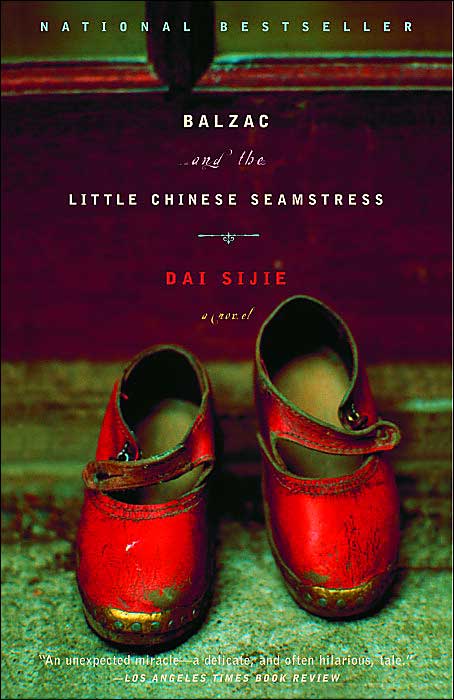
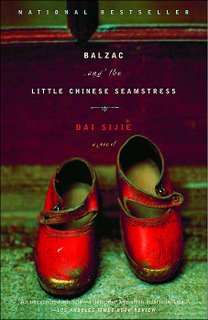 Balzac and the Little Chinese Seamstress by Dai Sijie
Fiction
Began on 7/21/06
Quit on 7/23/06Rating: DNF (Did Not Finish)Eh. This book didn't do a thing for me. I gave up after 70+ pages. It only has 184 pages and I felt like I'd given it more than a fair chance. Off to my discard pile.
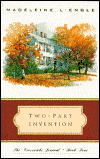 Two-Part Invention: The Story of a Marriage by Madeleine L'EngleAutobiography
Began on 6/23/06
Finished on 7/20/06
Rating: A- (8/10 Very good)
To say Madeleine L’Engle is a prolific author would be quite an understatement. To date, she’s written 16 young adult novels, 4 children’s books, 8 works of general fiction, 4 autobiographical works, 7 books of reflections on scripture, 6 books of prayers, 5 collections of poetry and 11 titles of special books, plays and short stories. In one of her most recent publications (Madeleine L'Engle Herself: Reflections on a Writing Life), she states:
"I have never served a work as I would like to, but I do try, with each book, to serve to the best of my ability, and this attempt at serving is the greatest privilege and the greatest joy that I know."
And what a joy it was for me to discover one of her autobiographical works, especially since I wasn’t terribly impressed with my first (and only) encounter with her writing (Newbery Award winner, A Wrinkle in Time) four years ago.
I don’t recall when or where I found my copy of Two-Part Invention, but it seems to me it was one of my many used book store acquisitions. I was probably drawn to the subject matter as well as the attractive line-drawing of Crosswicks (Madeleine and Hugh’s New England farmhouse), but as with most of my new book purchases, it wound up on a shelf, long forgotten until last month.
I read well over 50 pages and began to wonder if it was worth sticking with any longer. Not that it wasn’t well-written, but the prelude focused on Madeleine’s life after college, working as an understudy on Broadway while struggling with her new writing career. Lots of tidbits about the actors she worked with and her social life (including that of her attraction and fondness for actor Hugh Franklin). None of this was of much interest to me, so by the end of the 70-page prelude, I’d made the decision to abandon the book. However, as I was searching Amazon for a link for my blog entry, I came across several glowing reviews, causing me to wonder if I’d been too hasty to call it quits. How fortuitous! To think I would have missed such a wonderful, wonderful book!
L’Engle weaves past and present as she recalls her shared history with her husband while facing the heartbreaking challenge of watching him slowly give in to the ravages of bladder cancer (and all the subsequent health issues he faces). L’Engle writes with tremendous honesty and the love for her husband (and her God) shines through in spite of the constant fear and worry. After 40 years of marriage, she can’t help but feel immensely vulnerable, yet she conveys a sense of incredible courage in spite of the bleak prognosis.
Favorite Passages:
When I was a child the most terrible punishment my mother could give me was to forbid me to read or write for twenty-four hours, and I would beg her to spank me instead.
A love which depends solely on romance, on the combustion of two attracting chemistries, tends to fizzle out… A long-term marriage has to move beyond chemistry to compatibility, to friendship, to companionship. It is certainly not that passion disappears, but that it is conjoined with other ways of love.
Love of music, of sunsets and sea; a liking for the same kind of people; political opinions that are not radically divergent; a similar stance as we look at the stars and think of the marvelous strangeness of this universe – these are what build a marriage. And it is never to be taken for granted.
Our love has been anything but perfect and anything but static. Inevitably there have been times when one of us has outrun the other and has had to wait patiently for the other to catch up. There have been times when we have misunderstood each other, demanded too much of each other, been insensitive to the other’s needs. I do not believe there is any marriage where this does not happen. The growth of love is not a straight line, but a series of hills and valleys. I suspect that in every good marriage there are times when love seems to be over. Sometimes these desert lines are simply the only way to the next oasis, which is far more lush and beautiful after the desert crossing than it could possibly have been without it.
But the wonderful thing, whether we are together or apart, is to know that he is in the world, and that we belong together. And what I must learn is to love with all of me, giving all of me, and yet remain whole in myself. Any other kind of love is too demanding of the other; it takes, rather than gives. To love so completely that you lose yourself in another person is not good. You are giving a weight, not the sense of lightness and light that loving someone should give. To love wholly, generously, and yet retain the core that makes you you.
It is hard to keep a sense of proportion, a sense of humor, and yet I know that laughter is most necessary when things are difficult. Life on this planet in general is not very humorous. There is nothing funny about the disaster of the Challenger, or about Chernobyl, or the cutting down of the rain forests. There is nothing funny about cancer. But despite all the horror and tragedy there is still the possibility of genuine laughter.
Right now my vulnerability is on the outside of my skin. Small things bring sobs up to my throat, but thus far only when it has been all right, appropriate, to cry. I have slowly learned a lot about grief, and the right and proper expression of it. Wearing mourning in the old days was not such a bad idea, because it took into visible account the fact of death, which we now try to hide, so that it won’t embarrass others… We pull ourselves together when we need to. We do the things that have to be done. But we need to give ourselves time and place in which to mourn. This is strength, not weakness.
But grief still has to be worked through. It is like walking through water. Sometimes there are little waves lapping about my feet. Sometimes there is an enormous breaker that knocks me down. Sometimes there is a sudden and fierce squall. But I know that many waters cannot quench love, neither can the floods drown it.
We are not good about admitting grief, we Americans. It is embarrassing. We turn away, afraid that it might happen to us. But it is part of life, and it has to be gone through.My copy is now dog-eared and highlighted, and I plan to read it many, many more times. It’s one of the most inspiring works on marriage I’ve yet to read and I’m anxious to buy the remaining three titles in her Crosswicks Journal series. Brilliant writing!
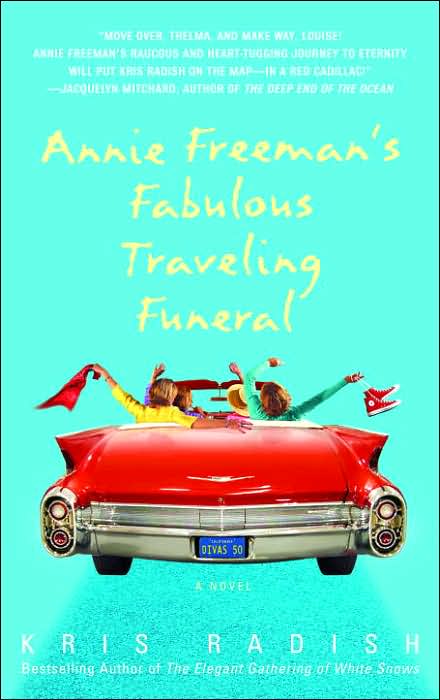
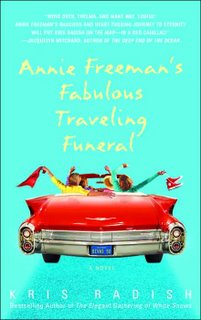 Annie Freeman's Fabulous Traveling Funeral by Kris RadishContemporary FictionFinished on 7/12/06Rating: C (3/10 Ho-hum)I had pretty low expectations for this novel, as I didn’t care much for Radish’s first book, The Elegant Gathering of White Snows. That, combined with a several negative reviews at Amazon (and my concern that reading about someone’s funeral still might be too painful), made me set it aside for several months after receiving it from my sister-in-law. Who knows why I finally picked it up when I did? I was pleasantly surprised that I fell right into the narrative in spite of the silly opening scene, but I was even more surprised that I didn’t throw the book against the living room wall before I managed to finish. The premise of the story was intriguing and captured my curiosity. I was anxious to see how the five women (many of whom didn’t know one another until they gathered at the first airport) would honor their mutual friend’s request to travel together, visiting specific locations laid out in her final request, scattering her ashes at each destination. I was also interested to see how each character would deal with the grief involved in losing a close friend.
Annie, who died of ovarian cancer, had the entire trip planned out in advance, providing for airline tickets, hotel accommodations, meals, spending money and any other extravagant expense that the women might incur along the way. They were to travel to Sonoma, Albuquerque, the Florida Keys, New York City, the North Shore of Lake Superior, and finally (this one really caught my interest) a small island near Seattle.
While I like the idea of this non-traditional funeral and was curious to see how Annie’s closest friends would get along as a group, I was very disappointed in the author’s melodramatic and repetitious writing style. The characters were indistinguishable from one another (same complaint I had with The Elegant Gathering of White Snows) and there were far too many magical moments that felt too “over the top” for this reader. I also got very irritated with the use of Annie’s full name instead of just Annie. Why in the world would the author continue to refer to her character as Annie G. Freeman??
Suffice it to say, this isn’t a keeper and you won’t find me writing any more reviews of this author’s works. Life is too short to read such ridiculous and unpolished writing.
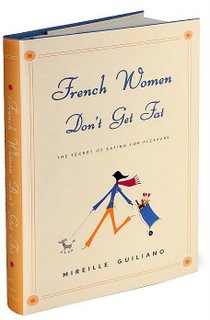 French Women Don't Get Fat: The Secret of Eating For Pleasure by Mireille GuilianoNonfiction/Diet
Finished on 7/11/06
Rating: B+ (7/10 Good)
Growing up, I was a fairly skinny little girl. It wasn’t until I entered puberty that I even gave my weight a second thought and I must’ve been around 17 when I went on my first diet. Remember the Scarsdale Diet? Dry wheat toast and half a grapefruit for breakfast? I have no idea if I managed to lose any weight, but at the time it seemed like the thing to do. I doubt I needed to lose much more than 5 pounds, but I wanted to be tall and skinny like all the popular girls; while I couldn’t do anything about growing taller, I could try for that waifish look, even if it meant giving up some of my favorite foods (Fritos and guacamole for lunch!).
Like the majority of Americans, I tried all the new diets as they became popular. I drank liquid protein shakes in the early ‘80s, advanced to Slim Fast when it came on the market, gave the Rotation Diet a spin (not that I have any recollection of what that involved!), ate Healthy Choice microwaveable meals, and most recently got caught up in the buzz of the South Beach Diet.
Each and every one of these diets showed initial promise. I was able to see immediate results, losing a few pounds (water!) right off the bat and eagerly continued with high hopes for the perfect body. Well, at least the perfect weight.
But as with any diet, I felt deprived and could never stick with it for more than a few months – with the exception of the South Beach Diet. Rod and I both went on it together and were able to lose quite a bit of weight and keep it off for over a year. Unfortunately, last year we chose to indulge ourselves in a lot of comfort food (we were in desperate need of comfort) and all that weight came back in a matter of months.
So why in the world would I pick up French Women Don’t Get Fat? Diets don’t work. Everyone knows that. Well, it does have a cute cover and I was curious to see what the French could possibly know that Americans either are ignorant of or simply choose to ignore.
So what is Guiliano’s philosophy? Well, let’s take a look at what she says:
French women typically think about good things to eat.
American women typically worry about bad things to eat.
French women eat smaller portions of more things.
American women eat larger portions of fewer things.
French women eat more vegetables.
French women eat a lot more fruit.
French women love bread and would never consider a life without carbs.
French women don't eat "fat-free," "sugar-free," or anything artificially stripped of natural flavor. They go for the real thing in moderation.
French women love chocolate, especially the dark, slightly bitter, silky stuff with its nutty aroma.
French women eat with all five senses, allowing less to seem like more.
French women balance their food, drink, and movement on a week-by-week basis.
French women do stray, but they always come back, believing there are only detours and no dead ends.
French women don't often weigh themselves, preferring to keep track with their hands, eyes, and clothes: "zipper syndrome."
French women eat three meals a day.
French women don't snack all the time.
French women never let themselves be hungry.
French women never let themselves feel stuffed.
French women train their taste buds, and those of their young, from an early age.
French women honor mealtime rituals and never eat standing up or on the run. Or in front of the TV.
French women don't watch much TV.
French women don't have much TV to watch.
French women eat and serve what's in season, for maximum flavor and value, and know availability does not equal quality.
French women love to discover new flavors and are always experimenting with herbs, spices, and citrus juices to make a familiar dish seem new.
French women eschew extreme temperatures in what they consume, and enjoy fruits and vegetables bursting with flavor at room temperature, at which they prefer their water, too.
French women don't care for hard liquor.
French women do enjoy wine regularly, but with meals and only a glass (or maybe two).
French women get a kick from Champagne, as an aperitif or with food, and don't need a special occasion to open a bottle.
French women drink water all day long .
French women choose their own indulgences and compensations. They understand that little things count, both additions and subtractions, and that as an adult everyone is the keeper of her own equilibrium.
French women enjoy going to market.
French women plan meals in advance and think in terms of menus (a list of little dishes) even at home.
French women think dining in is as sexy as dining out.
French women love to entertain at home.
French women care enormously about the presentation of food. It matters to them how you look at it.
French women walk everywhere they can.
French women take the stairs whenever possible.
French women will dress to take out the garbage (you never know).
French women are stubborn individuals and don't follow mass movements.
French women adore fashion.
French women know one can go far with a great haircut, a bottle of Champagne, and a divine perfume.
French women know "l'amour fait maigrir" (love is slimming).
French women avoid anything that demands too much effort for too little pleasure.
French women love to sit at a cafe and do nothing but enjoy the moment.
French women love to laugh.
French women eat for pleasure.
French women don't diet.
French women don't get fat.
If asked, I would say Guiliano’s book is NOT a diet book, but rather a book about living a healthy life. It’s definitely a lifestyle, which makes all the sense in the world to me. It’s full of basic common sense and I feel that if I don’t lose the 5-10 pounds that have been hanging around for the past six years (as my cute gynecologist said, “Welcome to your 40s”), I still believe it’s a lifestyle worth adapting and one in which I will at least be able to maintain my current weight. Having said that, I have already lost 4 pounds without feeling the least bit deprived (of course it’s been 100 degrees for almost a week now and maybe that 4 pounds was merely sweated away!).
Guiliano admits to not being a "physician, physiologist, psychologist, nutritionist, or any manner of '-ist- who helps or studies people professionally." She was, however, born and raised in France (she currently resides in New York) and feels qualified to share her knowledge about French women and their healthy lifestyles.
Other obvious guidelines:
Savor every bite. Put utensils down every few bites. Portion control - use a scale until you learn to eye 4-6 oz. Don't buy junk (chips, ice cream, cookies, beer) if you lack self-control. If it's not around, you can't eat it. Save those treats for a social event or weekend, but don't keep in stock.
Walk at least 20-30 minutes a day.
Always have something on hand to eat if you start to feel hungry (string cheese, apple, almonds) while away from home.
Deprivation is the mother of failure. Reward yourself with a little something on the weekend, but don't go overboard. Enjoy dessert but skip the chips; savor the baked potato and butter, but skip the beer or margarita.
Nuts are a nutritious snack, but they're high in calories and fat, so be careful. Don't overindulge!
Meat once a week; fish 1-2 times a week
If you eat a large lunch, make dinner a more modest meal. Likewise, if dinner is to be large, go lighter with lunch.
Some favorite quotes:
"Making choices that are meaningful to you is the essence of the French woman's secret."
"The key is to cultivate your own intuition of your offenders and pleasures and adjust each accordingly by degrees that suit you."
"When you add an indulgence, make a corresponding reduction to compensate. Add another half hour of walking the next day. Skip the cocktail. Pass the breadbasket."
"The trick is to manage and gratify your appetites, while determining how, when, and what to reduce. Eat breakfast!! Don't skip meals or rely on ‘protein’ shakes for meal substitutions. Eat with your head. Make wise choices. Don't try to achieve an ideal weight (based on insurance company charts that focus only on height and gender) or fashion weight, but rather a ‘well-being’ weight, the one at which a particular individual feels biendans sa peau (comfortable in his or her skin)... It's the weight at which you can say, 'I feel good and I look good.'"
Obviously, I found a lot of useful information in this book and I would definitely recommend it to anyone who not only wants to try to lose a little (or a lot of) weight, but also to anyone who wants to try to live a more healthy life. I read a library copy and am tempted to buy a copy for my permanent collection. Guiliano includes several recipes in her book and I’d like to give some a try. And I just discovered she has a new book coming out in October called French Women for All Seasons: A Year of Secrets, Recipes, and Pleasure. Definitely something I want to check out (and not just because it has a cute cover!).
 Easy Prey by John Sandford
Mystery
Finished on 6/22/06
Rating: B+ (7/10 Good)Poor Lucas. When it rains, it pours. Not only has Weather (the beautiful, intelligent doctor whom Lucas was engaged to up until she called it all off after getting caught in the crossfire of one of Lucas’ gunfights) begun to show an interest in rekindling their relationship, but an old flame from college (whom he never really quite got over) has been in touch with Lucas, also expressing an interest in rekindling their relationship (as her own marriage falls apart). If that isn’t enough to confuse the poor guy (who is a few years older, wiser and less of a womanizer than in previous books), a gorgeous, young (albeit bisexual) model is demonstrating quite a bit of interest in a casual (yet physical) relationship with Davenport.
Meanwhile, back at the police station, our favorite detective is busy trying to solve not one, not two, but a string of related murders which all started one night at a wild party thrown by a wealthy socialite with a guest list composed mainly of actors, artists and models. There are over a hundred possible suspects, including one of Lucas’ undercover agents who just happens to be in the wrong place at the wrong time.
Suffice it to say, Lucas has his hands full.
Easy Prey isn’t any more complicated than other mysteries in Sandford’s “Prey” series, yet something was definitely missing and the book never grabbed my attention. Several of the supporting characters failed to come to life and the plot lacked the necessary tension to keep the pages turning. Maybe I’ve come to enjoy being privy to the identity of the murderer and the absence of that knowledge left me on the sidelines, watching Lucas attempt to unravel the connection among the various murders, feeling just as clueless as he. In spite of the novel’s shortcomings and anticlimactic finale, I still enjoyed the subplot between Lucas and Weather (hence the decent rating) and look forward to the next book in the series (Chosen Prey).
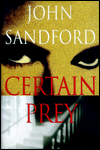
Certain Prey by John SandfordMysteryFinished on 6/19/06Rating: A (9/10 Terrific!)This has to be one of the more immediately engrossing of Sandford’s mysteries I’ve read so far. It usually takes a while to settle into the assorted characters and complicated plotlines before I’m hooked, but not so with Certain Prey. I was sucked in from the get-go and thoroughly enjoyed the ride. As always, it was fun to sit back and watch Lucas chase red herring after red herring, enjoying the privilege of being in on the perpetrator’s identity long before Lucas manages to figure it out. Definitely one of my favorites in the series.
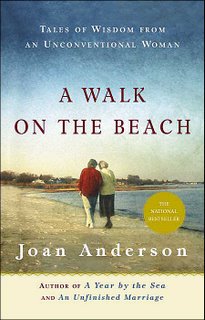 A Walk on the Beach: Tales of Wisdom From an Unconventional Woman by Joan AndersonNonfictionFinished on 6/16/06Rating: C (3/10 Ho-hum)
Joan Anderson has published three books centered around the year (and subsequent years with her husband) she spent living alone in her family cottage on Cape Cod, choosing not to join her husband when he accepts a new job and is forced to sell their home and relocate. As I wrote in my reading journal in 2002, after finishing A Year By the Sea, the idea of escaping to a cottage on Cape Cod to find yourself sounds wonderful, but perhaps for only a month or so, not an entire year! I happen to be very happily married to my best friend and have already spent far too much time living apart (thanks to those lovely job transfers and relocations) and can't imagine wanting to voluntarily spend a year apart ever again!
I enjoyed parts of the first installment of the trilogy (gave it a B, or a 6/10 rating), but thought the introspective details a bit tedious. Anderson's second book, An Unfinished Marriage, focuses on the time spent with her husband after he chooses to retire and join her at their Cape Cod cottage. It was a quick and thought-provoking read, which I enjoyed quite a bit (an A, or 5/5 rating), perhaps due to Anderson's more approachable narrative. She doesn't come across as quite so selfish and self-centered as she did in A Year By the Sea.
Unfortunately, I wasn't nearly as impressed with A Walk On the Beach. I had hoped to garner some words of wisdom from Anderson's elderly neighbor and mentor, Joan Erikson (wife of Erich Erikson, the renowned psychoanalyst). With a subtitle of "Tales of Wisdom from an Unconventional Woman" that's what I was led to believe. Yet, Anderson repeats the same stories and conversations she shared in her previous books, obviously expanding and providing further details to her anecdotes; yet to anyone who has read the earlier works, this sequel comes across as a regurgitation of ideas previously explored and a poor excuse for another royalty check.
I’m sure Joan Erickson was a wonderful woman and someone I’d enjoying walking the beaches of Cape Cod with – there is something about her, as told by Anderson, that reminded me of my grandmother – but, unfortunately, Anderson’s recollections of conversations between herself and her mentor come off as just a bit too contrived and, at times, even sappy. While some may find a gem or two in Erikson's oversimplified platitudes on living a rich and fulfilling life, the book was a waste of my time and money. I even had a sense of deja vu, wondering if I’d already it. This small book is quick to read and might do well as a stand-alone, but given a choice, I'd recommend Mitch Albom's Tuesday's With Morrie instead.
Note: After a quick visit to Amazon to capture the hyperlink for this book, I noticed that Anderson has written another book entitled A Weekend to Change Your Life : Find Your Authentic Self After a Lifetime of Being All Things to All People. Puleeeeeeze! No more!! This is one I can live without, thank you very much.
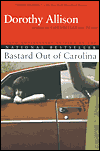
 Bastard Out of Carolina by Dorothy AllisonContemporary FictionQuit on 6/26/06Rating: DNF (Did Not Finish)I decided to put this down after a little over 50 pages. Too depressing. If it wasn't an Oprah pick, I'm truly surprised.

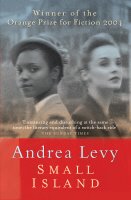
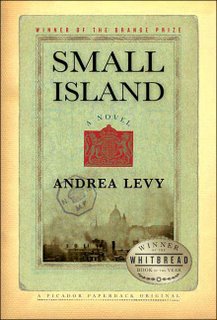 Small Island by Andrea LevyContemporary FictionFinished on 6/12/06Rating: A- (8/10 Very good)Winner of three major literary prizes in the UK - the Orange Prize for Fiction, the Whitbread Book of the Year and the Commonwealth Writer’s prize. In addition, it has been awarded the Orange ‘Best of the Best’ prize.Long before on-line books groups and my huge TBR (to-be-read) stacks, I was determined to finish every book I started, suffering through painfully dull or poorly written novels, classics and works of nonfiction. The older I get and the more I read, the easier it’s become to quit books that fail to entertain or hold my interest.
Sometimes, however, perseverance pays off and a gem is discovered, leading me to wonder how many others I may have missed simply because I was too impatient or quick to call it quits.
Ian McEwan’s Atonement took well over 80 pages before I came to realize it was well worth every minute I’d invested leading up to that turning point, ultimately becoming my number one read for that particular year. The Life of Pi (Yann Martel) and A Thread of Grace (Mary Doria Russell) are two other examples of wonderful novels that I would have missed had I given up when they failed (initially) to entertain me.
It took me a whopping 200+ pages before I even started to get interested in Small Island and the only reason I stuck it out that long is because it was my personal nomination for an on-line book group read for June. I considered setting it down several times, but kept plugging away out of sheer guilt. How would it look to the rest of the group if I, the member who put it up for nomination, didn’t even bother to finish?
Yet, in spite of the long, slow start, I was finally drawn into the narrative, captivated in particular by two of the four narrators, and anxious to return to my reading when called away by the mundane chores of life. As the final chapters drew near, I came to realize how much I’d enjoyed the story and slowed down, savoring the final pages.
Set in postwar London, Small Island is a thought-provoking narrative, centered around four strangers whose lives intersect and overlap. Levy addresses issues of race, prejudice and loyalty with a keen sense of emotion mixed with subtle humor and tenderness.
I was quite impressed with this author and not only plan to read her other novels, but hope to make time to re-read Small Island in the not too distant future. I have a feeling I’ll find the first 200 pages much more enjoyable the second time around. I also have a strong feeling that this particular novel will wind up in my Top Ten for 2006. It was definitely worth my time and effort.
 A Thousand Days in Venice: An Unexpected Romance* by Marlena de BlasiNonfiction - Memoir/Travel EssayQuit on 6/16/06Rating: DNF (Did Not Finish)*A Hundred Pages of Boredom (nice cover, though)Yep, another one bites the dust. I decided after over a hundred pages that this darling little book just wasn't doing a thing for me and rather than suffer through the weekend, trying to finish reading it, I'd rather start something more appealing like another Lucas Davenport mystery. I need SOMETHING to pull me out of this reading slump!
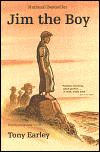
 Jim the Boy by Tony Earley
Contemporary Fiction
Quit on 6/14/06
Rating: DNF (Did Not Finish) No interest after over 50 pages.
 In a Summer Season by Elizabeth Taylor
Fiction
Quit on 6/14/06
Rating: DNF (Did Not Finish)
Gave up after 60+ pages. Didn't care for any of the characters or their stories.
 Digging To America by Anne Tyler
Contemporary Fiction
Finished on 6/2/06
Rating: A- (8/10 Very good) I’ve been reading Anne Tyler’s novels on and off for several years, but I hesitate to say I’m a big fan. I enjoyed Ladder of Years, A Patchwork Planet, Back When We Were Grownups, and The Amateur Marriage, but I’d be hard pressed to say that any wowed me enough to think, “I have to buy her next new release!!” I even have to confess that I had to go to Amazon to look up the earlier titles and familiarize myself with the various plots and characters. I’m sure she’d hate to hear this, but I’m forever confusing her with Alice Hoffman.
This particular novel revolves around Jin Ho and Susan, Korean babies adopted by two families, who until “Arrival Day” at the Baltimore airport, were complete strangers. Jin Ho’s new parents are All-American Brad & Bitsy Donaldson and Susan’s are Sami & Ziba Yazdan, a young Iranian couple. Other key characters include Bitsy’s parents (Connie & Dave) and Sami’s widowed mother, Maryam. In spite of exchanging just a few polite words of congratulations, this shared life-altering experience turns what could have been a casual meeting into a close, and long-lasting, friendship as they watch their little babies grow up and become childhood friends.
In alternating chapters, the insecurities and challenges of parenting are gradually revealed through each of the major characters’ points-of-view. It wasn’t until I read Dave’s (Jin Ho’s grandfather) chapter that I began to feel an affinity for any of the characters and their roles as husbands, wives, mothers and fathers. Tyler hits her mark when it comes to understanding (and thus, expressing) the minutiae of the day-to-day process of grieving for a loved one.
Digging To America is a wonderful read and I’m glad my online book group chose it for this summer’s lineup. I zipped through it in just a few short days, in spite of a lackluster beginning. Tyler’s narrative is one of humor and tenderness, particularly in the closing chapters. Her characters have stayed with me, weeks later, in spite of moving on and finishing a couple of new books.
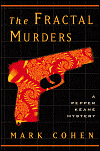
 The Fractal Murders by Mark Cohen
MysteryFinished on 6/2/06
Rating: B+ (7/10 Good)
I’d never heard of this book or author and just happened to stumble upon it at the library one day. Brought it home for Rod and wound up reading it once he’d finished.
Set in Nederland, Colorado (near Boulder), private investigator Pepper Keane is hired to uncover the possible serial murders of three math experts – specifically, experts in fractals. The FBI has decided that the murders were unrelated and, as a result, closed all three cases.
Pepper lives alone with his two dogs (Buck & Wheat) and like most contemporary mysteries I’ve recently read, the potential for a love interest with the math professor who hires him is pretty obvious. Pepper is a bit reminiscent of Harlan Coben’s witty Myron Bolitar and I was easily drawn into his personal story, as well as the mystery. The details of fractal geometry don’t get too complex (and I’m almost brave enough to say that I actually learned something about them!), although I did find myself skimming a page or two that dealt with the stock market and how fractals can be useful in predicting the trends of a given market.
I enjoyed the references to Lincoln (Cohen practiced law for eight years in Omaha and spent a year at UNL pursuing a Master’s in philosophy) and had no trouble picturing Pepper and his sidekick, Scott (reminiscent of Harlan Coben’s Win, although not quite as psychotic) hanging out in the Haymarket, enjoying their pizza and Empyrean Ale at Lazlo’s. Hmmm, perhaps this is why I stumbled on the book on the new release shelf, in spite of its 2004 publication date. Product placement of a “local” author?
In any event, The Fractal Murders is a decent summer read, although it does have a few shortcomings. My biggest complaint is with Cohen’s writing style. He has a tendency to describe every character’s clothing ensemble EVERY time the person is mentioned. On a single page, halfway into the book, three characters are in a discussion with one another and Cohen describes exactly what each is wearing. This clothing fetish has absolutely no bearing on the narrative and it comes across as very amateurish and formulaic. In addition to the clothing issue, Cohen’s writing seems a bit simplistic: He often states the obvious and makes a point to comment on the weather, as if he were thinking, “hmmm, I mentioned what they were wearing and how to open a bottle of beer… now maybe I should tell the reader that it looks like rain.” Sandford, Lehane, Coben and Parker he’s not, but I still enjoyed the book and plan to read more by this new-to-me author. Bluetick Revenge looks promising with the return of Pepper Keane and his assorted buddies (canine and human, alike). Maybe his second novel is a little more polished and not in need of quite so much editing.
A favorite passage:
“The math building, a three-story fortress, was right where the student had said it would be. Not far from where I’d parked. I had expected it to be named the Chester Q. Hollingsworth Hall of Mathematics or some such thing, but the sign above the entrance read simply, MATHEMATICS BUILDING.
I entered unafraid. I was forty-four years old and nobody was going to ask me to bisect an angle or test my ability to solve a quadratic equation. That’s one of the advantages of growing up. There aren’t many, so I savored it.”
 Promise Me by Harlan Coben
Mystery
Finished on 5/17/06
Rating: A (9/10 Terrific!)He’s baaaack! After a 6-year hiatus, Myron Bolitar returns along with his psychotic (yet undeniably useful) sidekick, Win. The rest of the gang (Esperanza, Big Cindy, Myron’s parents, and Jessica) all make an appearance, which should satisfy the devoted fans of this entertaining series. Reading Coben’s latest mystery is like visiting an old friend, picking up as if we hadn’t been apart for all these years. I’d forgotten how funny Myron can be; his dry wit never fails to crack me up.
In addition to reacquainting myself with this crazy group of friends, I thoroughly enjoyed the mystery in spite of a few difficult pages dealing with missing daughters and their parents' angst. Overall, it’s a great read and, just in time for summer, should prove to be the perfect beach read, as it’s quite the page-turner. I liked it so well that I’m toying with the idea of heading over to Barnes & Noble to buy the previous 7 Bolitar books and treat myself to a re-reading fest this summer.
 Secret Prey by John Sandford
Mystery (#9 in Prey series)
Finished on 5/12/06
Rating: A- (8/10 Very Good)
In spite of the weak (and largely irrelevant) introductory chapters (too many confusing details about a corporate merger), this may be the best Lucas Davenport mystery thus far! I thoroughly enjoyed the book, yet should caution those who might chose to read it as a stand-alone or before reading #7 and #8 in the series. Sandford is generally very good about establishing the backstory to these mysteries, but this particular novel has several details interwoven from previous works and not only is there potential for confusion, but spoilers, as well. Great suspense and an intense finale!
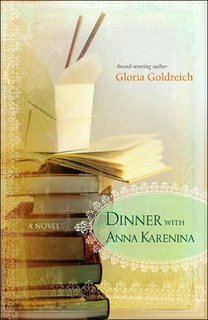
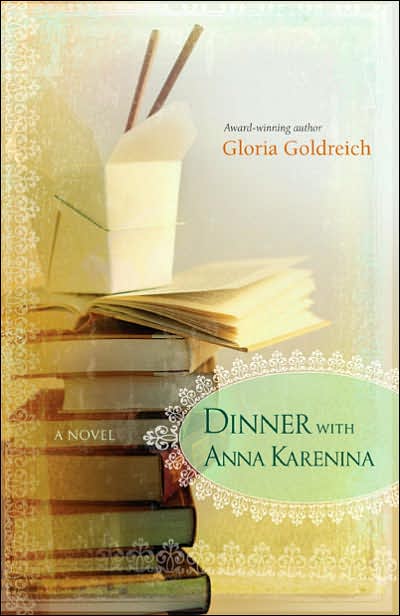
Dinner with Anna Karenina by Gloria Goldreich
Contemporary Fiction
Finished on 5/8/06
Rating: B+ (7/10 Good)
This started out to be such a good book, but my enthusiasm began to wane the further along I read. It’s another women’s friendship book, centered around a monthly book group; a plot device that has been used ad nauseum of late.
They were readers for whom literature was a drug, each complex plot line delivery a new high, suspending them above reality, allowing them a magical crossover – now onto the snowbound avenues of St. Petersburg, now into the pretentious opera house of provincial Rouen. They had spoken often, with rueful honesty, of how the books they read represented escape, offered pathways to literary landscapes that intrigued and engrossed.
As I began to read, particularly the sections devoted to the actual book discussions, I was optimistic and felt that this book would be different. More intellectual and less “fluff” than say, The Book Club (Mary Alice Monroe), The Reading Group (Elizabeth Noble), The Jane Austen Book Club (Karen Joy Fowler), or Angry Housewives Eating Bon-Bons (Lorna Landvik).
Theirs was no ordinary book group, because they themselves were not ordinary readers. Each of them had visited other book groups, heard superficial comments, pseudoanalysis, words offered in games of intellectual one-upmanship….
They themselves were different. Literature was their passion, each book they discussed a challenge to heart and mind, each of their meetings a celebration of ideas. Their friendship, their intimacy, was rooted in that shared passion, unarticulated but silently acknowledged. In discussing books, they revealed themselves to one another, exposed their dreams, their deepest fears, their brightest hopes….
I’ve read several of the books the women chose and thought the discussions were well-done. Goldreich devotes several pages to each book, and the women were well-prepared and quite serious about their contributions, reading additional material about the author and comparing the work to other books they’d previously read. Just for fun, here are the titles the group read:
Anna Karenina (Tolstoy)
Madame Bovary (Flaubert)
The Letters of Edith Wharton and The Reef (Wharton)
The Lottery and Life Among the Savages (Jackson)
Reading Lolita in Tehran (Nafisi) and Lolita (Nabokov)
The Bell Jar and the Ariel poems (Plath)
Little Women (Alcott)
Unfortunately, the relationships didn’t ring true and the dialogue between the friends was so poorly written that I began to cringe each time I came upon their enthusiastic but superficial chattering. I also think the book could have used a bit more editing. Goldreich has a tendency to repeat the details in which she describes the characteristics of the various friendships and one particular subplot that is revealed in the first chapter (and continues for the duration of the novel) became very tiresome and petty, resulting in a weak backdrop to the book’s focus.
That said, it wasn’t a bad read, in spite of the minor flaws, and I’m a bit tempted to start my own F2F (face-to-face) book group with my close friends. Anyone in Lincoln interested??
 Extremely Loud & Incredibly Close by Jonathan Safran Foer
Contemporary Fiction
Quit on 5/19/06
Rating: DNF (Did Not Finish)I read several pages, but couldn't get interested. Skimmed ahead quite a bit (I almost never do this!) but remained unimpressed. I don't mind stream-of-conscious writing, so that wasn't the problem. I just wasn't interested in the main character or the storyline.
 The Reader by Bernhard Schlink
Contemporary Fiction
Quit on 5/19/06
Rating: DNF (Did Not Finish)Read several chapters but couldn't get interested. Life is too short...