November 21, 2010

Plain Kate


Plain Kate by Erin Bow
Teen/YA Fiction
2010 Arthur A. Levine Books (Scholastic)


(from the author's website)

In addition to his good looks, charm, wit, loyalty, love of animals and all-around good nature, my husband is as passionate about reading as I am. He reads a lot more nonfiction (especially history & biographies) than I do, but he still enjoys a good novel and often reads what I recommend. We've spent many an evening sitting at the dinner table, chatting about our current reads. This past week, we've been discussing a teen novel that was written by the daughter of a friend of ours. We were first introduced to Erin Bow's beautiful writing in Mongoose Diaries (reviewed here almost exactly a year ago!), but Plain Kate is her first novel, and we were both quite eager to get our hands on it. Since I was in the middle of a book club read, I told Rod to go ahead and read Plain Kate before me. He read it and loved it. As we were chatting, he said he'd like to write the review, so without any further babbling from me, here's Rod's review of Plain Kate:


Plain Kate is a magical book about a magical girl in a magical land. Aimed at young adults, it is at once a quest novel, a coming-of-age story, and a fairy tale in the classic tradition. It is the story of a young girl who must overcome hardship and confront danger to find her way in a world that abounds in enchantment, both good and evil.

The title is ironic, for we soon see that there is nothing at all plain about Kate. She is beautiful, pure of heart and strong of mind, honest and determined. Other characters, older and wiser than Kate herself, understand that there is something very special about her:

Take this one,” said Daj, pointing an elbow at Kate while she turned the chicken over. “This is Kate Carver, who will go our way a while.”

"Plain Kate,” corrected Plain Kate.

“Hmph, so you said.” Daj eyed her. “As you’d have it, kit.”

Almost by definition, the characters in a quest novel must grow, and Kate is no exception. She begins the novel as a precocious young girl with an uncanny talent for woodcarving, but is forced by tragedy and by malevolent circumstance to grow up quickly. Suddenly bereft of her father, her childhood is lost, but she discovers her true strength as she matures; in the end, she is even stronger and more beautiful than perhaps she would have been absent the tragedies that helped shape her. She is tempered like steel, made stronger by first being weakened.

Taggle is Kate’s friend and travel companion, a wryly sarcastic, hedonistic cat that provides a welcome touch of humor in what is sometimes a bleak story. (And the story is often bleak, there’s no getting around it; the world—and especially Kate’s world—can be a very bleak place indeed. But we know that for joy to prevail there must be bleakness over which it can triumph.)

Like Kate, Taggle also grows. In a fairy-tale world in which charms have power and the dead can kill and animals can speak, a self-centered cat becomes, literally, the voice of reason. Ultimately Taggle is willing to sacrifice himself for one whom he has come to love:

Taggle looked up at her, his amber eyes deep as the loneliness Kate had felt before he became her friend. “The traditional thing,” he said slowly, “involves the river and a sack.”

Erin Bow is a poet, and a fine one. And, as poets do, she revels in language—her descriptions of ordinary things make them seem extraordinary:

Kate found herself fixed on the texture of Daj’s hands: so calloused and worn with work that that they were glossy-smooth, like the inside of an ox-yoke or the edge of an oarlock. Smooth as dry dust. Her father’s hands had been a little like that.

Or this about the ghostly shadow that haunts Kate:

Plain Kate watched the third shadow; it pinned her eyes. It was supposed to be her shadow, but it wasn’t. It was sinuous and moved like a water snake. She knew in her stomach that this was not a simple shadow, but some cold thing, some damp dead thing that should be resting. And, though their fire was the only light, she thought this shadow was not cast backward from the flame, but was drawing near to it, from outside the tent.

Poets see things; they notice what the rest of us miss. This is one reason they’re poets. Perhaps that’s why Bow’s prose resonates so strongly with readers: We read a description or a phrase and think, “Yes. That’s exactly right! It’s perfect. That’s how I would have described that, if only I’d known how.” But we don’t know how, most of us, which is why we’re not poets.

Plain Kate is a fairly tale that hearkens back to the tales of Hans Christian Anderson and the brothers Grimm. It’s Cinderella and Beauty and the Beast and Pinocchio and Little Red Riding-Hood as they were meant to be read, long before Disney got to them and wiped them clean of the grim horror that made them such powerful cautionary folk tales. Meant for young adults, Plain Kate speaks honestly to young people, but it’s a beautiful book that can be enjoyed by all ages, because it is written in language that appeals to us all and because it tells a story with which we can all identify. Plain Kate takes us back to our innocent childhoods, to a time when every nighttime creak of a floorboard, every branch scraping against a frost-rimed window, every whisper of the cold wind sent delicious chills through us—delicious because we knew, in our heart of hearts, that we were in fact safe and warm and loved. Bow’s book helps us relive those days, and it reminds us that the journey on which we set out is not necessarily the journey we end up taking; and that in a quest, the prize that is sought is not always the prize ultimately won.

November 15, 2010

Stiltsville


Stiltsville by Susanna Daniel
Fiction
2010 Harper Collins
Finished 10/26/10
Rating: 4.75/5 (Terrific!)


From Barnes & Noble (Discover Great New Writers):

When Frances accepts an invitation to visit Stiltsville, a community of houses built on pilings in Biscayne Bay, she has no idea that her simple "yes" to a new friend will determine the course of her life for the next two dozen years. Set in Miami from the late '60s to the 1990s, Stiltsville is a sweeping journey seen through the eyes of one woman as she experiences love, motherhood, friendship, hurricanes, racial tension, and finally, a tragic death in slow motion.

In her debut novel, Daniel describes the experiences of three generations in one family whose spiritual heart is centered in a modest bungalow built a few feet above the water. When Frances meets and marries Dennis, she learns to live her life on the water, from bay to ocean to everglade to bayou. She navigates through it all—infidelity, empty-nest syndrome, and debilitating illness—sometimes with grace and humor, sometimes with anger and bitterness, but always with the same people by her side.

Daniel excels in capturing the flavor and decadence of Miami as it became a multicultural hotbed. In Stiltsville, she has woven factual events into Frances's life from a tumultuous period that witness racial beatings, the cocaine wars, and Hurricane Andrew. The result is a riveting novel filled with pathos.

Marisa de los Santos. Anna Quindlen. Kate Maloy. Elizabeth Berg. Jeanne Ray. These talented authors have all written beautiful novels that take the ordinary and make it extraordinary. Their books explore the everyday life of mothers, wives and friends, depicting scenes of domestic life with believable situations and authentic voices. These "comfort" reads are the sort that don't involve wars or murders. There are no car chases, no mysteries to solve, no supernatural disturbances. They may not be the sort of read my husband would enjoy, but I love them! I love the sense of familiarity to my own life. I love the sense of affirmation I feel after reading a passage about the dynamics between mothers and daughters. And I love to read about long-standing marriages, full of the predictable ebb and flow of love and happiness. Daniel has written a tender story that is sure to satisfy those who share my enthusiasm for women's fiction, as well as those who enjoy reading anything set near the ocean, as I do.

As for my new hometown, I'd fallen quickly and surely in love with it. I loved to drive through the dense neighborhoods with my car windows down and smell the rotting sweetness of a ripening mango tree. I loved to eavesdrop on the loud conversations of the ladies at the deli counter, ferreting out select phrases using the lazy Spanish I'd acquired over the years. I loved the lychees and star fruit that fell into my yard over the neighbor's fence, and I loved the bright bougainvillea that dropped its papery pink petals onto my lawn. I loved the rusty barges loaded with stolen bicycles that plodded down the Miami River and out to sea. I loved the half-dozen chilly February nights, all the windows in the house open and the fireplace going. I loved the limestone and the coral rock, the fountains and the ocean and the winding blue canals. I loved the giant banyans and the dense wet mangroves and the gumbo-limbo trees and the many-sized, many-shaped palms. I loved the pelicans and manatees and stone crabs and storms and even the thick, damp summers.

Miami is the only place in this country where Stiltsville could exist, and for a while I had the good fortune of spending time there.

I lived in Miami through scandals and riots, through dozens of tropical storms and one devastating hurricane, through the Mariel boat lift and the cocaine cowboys. Outside Florida, I never met anyone else who lived in Miami or cared to, or even anyone who is not somewhat surprised to hear that I lived there for half of my life. Perhaps what is still most surprising to me about Miami is that in spite of its lurid excesses and unreal beauty and unreal ugliness, it was possible for me, a girl from Georgia, to create a life there. Overall, an excellent life. A life I knew even as I was living it, I would miss when it came to an end.

On parenting:

We'd been unlucky and now it seemed we might become lucky again. Sometimes I think the guiding principles of good parenting are luck and circumstance. And sometimes when I'm feeling pompous I think there is no such thing as luck, that Margo's strength comes from our steerage. The night she fled Trisha Weintraub's house, I'd told her while she cried that no one should have the power to make her feel bad or ugly or embarrassed, that she was the one to decide who could hurt her feelings and who could not. I was just filling the air, of course; she knew well enough that this wasn't true. I hoped, however, that at some point she'd learn what is true: that although we like to believe we are our own little islands, capable of protecting ourselves as well as sheltering and welcoming others, this is never really the case. Still, we must behave as if it is, and hope that we can withstand the wills of other people more than we cannot.

On Stiltsville:

"I thought the last time at Stiltsville was the last time," I said. We'd skied and Dennis and Margo had fished off the dock. It had been five years since the state of Florida had declared Biscayne Bay a national monument and began pushing for an end to private ownership of the stilt houses. Marcus Beck, a trial lawyer, had negotiated a deal guaranteeing that current residents could keep our houses until the year 1999—after that, Stiltsville would belong to the state. Since the decision, we'd gone out every possible weekend.

"There's no last time," said Dennis.

On empty-nesting:

I had a feeling that very soon there would be a tear in the fabric of my life, an enormous divide. On one side would be the time I moved through and things I did and the people I saw, and on the other side would be a great expanse of black time where Margo lived her life, and she and I would move parallel to each other like cars in different lanes, allowing only passing glimpses. I had to remind myself that, strangely enough, this was the way it was meant to go. They grow up, they move away.

I first read about Stiltsville on Kay's blog and after reading her wonderful review, knew it was my kind of book. Thanks for sending me your copy, Kay. I loved it and can't wait for the author to write another!

Final thoughts: When the frigid, dark days of winter become unbearable, I'll pull this book from the shelf to read a second time, warming my chilled bones vicariously through Daniel's beautiful prose, dreaming of the day when, like Frances, I can walk around the house in nothing but a pair of shorts, tank top and sandals. Now I understand why so many retirees settle in Florida!

The author in Stiltsville, circa 1980
(From the author's website)


Stiltsville
(From the author's website)

Go here for more information about Stiltsville.

November 8, 2010

Sailing Alone Around the World

(Click here to order)


Exciting news in the Scher household. Rod got an email from his publisher. It reads:

We have just received an order for 24 copies of your book from the textbook store of the United States Naval Academy in Annapolis. We were told that a professor has selected this book for the spring semester.

This could be a very big deal! Woot!!


November 7, 2010

The Memory Keeper's Daughter


The Memory Keeper's Daughter by Kim Edwards
Fiction
2005 Penguin Books
Finished 10/18/10
Rating: 3.5/5 (Good)


Publisher's Blurb:

This stunning novel begins on a winter night in 1964, when a blizzard forces Dr. David Henry to deliver his own twins. His son, born first, is perfectly healthy, but the doctor immediately recognizes that his daughter has Down syndrome. For motives he tells himself are good, he makes a split-second decision that will haunt all their lives forever. He asks his nurse, Caroline, to take the baby away to an institution. Instead, she disappears into another city to raise the child as her own. Compulsively readable and deeply moving, The Memory Keeper's Daughter is a brilliantly crafted story of parallel lives, familial secrets, and the redemptive power of love.

Most of us have experienced grief at some point in our lives, and I can honestly say that losing a child is the worst. So why didn't this book resonate more strongly with me? To be lied to about the death of one's child has got to be one of the most cruel acts a person can inflict on another human being. That it was Norah's very own husband who deceived her about their daughter's death is despicable. I can't begin to imagine what it would be like to later discover that the child was alive and well, not to mention being raised by another woman.

The Memory Keeper's Daughter is a compelling read, holding my interest from beginning to end, and yet it still somehow managed to miss the mark: It was a good book, but not a great one. The characters, held at arm's length (reminiscent of Frank and April Wheeler in Richard Yates' Revolutionary Road), are unsympathetic and tedious, and the plot is predictable and contrived. Still, I'm sorry my book club wasn't able to meet in October, because The Memory Keeper's Daughter was thought-provoking and rich with discussion material, in spite of its flaws.

November 2, 2010

Left Neglected


Left Neglected by Lisa Genova
Fiction
2011 Gallery Books
Finished 10/11/10
Rating: 5/5 (Outstanding!)
ARC - On sale January 4, 2011
FTC Disclosure: Received ARC from Jean Anne Rose, Director of Publicity, Gallery Books


Publisher's Blurb:

In an instant, life can change forever.

Sarah Nickerson is a high-powered working mom with too much on her plate and too little time. One day, racing to work and trying to make a phone call, she looks away from the road for one second too long. In the blink of an eye, all the rapidly moving parts of her over-scheduled life come to a screeching halt. A traumatic brain injury completely erases the left side of her world. As she struggles to recover, she discovers she must embrace a simpler life, and in so doing begins to heal the things she's left neglected in herself, her family, and the world around her.

She's done it again! Lisa Genova has written a compelling novel that reads like a memoir, pulling me in from the opening paragraph, and making me long for a back-list of titles to enjoy until her next publication. Reading all but the final chapters in-flight to California earlier this month, the narrative taut with suspense, I found myself on the verge of hyperventilating as the impending disaster drew nearer. It would have been easy enough to finish the book as my plane taxied to the gate, but I wanted to savor those final pages in a more peaceful environment.

My book is littered with over two dozen sticky-notes and as I began to read each marked passage in preparation of writing this review, I found myself reading several pages at a time, losing myself all over again in Lisa's prose.

I think some small part of me knew I was living an unsustainable life. Every now and then, it would whisper, Sarah, please slow down. You don't need all this. You can't continue like this. But the rest of me, powerful, smart, and determined to achieve, achieve, achieve, wasn't hearing a word of it. If, once in a while these kinds of thoughts did manage to wiggle into my consciousness, I shushed them, scolded them, and sent them to their room. Quiet, little voice, can't you see I have a million things to do?

Genova (who has a degree in Biopsychology and a Ph.D. in Neuroscience from Harvard) adroitly continues to educate her readers as she did with her amazing debut work, Still Alice. And yet her creativity as a novelist is equally as impressive as her scientific expertise. I love her use of dreams, so imaginative and detailed, as a means to begin each chapter in the first half of the novel.

Even my dreams began tapping me on the shoulder, trying to grab my attention. Do you even know what you're doing? Let me show you. But each dream was elusive upon waking, and like a slimy fish captured in my bare hands, it slipped out and swam away before I could get a good look at it. Strange that I remember them all now. In the nights just before the accident, I think my dreams were trying to wake me up. With all that has happened, I honestly believe that they were guidance sent from a spiritual source. Messages from God. And I ignored them. I guess I needed something less fleeting and more concrete.

Like a traumatic smack to the head.

Much like a few of my favorite authors (Marisa de los Santos and Erica Bauermeister, to name just a couple), Genova deftly explores the ordinariness of everyday life and marriage.

We kiss good-bye. It's our typical morning good-bye kiss. A quick peck. A well-intentioned habit. I look down and notice Lucy's round, blue eyes paying close attention. I flash to studying my own parents kissing when I was little. They kissed each other hello and good-bye and good night like I would have kissed one of my aunts, and it terribly disappointed me. There was no drama to it at all. I promised myself that when I got married someday, I would have kisses that meant something. Kisses that would make me weak in the knees. Kisses that would embarrass the kids. Kisses like Han Solo kissing Princess Leia. I never saw my father kiss my mother like that. What was the point of it? I never got it.

Now I get it. We aren't living in some George Lucas block-buster adventure. Our morning kiss good-bye isn't romantic, and it certainly isn't sexual. It's a routine kiss, but I'm glad we do it. It does mean something. It's enough. And it's all we have time for.

Until reading Left Neglected, I had never heard of this condition. From the publisher, "Left Neglect Syndrome, also known as Hemispatial Neglect, is a neuropsychological condition that can result from damage to the right hemisphere of the brain. In these cases, the patient experiences a deficit in attention and fails to recognize the left side of the body and space. The patient is unaware of stimuli on the left side and unable to recognize the significance or importance of the stimuli. This is not a visual problem." In spite of this clear explanation, I still found it difficult to wrap my brain around the specific condition until Genova put me in Sarah's shoes:

"She doesn't seem to notice that it's missing," says Bob.

"Yes, that's true for most patients in the acute phase immediately following the injury. She's mostly unaware of her unawareness. She's not aware that the left side of everything is missing. To her, it's all there, and everything is normal."

I may be unaware of some unawareness, but Dr. Kwon and Bob seem unaware that I'm still here.

"Do you know you have a left hand?" Bob asks me.

"Of course I know I have a left hand," I say, embarrassed that he keeps asking these ridiculous questions.

But then I consider this ridiculous question. Where is my left hand? I have no idea. Oh my God, where is my left hand? How about my left foot? That's also missing. I wiggle my right toes. I try to send the same message to my left food, but my brain returns it to sender. Sorry, no such address.

"Bob, I know I have a left hand, but I have no idea where it is."

and then in Bob's:

"I can't."

"Yes, you can. It's simple."

"It's not."

"I don't understand why you can't just turn your head."

"I did."

"To the left."

"There is no left."

I hear him sigh in frustration.

"Honey, tell me everything you see in here," I say.

"You, the bed, the window, the chair, the table, the flowers, the cards, the pictures of me and the kids, the bathroom, the door, the television.

"Is that everything?"

"Pretty much."

"Okay, now what if I told you that everything you see is only half of everything that's really here? What if I told you to turn your head and look at the other half? Where would you look?"

He doesn't say anything. I wait. I imagine Bob standing in his tee-shirt and jeans, searching.

"I don't know," he says.

"Exactly."

One of the reasons I love Genova's novels is that I see parts of myself in her main characters. Losing myself in the narrative, my head bobbing in agreement, I recognize situations and emotions much like my own:

And there's something magical about the combination of mountain air and physical exercise that interrupts that endlessly looping and insistent voice inside my head that normally chatters on and on about all the things I need to do. Even though it's completely irrelevant now, I can still hear the nagging list that was playing in my head just before the accident.

You need to call Harvard before noon, you need to start year-end performance reviews, you need to finalize the B-school training program for science associates, you need to call the landscaper, you need to email the London office, you need to return the overdue library books, you need to return the pants that don't fit Charlie to the Gap, you need to pick up formula for Linus, you need to pick up the dry cleaning, you need to pick up dinner, you need to make a dentist appointment for Lucy about her tooth, you need to make a dermatologist appointment for you about that mole, you need to go to the bank, you need to pay the bills, don't forget to call Harvard before noon, email the London office...

And my experience with meditation is much like that of Sarah's:

Meditation has been added to the list of rehabilitation techniques that may or may not help me return to my old life. So I meditate. Well, I try. I've never had any inclination to meditate, and even beyond that really, I can't imagine why anyone would want to. To me, meditation sounds a whole lot like doing nothing. I don't do nothing. I pack every second of every day with something that can get done. Have five minutes? Send an email. Read the school notices. Throw in a load of laundry. Play peek-a-boo with Linus. Got ten? Return a phone call. Outline the agenda for a meeting. Read a performance evaluation. Read a book to Lucy. Sit with my eyes closed and breathe without planning, organizing, or accomplishing anything? I don't think so.

Still Alice was one of my top ten reads in 2009. Reading like a memoir and putting a face on Alzheimer's, it quickly became a favorite among book clubs across the country. I predict Left Neglected will be do just the same. Laced with humor and not quite as emotionally terrifying as Still Alice, Genova takes another medical condition and reveals the humanity that lies beneath the normally cold, clinical, disinterested account of that condition. I can't wait for the release of this amazing book so I can start discussing it with other readers.

Life can change in an instant. No one lives in a bubble, but we can take measures to protect ourselves (and loved ones) from traumatic brain injuries. Wear helmets while riding bikes and motorcycles. Don't text and drive. For that matter, don't talk on a cell phone while driving (hands-free or not). Keep your eyes on the road. Pay attention. Because we all know there are those who don't.

Final thoughts: Another winner! This will be the book club darling of 2011.

Note to Lisa: Many thanks for another great book. More, please!!

October 26, 2010

NOOKcolor


Wow. I have to say this is pretty slick. Even though I own an iPad, this is very tempting!

Go here to see all the specs, including:

Extra Wide Viewing Angle

Portrait or Landscape View

Newsstand Favorites (color-rich magazines)

AliveTouch and "Read-To-Me" Technology for Kid's Books

Browse a Friend's Nook Library

Connect Directly to FaceBook and Twitter

Share Passages or Recommend Books to Friends

Organize Your Home Page

Personalize Your Bookshelf

Tune In To Pandora

All for $249. Sounds like a perfect Christmas gift to me.

And, yes. I'm an Amazon Associate. But I work for B&N. What can I say? Please support my employer! ;)

October 25, 2010

Movie News


From Shelf Awareness:

The Girl Who Kicked the Hornets' Nest, based on the book by Stieg Larsson (Knopf, $27.95, 9780307269997/030726999X), opens this Friday, October 29. Noomi Rapace and Michael Nyqvist star in this final part of the Millennium trilogy.

Go here to read more and view the trailer.

October 5, 2010

Room


Room by Emma Donoghue
Fiction
2010 Little, Brown
Finished 9/28/10
Rating: 5/5 (Brilliant!)


Publisher's Blurb:

A five-year-old boy—who's lived his whole life in a single room—narrates this riveting story of the power of a mother's love.

To five-year-old Jack, Room is the entire world. It's where he was born, where he and his Ma eat and play and learn. At night, Ma puts him safely to sleep in the wardrobe, in case Old Nick comes.

Room is home to Jack, but to Ma it's the prison where she's been held for seven years. Through determination, ingenuity, and fierce motherly love, Ma has created a life for her son. But Jack's curiosity is building alongside Ma's desperation—and she knows Room cannot contain either indefinitely...

Told in the inventive, funny, and poignant voice of Jack, Room is a powerful story of a mother and son whose love lets them survive the impossible.

My husband and I were discussing this book a few nights ago and I came to the conclusion that I really enjoy a narrative told from a child's point-of-view. I love their take on the world; their naïvé outlook on how things operate (and how those around them get along). I remember having this same reaction after reading Patricia Wood's Lottery. Jack reminded me of Wood's Perry, who, as he's quick to remind you, is definitely not retarded. One has to have an IQ of less than 75 to be retarded and his IQ is 76. Definitely not retarded. Just slow. There's something about a child's (or a child-like) view of the world to make one truly appreciate life and its blessings. Maybe it's just their lack of filter.

As I talk to other readers about this extraordinary book, I find that some are resistant to reading a story about an abduction, worried that it will be too distressing, violent or exploitative. And yet Donoghue does a remarkable job telling a tale of a young girl held in captivity (for seven years!) with her small child (conceived by the man holding them captive) without resorting to gratuitous details of each and every encounter with "Old Nick." His presence is felt and observed, but the abduction is more of a backdrop to this story about a mother and son's love for one another, and that love ultimately overshadows the darkness of the kidnapping and confinement.

Did I mention how much I love Jack? Oh, my. What a remarkable little boy! His mother not only taught him math and how to read, but knew the importance of a healthy diet and exercise, in spite of her obvious limitations. Jack may seem a bit precocious, but I loved him nonetheless. And, I have to keep reminding myself he doesn't really exist. I don't need to worry about him anymore. I don't need to wait for a sequel to see how he and his ma are doing.

Jack on Reality:

Outside has everything. Whenever I think of a thing now like skis or fireworks or islands or elevators or yoyos, I have to remember they're real, they're actually happening in Outside all together. It makes my head tired. And people, too, firefighters teachers burglars babies saints soccer players and all sorts, they're all really in Outside. I'm not there, though, me and Ma, we're the only ones not there. Are we still real?

and

The sea's real, I'm just remembering. It's all real in Outside, everything there is, because I saw the airplane in the blue between the clouds. Ma and me can't go there because we don't know the secret code, but it's real all the same.

On the Outside:

I'm learning lots more manners. When something tastes yucky we say it's interesting, like wild rice that bites like it hasn't been cooked. When I blow my nose I fold the tissue so nobody sees the snot, it's a secret. If I want Ma to listen to me and not some person else I say, "Excuse me," sometimes I say, "Excuse me, Excuse me," for ages, then when she asks what is it I don't remember anymore.

and

"Let's go onto the grass." She pulls me a little bit.

I'm squishing the green spikes under my shoes. I bend down and rub, it doesn't cut my fingers.

and

In the parking he puts out his hand beside him like I'm meant to hold it. Then he puts it down again.

Something falls on my face and I shout.

"Just a speck of rain," says Paul.

I stare up at the sky, it's gray. "Is it going to fall on us?"

and

It's quiet when she's gone, except there's squeaky sounds in the trees, I think it's birds but I don't see. The wind makes the leaves go swishy swishy. I hear a kid shout, maybe in another yard behind the big hedge or else he's invisible. God's yellow face has a cloud on top. Colder suddenly. The world is always changing brightness and hotness and soundness, I never know how it's going to be the next minute. The cloud looks kind of gray blue, I wonder has it got rain inside it. If rain starts dropping on me I'll run in the house before it drowns my skin.

On adult wisdom:

My fingers are scuba divers. The soap falls in the water and I play it's a shark. Grandma comes in with a stripey thing on like underwear and T-shirt stuck together with beads, also a plastic bag on her head she says is called a shower cap even though we're having a bath. I don't laugh at her, only inside.

When she climbs in the bath the water gets higher, I get in too and it's nearly spilling. She's at the smooth end, Ma always sat at the faucet end. I make sure I don't touch Grandma's legs with my legs. I bang my head on a faucet.

"Careful."

Why do persons only say that after the hurt?

On stress and parenthood:

In the world I notice persons are nearly always stressed and have no time. Even Grandma often says that, but she and Steppa don't have jobs, so I don't know how persons with jobs do the jobs and all the living as well. In Room me and Ma had time for everything. I guess the time gets spread very thin like butter over all the world, the roads and houses and playgrounds and stores, so there's only a little smear of time on each plate, then everyone has to hurry on to the next bit.

Also everywhere I'm looking at kids, adults mostly don't seem to like them, not even the parents do. They call the kids gorgeous and take a photo, but they don't want to actually play with them, they'd rather drink coffee talking to other adults. Sometimes there's a small kid crying and the Ma of it doesn't even hear.

Can I just tell you that this does not end badly? I hate spoilers, but I'm afraid many will shy away from this extraordinary tale simply because they don't want to read something sad and upsetting.

You can read this book. I hope you will read this book.

The Holocaust was sad and upsetting (to say the least). But The Book Thief was one of the best books I have ever read.

Room is one of the best books I have ever read.

Riveting. Tender and powerful at the same time, yet not depressing or maudlin.

This is a book I want to discuss with my book club.

This is a book I want to discuss with my "regulars" at the store.

This is a book I want you to read.

I don't know if reading it will make you a better human being...or more aware of those around you. But it will touch your heart. And it will make you thankful for what you have. For what you may take for granted.

The sky.

The grass.

The rain.

The companionship of others.

This is an unpredictable, yet utterly plausible story.

Excellent sense of place.

Excellent narrative voice.

An original story.

This may very well be the best book I've read all year. Maybe even the best book I've read since Marcus Zusak's The Book Thief. Amazing story-telling. Amazing dialogue. Amazing characters. I can't stop thinking about Jack & Ma. What a fabulous novel!! Shortlisted for this year's Man Booker Prize, it so deserves the honor. I guess we'll have to wait until the 12th to see...

Go here to hear the author discuss and read from Room on NPR.

Final thoughts: Read this book.

October 3, 2010

Loving Frank


Loving Frank by Nancy Horan
Historical Fiction
Debut
2007 Ballantine Books
Finished on 9/20/10
Rating: 4.5/5 (Terrific!)


Product Description

I have been standing on the side of life, watching it float by. I want to swim in the river. I want to feel the current.

So writes Mamah Borthwick Cheney in her diary as she struggles to justify her clandestine love affair with Frank Lloyd Wright. Four years earlier, in 1903, Mamah and her husband, Edwin, had commissioned the renowned architect to design a new home for them. During the construction of the house, a powerful attraction developed between Mamah and Frank, and in time the lovers, each married with children, embarked on a course that would shock Chicago society and forever change their lives.

In this ambitious debut novel, fact and fiction blend together brilliantly. While scholars have largely relegated Mamah to a footnote in the life of America’s greatest architect, author Nancy Horan gives full weight to their dramatic love story and illuminates Cheney’s profound influence on Wright.

Drawing on years of research, Horan weaves little-known facts into a compelling narrative, vividly portraying the conflicts and struggles of a woman forced to choose between the roles of mother, wife, lover, and intellectual. Horan’s Mamah is a woman seeking to find her own place, her own creative calling in the world. Mamah’s is an unforgettable journey marked by choices that reshape her notions of love and responsibility, leading inexorably ultimately lead to this novel’s stunning conclusion.

Elegantly written and remarkably rich in detail, Loving Frank is a fitting tribute to a courageous woman, a national icon, and their timeless love story.

Hmmm, I not so sure about using the word courageous to describe Mamah in the above blurb. We're talking about a woman who basically abandoned her two young children for her lover. And that act was the hot topic of discussion at my book club two weeks ago. How could a mother behave so selfishly? Yes, we understood her unhappiness in her marriage and yes, we understood the difficulty of obtaining a divorce, but we could not understand how she could move to Europe, leaving her children behind to live with her estranged husband, burdening her sister to care for them when they so desperately missed her. Was she courageous to seek her own happiness over that of two small children? The consensus of our group was that it was a purely selfish act that none of us could fathom.

That said, we loved the book. Horan draws the reader in from the opening paragraphs and, other than a brief lull in the middle of the narrative, maintains the pace with believable dialogue and tension, causing this reader to quickly finish the final chapters with just a few hours to spare before the women arrived for book club.

Prior to reading Loving Frank, I knew nothing about Wright, other than having a general familiarity with a few of his architectural works. And I certainly knew nothing about Mamah Borthwick Cheney until the release of Horan's novel. So, the historical details of their affair and life together at Taliesin were quite revealing.


On her walk home, the snow stopped. She paused on the sidewalk to look at her house. Tiny iridescent squares in the stained-glass windows glinted back the late-afternoon sun. She remembered standing in this very spot three years ago, during an open house she and Ed had given after they'd moved in. Women had been sitting along the terrace wall, gazing out toward the street, calling out to their children, their faces lit like a row of moons. It had struck Mamah then that her low-slung house looked as small as a raft beside the steamerlike Victorian next door. But what a spectacular raft, with the "Maple Leaf Rag" drifting out of its front doors, and people draped along its edges.

Edwin had noticed her standing on the sidewalk and come to put his arm around her. "We got ourselves a good times house, didn't we?" he'd said. His face was beaming that day, so full of pride and the excitement of a new beginning. For Mamah, though, the housewarming had felt like the end of something extraordinary.


On Marriage and Motherhood:

For as long as Mamah could remember, she had felt a longing inside her for something she could not name. She had shoveled everything into that empty place—books, club committees, suffrage work, classes—but nothing filled it.

In college, and for a good period afterward in Port Huron, she'd had big ambitions. She had wanted to be a writer of substance, or maybe a translator of great works. But the years passed. She was nearing thirty when Edwin finally won her over. By the time she married him, she'd put those dreams to rest.

Back in Oak Park, living as a wife, she had done what all the women did: had children. She had truly wanted children—that was the main reason she'd married Ed. But there was a nanny now, and she had reverted to her old habit of retreating into herself, holing up to read and study. When she came out for a burst of socializing, everyone seemed pleased to see her. "Strong-minded" was a word she heard from time to time about herself. It meant brainy. But she heard "lovely," too.

On Writing:

She took her time translating Love and Ethics. She toyed with phrases, consulted her dictionary, framed and reframed sentences. She wanted to honor the work by getting it right. And when she did, when she poured the German translation of Ellen's wisdom through the filter of her own soul, when it distilled into elegant, persuasive English sentences right there on the paper, something very much like ecstasy came over her.


(top three photos from www.savewright.org)


On Taliesin:

Taliesin had come a long way since Mamah had arrived that first August day. There were windows in—large clear panes, with no stained glass because there was no need to block out the views. There was plaster on the walls. Rough-cut oak beams thrust out from interior walls of stacked limestone.

How different from the house on East Avenue, she thought. In Oak Park, the kind of building Frank had put up, despite being called a "prairie house," turned inward toward the hearth and family life and turned its back on the street, because there was no real prairie beyond the door, only other houses.

Here, Taliesin opened its arms to what was outside—the sun and sky and green hills and black earth. Far more than the house on East Avenue, this house promised good times. It was truly for her, with its terraces and courtyard and gardens so like the Italian villas she had loved. Yet it wasn't an Italian villa. It had elements of the prairie house but it was not one. Taliesin was original, unlike anything else she had ever been in—a truly organic house that was of the hill.

Final thoughts: A sure winner for any book club seeking a thought-provoking, albeit scandalous topic. A word of caution, though. Don't Google "Mamah Borthwick Cheney" if you don't want to spoil the conclusion of this novel. I'm glad I went into it completely unaware of the final outcome for this famous couple. Now to read T.C. Boyle's The Women!

Go here to listen to Nancy Horan discuss the relationship between Frank Lloyd Wright and Mamah Borthwick Cheney.

September 29, 2010

While You've Been Blogging...

I've been hitting the local bike trails on my trusty Trek.

Click on photos to enlarge.


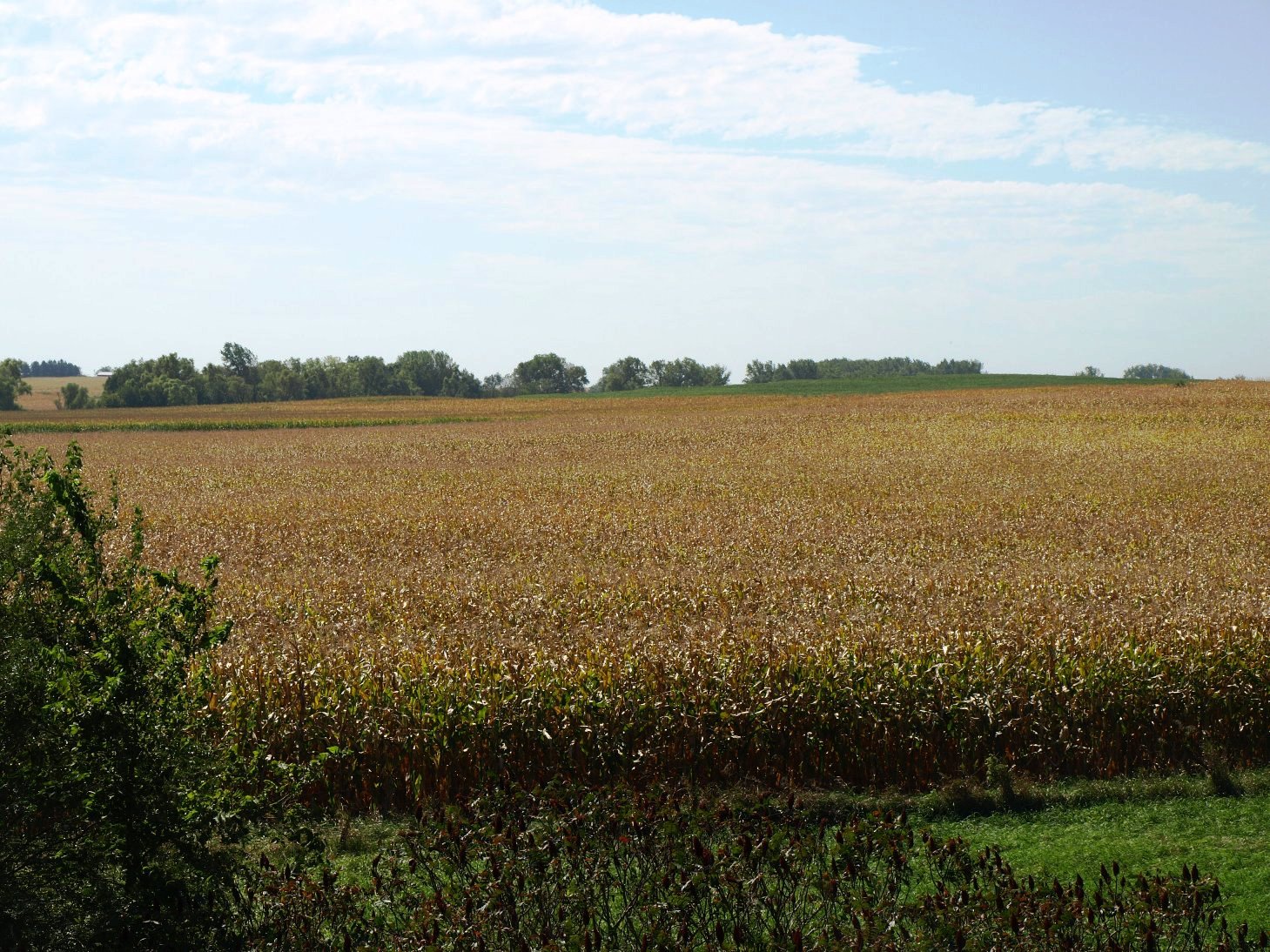
Yep. That would be corn.


Halfway mark.
Time to turn around and head back home.


Game day. Go Huskers!


In one month, I've logged 240 miles in less than 16.5 hours.
I hope to ride until the snow falls.

September 26, 2010

The Girl Who Played With Fire


The Girl Who Played with Fire by Stieg Larsson
Mystery/Thriller
2009 Random House Audio, Unabridged Edition
18 1/2 hours/ 15 compact discs
Read by Simon Vance
Finished on 9/13/10
Rating: 4.5/5 (Terrific!)


Product Description

Mikael Blomkvist, crusading journalist and publisher of the magazine Millennium, has decided to run a story that will expose an extensive sex trafficking operation between Eastern Europe and Sweden, implicating well-known and highly placed members of Swedish society, business, and government.

But he has no idea just how explosive the story will be until, on the eve of publication, the two investigating reporters are murdered. And even more shocking for Blomkvist: the fingerprints found on the murder weapon belong to Lisbeth Salander—the troubled, wise-beyond-her-years genius hacker who came to his aid in The Girl with the Dragon Tattoo, and who now becomes the focus and fierce heart of The Girl Who Played with Fire.

As Blomkvist, alone in his belief in Salander’s innocence, plunges into an investigation of the slayings, Salander herself is drawn into a murderous hunt in which she is the prey, and which compels her to revisit her dark past in an effort to settle with it once and for all.

Wow. For those of you who struggled with the opening chapters of The Girl With the Dragon Tattoo, you can rest assured that the second installment in the late Stieg Larsson's trilogy does not disappoint. I enjoyed The Girl With the Dragon Tattoo, but I loved The Girl Who Played with Fire. I felt the latter was less confusing and more evenly paced and I was immediately drawn in to the narrative, eager to discover more about Lisbeth Salander and her dark past. What an interesting character, so complex and so seriously flawed that one might think she exhibits sociopathic traits; yet, I found her completely sympathetic and likeable.


And, unlike the first in this series, I had no trouble with the Swedish names and locations thanks to Simon Vance's superb reading. Listening to an audio book is so helpful when it comes to a book set in a foreign country. The repetition of hearing the pronunciation of city names, as well as those of the characters, makes for a much more enjoyable reading experience. (Although I did need to glance at the book as I got toward the end, since a few of the names are very similar and I was having trouble keeping track of who the good guys were.)


And speaking of the ending, the final chapter had me holding my breath with trepidation and as the last words were read, I was stunned by the silence. My first reaction (after getting over the initial shock of the cliff-hanger) was relief in the knowledge that Larsson had written the third book prior to his death. My second thought was to hope that he didn't leave his readers with a similar cliff-hanger at the end of The Girl Who Kicked the Hornet's Nest.

Final thoughts: The Girl Who Played with Fire is a riveting sequel. I can hardly wait to read the final book in this series.