Showing posts with label Chunkster. Show all posts

August 24, 2025

Favorite Tomes

Several bloggers have been sharing their favorite tomes for TTT (Top Ten Thursday), a weekly meme hosted by Jana from That Artsy Reader Girl. I used to participate in memes back in the early days of blogging, but it's been ages since I've shared any of my favorites. I love a huge book, so I couldn't resist this week's theme ("Books with a High Page Count"). 


Have you read any of these? So far this year, I've read seven books with over 400 pages, and expect there will be more before the arrival of the holidays. 

January 16, 2025

Books Over 400 Pages Read in 2024


What do you consider a big book? Over 400 pages? More than 500? In 2023 I read a dozen books over 400 pages. This past year I read fifteen for a total of 7,138 pages. Nine of these books wound up on my Top Reads and Honorable Mentions lists, so in spite of my hesitation to read a weighty tome, they tend to be my favorites. It should also come as no surprise that there are a few titles here by Stephen King.

Demon Copperhead by Barbara Kingsolver (548 pages)

September by Rosamunde Pilcher (536 pages)

The Bird Hotel by Joyce Maynard (408 pages)

Billy Summers by Stephen King (515 pages)

Holly by Stephen King (449 pages)

Still Life by Sarah Winman (456 pages)

Salt to the Sea by Ruta Sepetys (418 pages)

Since We Fell by Dennis Lehane (418 pages)

Tomorrow and Tomorrow and Tomorrow by Gabrielle Zevin (401 pages)

The Stonecutter by Camilla Lackberg (489 page)

The Story of Edgar Sawtelle by David Wroblewski (566 pages)

Fairy Tale by Stephen King (599 pages)

Say Nothing by Patrick Radden Keefe (441 pages)

The Women by Kristin Hannah (471 pages)

The River We Remember (423 pages)

January 20, 2024

Books Over 400 Pages Read in 2023


Do you avoid big books? I do, but once I get immersed in one, I don't want it to end! Forget your Goodreads goal and sink into a chunky story. Here are mine from 2023. 

⭐⭐⭐⭐⭐ Fellowship Point by Alice Elliott Dark 

⭐⭐⭐⭐ Lonesome Dove by Larry McMurtry (so good on audio!)

⭐⭐⭐⭐⭐ Coming Home by Rosamunde Pilcher

⭐⭐⭐⭐⭐ Count the Ways by Joyce Maynard

⭐⭐⭐⭐💫 Mad Honey by Jodi Picoult and Jennifer Finney Boylan

⭐⭐⭐⭐ Damnation Spring by Ash Davidson

⭐⭐⭐⭐ Wrong Place Wrong Time by Gillian McAllister (excellent on audio)

⭐⭐⭐⭐ Hello Beautiful by Ann Napolitano

⭐⭐⭐💫 The Lincoln Highway by Amor Towles (not as good as A Gentleman in Moscow)

⭐⭐⭐⭐ The Various Haunts of Men by Susan Hill

⭐⭐⭐💫 Cutting for Stone by Abraham Verghese (re-read for book club; better the first time around)

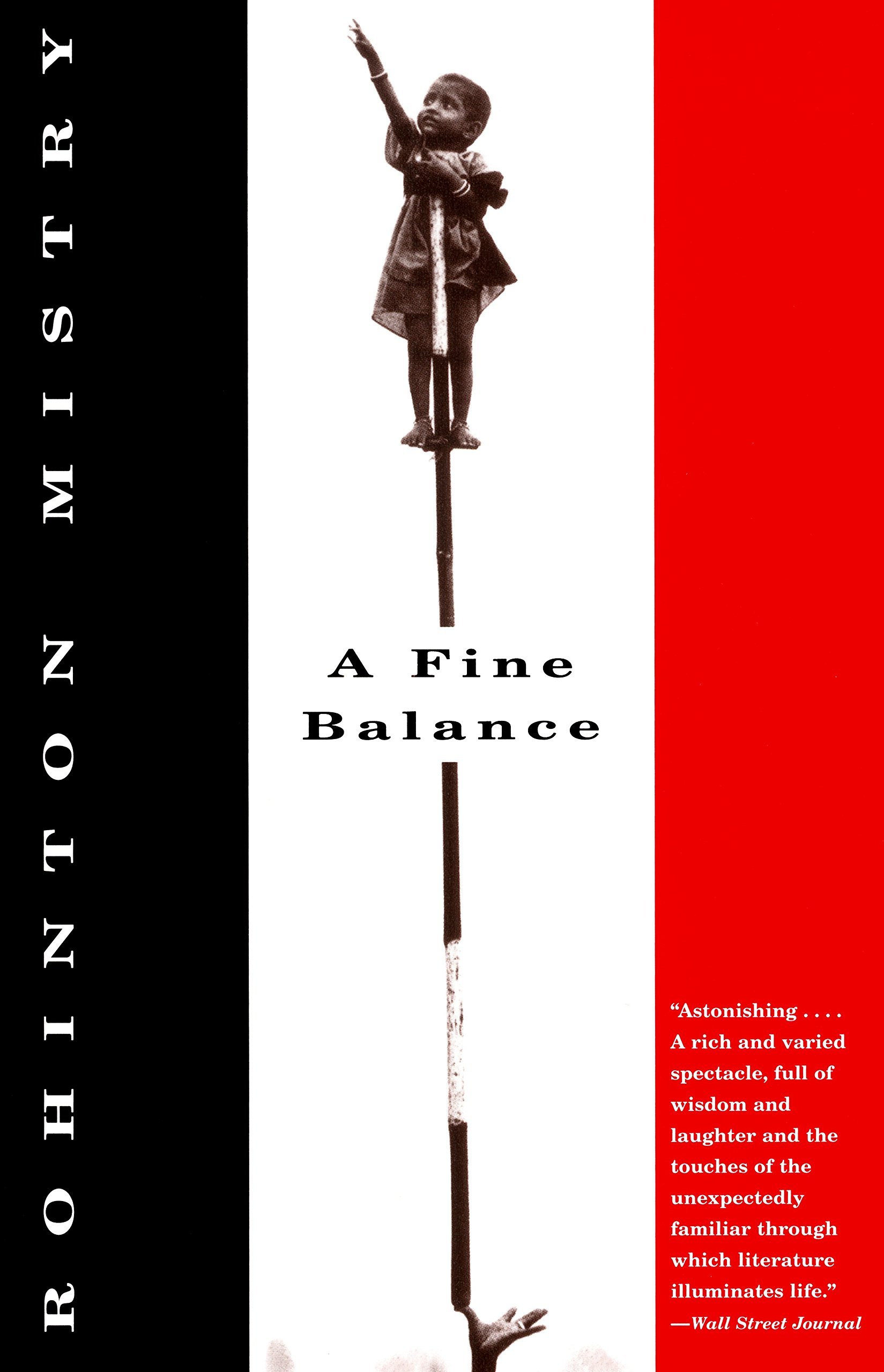
⭐⭐⭐⭐ A Fine Balance by Rohinton Mistry (another re-read for book club)

October 22, 2023

Fellowship Point


Fellowship Point by Alice Elliott Dark
Fiction
2022 Marysue Rucci Books
Finished on October 10, 2023
Rating: 5/5 (Excellent)

Publisher's Blurb:

Celebrated children’s book author Agnes Lee is determined to secure her legacy—to complete what she knows will be the final volume of her pseudonymously written Franklin Square novels; and even more consuming, to permanently protect the peninsula of majestic coast in Maine known as Fellowship Point. To donate the land to a trust, Agnes must convince shareholders to dissolve a generations-old partnership. And one of those shareholders is her best friend, Polly.

Polly Wister has led a different kind of life than Agnes: that of a well-off married woman with children, defined by her devotion to her husband, a philosophy professor with an inflated sense of stature. She strives to create beauty and harmony in her home, in her friendships, and in her family. Polly soon finds her loyalties torn between the wishes of her best friend and the wishes of her three sons—but what is it that Polly wants herself?

Agnes’s designs are further muddied when an enterprising young book editor named Maud Silver sets out to convince Agnes to write her memoirs. Agnes’s resistance cannot prevent long-buried memories and secrets from coming to light with far-reaching repercussions for all.

It's been a couple of weeks since I finished reading this marvelous novel, and while it took me over three weeks to read, I'm still thinking about Agnes, Polly, and Maud, wishing I could return to Fellowship Point and their stories. Fellowship Point is a literary work with a strong sense of place and unforgettable characters. It took me several chapters before I was fully immersed in the story (and I didn't care for a few of the men), but I loved the friendship (80 years long!) between Agnes & Polly. Friends and neighbors their entire lives, this is an epic friendship, though not without its faults...

I guessed one of the plot twists, but not most significant one, which was a lovely surprise and almost had me shouting, "No way!" Alice Elliott Dark is a new-to-me author, and I plan to jump into her backlist as soon as possible with hopes for a new novel in the coming years.  

Some random passages that spoke to me:
Rarely did she have to compromise for anyone, a privilege she did not take for granted and refused to squander. She was eighty, but she had not slowed down. Just the opposite. Her remaining work was urgent, and she was well aware of working alongside the specter of the unknown moment of her last breath.

and

The world through the looking glass, the parallel universe where life is as it should be, so close to us yet impenetrable except when we accept the graces and the love offered to us. What I have learned is the grace and love are offered all the time, in every new moment, at every glimpse of the sky, or dawn of a day that has never before existed, or squirrel skittering along a branch, or a conversation with a sister or a friend, or the sense of time suspended when reading a good book. We are free, always, to accept what is offered; it is we who don't recognize this. This is our free will. The result is what we call our experience, which in turn forms our beliefs. There are a lot of bad ideas in the world. I have less and less patience with any ideas at all. Animals, flowers, the sea. Friends. Children. Art. The end.

Is it too soon for a second reading? Perhaps on audio? Fellowship Point may just be my favorite book of 2023.


I have to include this photo from my neighborhood. It reminds me so much of the cover art for Fellowship Point!

January 24, 2023

A Fine Balance


Fiction
1995 Vintage Books
Finished on January 16, 2023
Rating: 4/5 (Very Good)
Original Rating: 5/5 (Excellent)

Publisher's Blurb:

With a compassionate realism and narrative sweep that recall the work of Charles Dickens, this magnificent novel captures all the cruelty and corruption, dignity and heroism, of India.

The time is 1975. The place is an unnamed city by the sea. The government has just declared a State of Emergency, in whose upheavals four strangers--a spirited widow, a young student uprooted from his idyllic hill station, and two tailors who have fled the caste violence of their native village--will be thrust together, forced to share one cramped apartment and an uncertain future.

As the characters move from distrust to friendship and from friendship to love, A Fine Balance creates an enduring panorama of the human spirit in an inhuman state.

Twenty-five years ago, I read A Fine Balance with an online book group. I remember falling in love with the story and characters, losing myself for hours in Mistry's evocative narrative. I gave the book a 5-star rating and went on to make it one of my favorite recommendations while working at Barnes & Noble. When we moved to Oregon, one of the members in my book group mentioned how much she enjoyed the book, and I encouraged her to nominate it for one of our selections last year. I wasn't able to attend the discussion, but I started reading the novel in September, only to set it aside for a few months. I picked it up again in December and couldn't put it down. Dina, Ishvar, Omprakash (Om, for short), and Maneck, who are so well-drawn and memorable, each worked their way into my heart, warts and all.

After all these years, I'd forgotten so much about the plot and was stunned by the turn of events as the conclusion drew near. I love a big book that pulls me in, invading my thoughts when I'm not reading, but unlike my recent read (Coming Home by Rosamunde Pilcher), this chunkster did not leave me feeling happy and hopeful. A Fine Balance is a heartbreaking story of four individuals who grow to care for one another, creating a non-traditional family within the confines of their small abode, struggling to survive during India's State of Emergency in the 70s. I didn't love this literary novel quite as much as the first time I read it, but it's an enlightening work, worthy of all the accolades and awards.

Highly recommend.

January 14, 2023

BIG Books

“Many people have lost the ability to really immerse themselves,” she said. “We have developed a cognitive impatience about our reading.” (Dr. Maryanne Wolf, New York Times)


2023 is the year I will read more from my stack of BIG books (aka "chunksters"). I don't know why I avoid them; so many of my favorites fall into this category. The books in the photo are all over 500 pages, and while some may take weeks to read, I have a feeling that I'll zip through a few of them. I'm already on a roll, as I'm currently reading Coming Home by Rosamunde Pilcher (936 pages). I'm also rereading A Fine Balance by Rohinton Mistry (603 pages). Both stories are holding my interest and I know that I'll be sorry to say goodbye to the main characters once I finish. Now to decide which one to read next. I'm leaning toward Stones from the River since it's been in my bookcase the longest.

June 29, 2018

Looking Back - A Fine Balance

Looking Back... In an effort to transfer my book journal entries over to this blog, I'm going to attempt to post (in chronological order) an entry every Friday. I may or may not add extra commentary to what I jotted down in these journals.


A Fine Balance by Rohinton Mistry
Fiction
1995 Vintage
Finished in November 1997
Rating: 5/5 (Excellent!)

Publisher's Blurb:

With a compassionate realism and narrative sweep that recall masters from Balzac to Dickens, this magnificent novel captures all the cruelty and corruption, dignity and heroism, of India. The time is 1975. The place is an unnamed city by the sea. The government has just declared a State of Emergency, in whose upheavals four strangers--a spirited widow, a young student uprooted from his idyllic hill station, and two tailors who have fled the caste violence of their native village--will be thrust together, forced to share one cramped apartment and an uncertain future.

As Rohinton Mistry's characters move from distrust to friendship and from friendship to love, A Fine Balance creates an enduring panorama of the human spirit in an inhuman state.

My Original Notes (1997):

Great novel, although pretty long. (603 pages)


Wonderfully descriptive. Harsh realities of life during this time period. I learned a lot about India and the caste system.

I highly recommend this book!

My Current Thoughts:

When I was working at Barnes & Noble, this is one of those books that would often come up in conversation with customers when asked about some of my favorite books. I remember how much I loved losing myself in Mistry's marvelous novel, not wanting it to end, in spite of its length. I can still recall several scenes from the story, but most of the details are long forgotten. I've moved this book from Nebraska to Texas, back to Nebraska and now to Oregon, with hopes of reading it a second time. Will it still have the same magic? With so many unread books on my shelves, not to mention the investment in time to re-read it, it seems doubtful. Maybe I'll get it on Audible.com and give it a listen instead, but I'm not ready to get rid of my copy. Maybe I can suggest it to my book club.

November 22, 2014

The Goldfinch


The Goldfinch by Donna Tartt
Fiction
2013 Hachette Audio
Reader: David Pittu
Finished on October 9, 2014
Rating:3.5/5 (Good)


Publisher’s Blurb:

Composed with the skills of a master, The Goldfinch is a haunted odyssey through present-day America and a drama of enthralling force and acuity.

It begins with a boy. Theo Decker, a thirteen-year-old New Yorker, miraculously survives an accident that kills his mother. Abandoned by his father, Theo is taken in by the family of a wealthy friend. Bewildered by his strange new home on Park Avenue, disturbed by schoolmates who don’t know how to talk to him, and tormented above all by his longing for his mother, he clings to the one thing that reminds him of her: a small, mysteriously captivating painting that ultimately draws Theo into the criminal underworld.

As an adult, Theo moves silkily between the drawing rooms of the rich and the dusty labyrinth of an antiques store where he works. He is alienated and in love—and his talisman, the painting, places him at the center of a narrowing, even more dangerous circle.

The Goldfinch is a novel of striking narrative energy and power. It combines unforgettably vivid characters, mesmerizing language, and breathtaking suspense, while plumbing with a philosopher’s calm the deepest mysteries of love, identity, and art. It is a beautiful, stay-up-all-night-and-tell-all-your-friends triumph, an old-fashioned story of loss and obsession, survival and self-invention, and the ruthless machinations of fate.

I’m not even going to try to discuss the literary merit (or lack thereof) of this novel, as there are numerous articles available on the Internet that debate both sides of this argument. I, however, am not a critic, nor am I a literary scholar. When I select book to read, I either trust an author’s past history with books I’ve previously read or I rely on word-of-mouth, whether from fellow bloggers, co-workers, friends or relatives. I look forward to each new book, hopeful that I will be both entertained and enlightened.

Winner of the Pulitzer Prize, The Goldfinch is THE most talked about novel of 2014. Weighing in at 771 pages, it was not up for debate as to whether I would read the print version or listen to the audio. I do most of my reading in bed, so the weight alone was enough to convince me to listen rather than read. This format is always a nice way to pass the time at work before the store opens, but, honestly, Theo’s internal monologue went on and on and on! The beginning of the novel is very compelling and I couldn’t wait to find an opportunity to listen to another chapter, but unfortunately the pacing is uneven and the book began to feel like a slog (albeit a nonetheless compelling train wreck of a slog) by the midpoint. Tartt is quite a storyteller, though, and I remained curious, anxious to see how it would all play out in the end for Theo. Plus, David Pittu is an excellent reader (with a great Russian accent), so I stuck with it and finished the novel in just under six weeks. It’s a good thing I didn’t choose to read the ebook edition, as I am pretty sure I wouldn’t have had the patience to see it to the very end. With that said, the story and characters are embedded in my memory, as is the case with most of the audiobooks I’ve experienced. Will they remain? That is yet to be seen.

Final Thoughts:

Masterful? Perhaps to some. Immense? Without a doubt. Worthwhile? Debatable. Lyrical? No. (If you’re looking for a lyrical work of literature, once again I highly recommend All the Light We Cannot See by Anthony Doerr.) Regrettable? I’m not sorry I read The Goldfinch (as a bookseller, it’s always good to be knowledgeable about the bestsellers, particularly during the holiday madness season), but I doubt it’s one about which I’ll gush to a tentative customer.

How about you? Have you read this chunkster? Do I dare try The Secret History, which has been languishing on my shelves for years?

May 19, 2014

East of Eden


East of Eden by John Steinbeck
Fiction (Classic)
1952 Penguin Books
Finished on 3/27/14
Rating: 4.5/5 (Terrific!)


Publisher’s Blurb:

In his journal, John Steinbeck called East of Eden “the first book,” and indeed it has the primordial power and simplicity of myth. Set in the rich farmland of California’s Salinas Valley, this sprawling and often brutal novel follows the intertwined destinies of two families—the Trasks and the Hamiltons—whose generations helplessly reenact the fall of Adam and Eve and the poisonous rivalry of Cain and Abel.

Adam Trask came to California from the East to farm and raise his family on the new, rich land. But the birth of his twins, Cal and Aron, brings his wife to the brink of madness, and Adam is left alone to raise his boys to manhood. One boy thrives, nurtured by the love of all those around him; the other grows up in loneliness, enveloped by a mysterious darkness.

First published in 1952, East of Eden is the work in which Steinbeck created his most mesmerizing characters and explored his most enduring themes: the mystery of identity, the inexplicability of love, and the murderous consequences of love’s absence. A masterpiece of Steinbeck’s later years, East of Eden is a powerful and vastly ambitious novel that is at once a family saga and a modern retelling of the Book of Genesis.


The Salinas Valley is in Northern California. It is a long narrow swale between two ranges of mountains, and the Salinas River winds and twists up the center until it falls at last into Monterey Bay.

I remember my childhood names for grasses and secret flowers. I remember where a toad may live and what time the birds awaken in the summer—and what trees and seasons smelled like—how people looked and walked and smelled even. The memory of odors is very rich.

I remember that the Gabilan Mountains to the east of the valley were light gay mountains full of sun and loveliness and a kind of invitation, so that you wanted to climb into their warm foothills almost as you wanted to climb into the lap of a beloved mother. They were beckoning mountains with a bright grass love. The Santa Lucias stood up against the sky to the west and kept the valley from the open sea, and they were dark and brooding—unfriendly and dangerous. I always found in myself a dread of west and a love of est. Where I ever got such an idea I cannot say, unless it could be that the morning came over the peaks of the Gabilans and the night drifted back from the ridges of the Santa Lucias. It may be that the birth and death of the day had some part in my feeling about the two ranges of mountains.

And so begins John Steinbeck’s masterpiece, East of Eden.

Several years ago, I posted a list of my favorite classics, followed by another list showing those that failed to impress me. Prior to reacquainting myself with all of these titles, I would have said that I’m not a big fan of the classics. I typically read only one or two a year (if that), just to satisfy a mild curiosity about one I may have missed in high school or college. But, apparently, these two lists indicate that I have found several classic novels quite enjoyable, if not memorable. There are even a couple that I’ve read more than once and a few that I’d like to re-read someday. The Grapes of Wrath, which I read in high school (probably 35 years ago!), is one that remains a favorite. I’ve read other novels by Steinbeck, but that particular saga is one I always remember with great fondness.

In addition to ignoring the classics, I also tend to shy away from large books, too impatient to get to all the others I’ve got stacked up around me. But when Trish mentioned that she was going to spend the month of March reading East of Eden, I decided it was time to dust off my lovely Steinbeck Centennial Edition of East of Eden and join her. I am so glad I finally took the time to read this book, as it is such a readable classic. Honestly, I couldn’t put it down! It’s quite long (601 pages, to be exact) and nearly every single page filled with text and very little white space. And yet the pages flew! It still took me almost the entire month to read, but I never once felt bored or grew tired of Steinbeck’s writing, in spite of his occasional diatribes, which he is prone to incorporate throughout his novels. Had I read this in college, I probably would have had to analyze these diatribes, as well as the biblical imagery, themes such as good versus evil, characterization and plot. One of the benefits of reading a classic later in life is that, if I choose to, I can simply enjoy the story. And I did! I liked the characters I was supposed to like and despised those who were evil (Lee and Cathy, respectively). And, having grown up in California, I thoroughly enjoyed reading Steinbeck’s descriptions of the landscape and vegetation.

On California's flora:
On the wide level acres of the valley the topsoil lay deep and fertile. It required only a rich winter of rain to make it break forth in grass and flowers. The spring flowers in a wet year were unbelievable. The whole valley floor, and the foothills too, would be carpeted with lupins and poppies. Once a woman told me that colored flowers would seem more bright if you added a few white flowers to give the colors definition. Every petal of blue lupin is edged with white, so that a field of lupins is more blue than you can imagine. And mixed with these were splashes of California poppies. These too are a burning color—not orange, not gold, but if pure gold were liquid and could raise a cream, that golden cream might be like the color of the poppies. When their season was over the yellow mustard came up and grew to a great height. When my grandfather came into the valley the mustard was so tall that a man on horseback showed only his head above the yellow flowers. On the uplands the grass would be strewn with buttercups, with hen-and-chickens, with black-centered yellow violets. And a little later in the season there would be red and yellow stands of Indian paintbrush. These were the flowers of the open places exposed to the sun.

Under the live oaks, shaded and dusky, the maidenhair flourished and gave a good smell, and under the mossy banks of the water courses whole clumps of five fingered ferns and goldy-backs hung down. Then there were harebells, tiny lanterns, cream white and almost sinful looking, and these were so rare and magical that a child, finding one, felt singled out and special all day long.

Final Thoughts:

I’m glad I finally made time for this wonderful, albeit ambitious, novel. Unfortunately, I can’t say the same for the film (the 1955 original), starring James Dean, Raymond Massey and Julie Harris. I finally turned it off after close to an hour; it was so disappointing and not at all what I envisioned. I wonder if I’d enjoy the mini-series (starring Jane Seymour) any better? Nonetheless, reading East of Eden has inspired me to make time to re-read The Grapes of Wrath, as well Travels with Charley, which is another favorite. Thanks for the nudge, Trish!

August 9, 2013

Under the Dome


Under the Dome by Stephen King
Fiction
2009 Scribner eBook
Finished on 7/9/13
Rating: 3.5/5 (Good)


Synopsis:

On an entirely normal, beautiful fall day in Chester’s Mill, Maine, the town is inexplicably and suddenly sealed off from the rest of the world by an invisible force field. Planes crash into it and fall from the sky in flaming wreckage, a gardener’s hand is severed as “the dome” comes down on it, people running errands in the neighboring town are divided from their families, and cars explode on impact. No one can fathom what this barrier is, where it came from, and when—or if—it will go away.

Dale Barbara, Iraq vet and now a short-order cook, finds himself teamed with a few intrepid citizens—town newspaper owner Julia Shumway, a physician’s assistant at the hospital, a selectwoman, and three brave kids. Against them stands Big Jim Rennie, a politician who will stop at nothing—even murder—to hold the reins of power, and his son, who is keeping a horrible secret in a dark pantry. But their main adversary is the Dome itself. Because time isn’t just short. It’s running out.

I’ve read quite a few books by Stephen King, but I’m not a diehard fan who anxiously awaits his new releases. I’ve never read the Dark Tower series, and I’ve let a lot of his early works go unread. However, I’ve enjoyed quite a few from his extensive backlist (a list of my favorites can be found here), but it’s been six years since I visited King’s scary world. And, as I re-read my review for Dreamcatcher, I noticed that it had been many, many years since I’d read anything by King. I suspect the length of his more recent works has something to do with this. When Under the Dome was released, I gave it a cursory glance, but was put off by the sheer enormity of the novel. But I’ve recently read a few chunksters (The Passage and The Twelve), so when a few blogmates suggested a read-along, I decided it was time to give it a try. I chose to read the book on my husband’s Simple Touch, which turned out to be a blessing and a curse. I doubt I would have hauled that tome (1088 pages in the paperback edition) around with me on vacation, but I was frustrated with King’s large cast of characters and trying to sort out their relationships was more difficult with the eBook. I’m used to being able to flip back and forth in a book and it took me longer than normal to get a sense of who was important and who was a throw-away character. I also kept glancing down at the page number (a total of 1349 in the eBook), feeling anxious that it was going to take me forever to finish the book. Well, it wasn’t forever, but it did wind up taking me 6 weeks! The first half was a challenge, but once I hit the halfway mark, I was fully engrossed and couldn’t put it down. With that said, though, I also couldn’t wait to start reading something new!

Overall, I enjoyed the storyline, and was somewhat relieved that it wasn’t a typical horror story. I could read the book at night, walk my dog without getting freaked out by the storm drains, and look through a photo album without worrying about the people coming to life. I also liked the frequent nods to other books (Alas, Babylon; On the Beach; and Lee Child’s Jack Reacher series) and writers in general. Fun stuff! I didn’t spend too much time trying to figure out the cause of the Dome and was a bit let down with the final explanation, but not so much that it ruined the experience of reading such a long book.

Final Thoughts: 

A big thanks to Natalie from Coffee and a Book Chick for hosting the DomeAlong. Also, a huge thank you to Trish and SuziQ for keeping me motivated via Twitter. Without their encouragement, I may have quit long before I got hooked. While I enjoyed reading Under the Dome, I’ve decided to skip the TV series. I’ve heard it’s based very loosely on the novel and I have a feeling I’d wind up disappointed. Maybe after a year or so, when the story isn’t as fresh, I can give it a try.

June 24, 2013

Under the Dome

From Shelf Awareness:


Under the Dome, a 13-part series based on Stephen King's novel (media tie-in edition available from Gallery Books), premieres tonight on CBS at 10 p.m. In a positive review, the New York Times wrote: "You can say goodbye to your next two Monday nights, and possibly--if past for once is not precedent--the whole summer's worth."

From Steven Spielberg's Amblin Television, the series "has a cinematic pedigree that gives it a good shot at transcending superficiality," the Times added, praising screenwriter Brian K. Vaughan (Lost) and a "pretty appealing" cast that includes Mike Vogel, Britt Robertson, Alexander Koch, Rachelle Lefevre (A Gifted Man) and Dean Norris (Breaking Bad).


I'm not a fan of mini-series (and I plan to wait to watch this on dvd), but I decided to join several blogger friends and read Under the Dome this summer. The official start date of the readalong (aka #DomeAlong Readalong) was May 25th. I began on the 26th and I'm not even halfway through the novel. The readalong ends on July 27th, so I think I can manage to meet that goal!

If you're a fan of King's or want to give this book a try, it's certainly not too late to sign up. Natalie, of Coffee and a Book Chick, is our readalong hostess, so stop over and check out all the details!

Nat asks us a few questions...

Show us your copy! Audio or print?

Ebook, although I really wish I had it on audio, as well. 

Have you read Uncle Stevie before?

Oh, yeah! I even posted a list of my favorites (as of 2007), which you can find here.

What are you familiar with about Under the Dome or Stephen King?

I wasn't familiar with anything prior to beginning the book. Since I don't watch TV (we watch a lot of our favorite shows on Netflix), I haven't even seen the trailer.

What are you looking forward to?

At this point, I'm looking forward to that moment when I get sucked in and can't put the book down. I think I'm close, but it hasn't quite happened. Yet. At least I'm to the point where I feel like I've got a handle on the cast of characters.

Thanks, Natalie, for organizing this event! I'm sorry it's taken me so long to write my kick-off post. Let's blame it on my early summer travels, shall we? I also want to thank Trish & SuzieQ for their ongoing encouragement on Twitter. :) Y'all are the best readalong pals!

October 20, 2012

The Thorn Birds


The Thorn Birds by Colleen McCullough
Fiction
1977 Harper Collins
Finished: 10/6/12
Rating: 3.5/5 (Good)


There is a legend about a bird which sings just once in its life, more sweetly than any other creature on the face of the earth. From the moment it leaves the nest it searches for a thorn tree, and does not rest until it has found one. Then, singing among the savage branches, it impales itself upon the longest, sharpest spine. And, dying, it rises above its own agony to outcarol the lark and the nightingale. One superlative song, existence the price. But the whole world stills to listen, and God in his heaven smiles. For the best is only bought at the cost of great pain… Or so says the legend.

Publisher's Blurb:

The magnificent epic, one of the most beloved novels of all time.

Colleen McCullough's sweeping saga of dreams, struggles, dark passions, and forbidden love in the Australian Outback has enthralled readers the world over. This is the chronicle of three generations of Clearys, ranchers carving lives from a beautiful, hard land while contending with the bitterness, frailty, and secrets that penetrate their family. Most of all, it is the story of only daughter Meggie and her lifelong relationship with the haunted priest Father Ralph de Bricassart—and intense joining of two hearts and souls that dangerously oversteps sacred boundaries of ethics and dogma.

A poignant love story, a powerful epic of struggle and sacrifice, a celebration of individuality and spirit, Colleen McCullough's acclaimed masterwork remains a monumental literary achievement—a landmark novel to be cherished and read again and again.


The Thorn Birds was published 35 years ago. If my memory is correct, I read it sometime around 1981, when I was 20 years old. I’ve always considered the novel one of my all-time favorites from my life as a young wife and mother, much like The Shell Seekers by Rosamunde Pilcher, which I read in the late 1980s. So when Bellezza and I agreed on a buddy-read, I was very happy to finally have a reason to give this chunkster a second reading. We decided to read it in September, so I began on August 31st, which was a big mistake. I should’ve started on July 31st, as it took me almost 6 weeks to finish! It’s probably the longest book I’ve read (excluding audio books) this year, coming in at 673 pages in the trade paperback edition.


So, did it stand the test of time? Well, you’d think with all those Post-it flags, I’d say it was fantastic, but unfortunately, this was not the case. I certainly liked it well enough to read the entire book, never once feeling like I wanted to quit, but it didn’t wow me the way it did when I was a young woman. Was it the illicit love affair that intrigued that young wife back in the 80s, much as Fifty Shades of Grey is doing for young women in 2012? Was I simply young and naïve, never having read anything as scandalous as this? I’m not sure, but it certainly didn’t bowl me over this second time around. If anything, I couldn’t really see what all the fuss was about.

There was so much about this novel that I’d forgotten. It isn’t simply a story about Meggie and Ralph’s love for one another, but about the country and about Meggie’s family and her upbringing. Oh, I shudder to think of attending a Catholic school -- or at least, a Catholic school such as the one described in this book! Thankfully, I was raised Episcopalian!
As they followed the upward rise of the cane above her own hands Meggie’s eyes closed involuntarily, so she did not see the descent. But the pain was like a vast explosion, a scorching, searing invasion of her flesh right down to the bone; even as the ache spread tingling up her forearm the next cut came, and by the time it had reached her shoulder the final cut across her fingertips was screaming along the same path, all the way through to her heart. She fastened her teeth in her lower lip and bit down on it, too ashamed and too proud to cry, too angry and indignant at the injustice of it to dare open her eyes and look at Sister Agatha; the lesson was sinking in, even if the crux of it was not what Sister Agatha intended to reach. [Meggie’s punishment for arriving late on her first day of school.]

Life with a stoic mother wasn’t as terrible as the discipline she suffered at school, but I still felt sorry for Meggie:
As for Meggie, she was incapable of equating Teresa’s beaming, portly little mother with her own slender unsmiling mother, so she never thought: I wish Mum hugged and kissed me. What she did think was: I wish Teresa’s mum hugged and kissed me. Though images of hugs and kisses were far less in her mind than images of the willow pattern tea set. So delicate, so thin and wafery, so beautiful! Oh, if only she had a willow pattern tea set, and could give Agnes afternoon tea out of a deep blue-and-white cup in a deep blue-and-white saucer!

And then she and her family had to move to Gillanbone:
In the morning they stared, awed and dismayed, at a landscape so alien they had not dreamed anything like it existed on the same planet as New Zealand. The rolling hills were there certainly, but absolutely nothing else reminiscent of home. It was all brown and grey, even the trees! The winter wheat was already turned a fawnish silver by the glaring sun, miles upon miles of it rippling and bending in the wind, broken only by stands of thin, spindling, blue-leafed trees and dusty clumps of tired grey bushes. Fee’s stoical eyes surveyed the scene without changing expression, but poor Meggie’s were full of tears. It was horrible, fenceless and vast, without a trace of green.

I didn’t recall Mrs. Carson’s (Meggie’s grandmother) attraction to Father de Bricassart, but it was quite apparent upon this second reading:
She accepted the deliberately blatant flattery in the spirit in which it was intended, enjoying his beauty, his attentiveness, his barbed and subtle mind; truly he would make a magnificent cardinal. In all her life she could not remember seeing a better-looking man, nor one who used his beauty in quite the same way. He had to be aware of how he looked: the height and the perfect proportions of his body, the fine aristocratic features, the way every physical element had been put together with a degree of care about the appearance of the finished product God lavished on few of His creations. From the loose black curls of his head and the startling blue of his eyes to the small, slender hands and feet, he was perfect. Yes, he had to be conscious of what he was. And yet there was an aloofness about him, a way he had of making her feel he had never been enslaved by his beauty, nor ever would be. He would use it to get what he wanted without compunction if it would help, but not as though he was enamored of it; rather as if he deemed people beneath contempt for being influenced by it. And she would have given much to know what his past life had made him so.

Curious, how many priests were handsome as Adonis, had the sexual magnetism of Don Juan. Did they espouse celibacy as a refuge from the consequences?

But I do remember Father Ralph’s initial fondness for Meggie:
Just why he was so fond of Meggie Father Ralph didn’t know, nor for that matter did he spend much time wondering about it. It had begun with pity that day in the dusty station yard when he had noticed her lagging behind; set apart from the rest of her family by virtue of her sex, he had shrewdly guessed. As to why Frank [Meggie’s older brother] also moved on an outer perimeter, this did not intrigue him at all, nor did he feel moved to pity Frank. There was something in Frank which killed tender emotions: a dark heart, a spirit lacking inner light. But Meggie? She had moved him unbearably, and he didn’t really know why. There was the color of her hair, which pleased him; the color and form of her eyes, like her mother’s and therefore beautiful, but so much sweeter, more expressive; and her character, which he saw as the perfect female character, passive yet enormously strong. No rebel, Meggie; on the contrary. All her life she would obey, move within the boundaries of her female fate.

Yet none of it added up to the full total. Perhaps, had he looked more deeply into himself, he might have seen that what he felt for her was the curious result of time, and place, and person. No one thought of her as important, which meant there was a space in her life into which he could fit himself and be sure of her love; she was a child, and therefore no danger to his way of life or his priestly reputation; she was beautiful, and he enjoyed beauty; and, least acknowledged of all, she filled an empty space in his life which his God could not, for she had warmth and a human solidity. Because he could not embarrass her family by giving her gifts, he gave her as much of his company as he could, and spent time and thought on redecorating her room at the presbytery; not so much to see her pleasure as to creature a fitting setting for his jewel. No pinchbeck for Meggie.

A few final thoughts for Bellezza…

Wasn’t Luke awful? I hated his selfish, self-centered attitude about life and marriage. I don’t think I would have been as proud as Meggie and would’ve caught the first train back to Drogheda… at least I say that now, as a 50-year-old. I wonder what I would’ve done as a young bride…

And, oh my. I’d completely forgotten about Justine and Dane… and the Second World War. This was quite the saga!


I honestly can’t recall if I ever saw the mini-series, starring Richard Chamberlain, Rachel Ward and Barbara Stanwyck. I’ll add it to my Netflix queue and give it a go. 


November 1, 2011

1Q84 Cover Art

We're supposed to get snow tomorrow. A part of me is dreading this change of seasons, but another part is hopeful that we get snowed in. I'd love to curl up with my current book. This is one I can't put down! Thankfully, I downloaded the chunkster to my iPad.