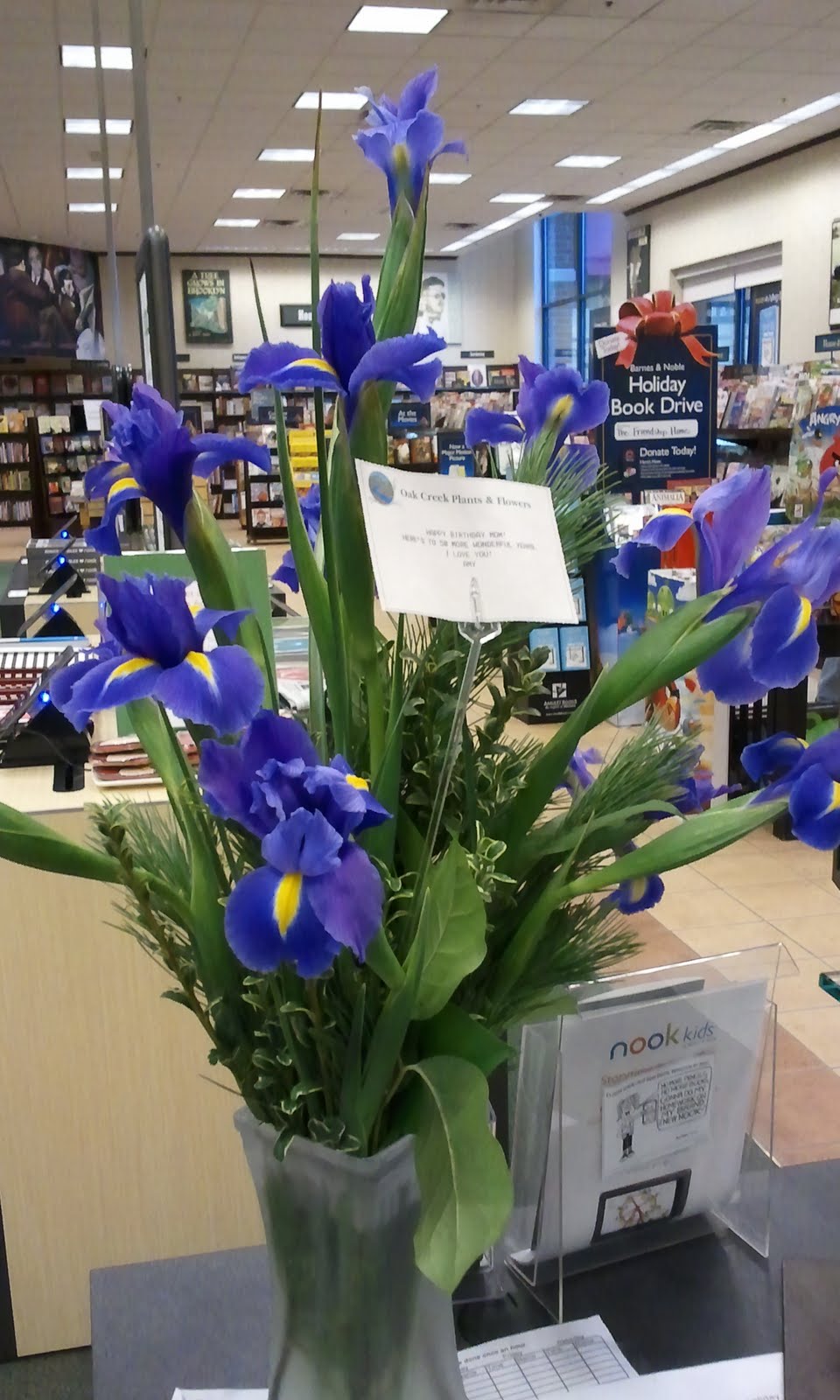
Showing posts with label Daughter. Show all posts

October 15, 2014

We'll Always Have Paris


We’ll Always Have Paris: A Mother/Daughter Memoir by Jennifer Coburn
Nonfiction/Travel Memoir
2014 Sourcebooks, Inc.
Finished on August 13, 2014
Rating: 3/5 (Good)


Publisher’s Blurb:

How her daughter and her passport taught Jennifer to live like there’s no tomorrow.

Jennifer Coburn has always been terrified of dying young. So she decides to save up and drop everything to travel with her daughter, Katie, on a whirlwind European adventure before it’s too late. Even though her husband can’t join them, even though she’s nervous about the journey, and even though she’s perfectly healthy, Jennifer is determined to jam her daughter’s mental photo album with memories—just in case.

From the cafés of Paris to the top of the Leaning Tower of Pisa, Jennifer and Katie take on Europe one city at a time, united by their desire to see the world and spend precious time together. In this heartwarming generational love story, Jennifer reveals how their adventures helped vanquish her fear of dying… for the sake of living.

When my daughter was 10, I took her to London for two weeks while my husband stayed home and slaved over a hot computer (his choice, mind you). I’ll never forget one of my girlfriends remarking on how brave I was to travel overseas by myself with a fairly young child. It never occurred to me to be afraid. And, it wasn’t as if I was going to be completely alone. At the time, one of my best friends was living in London and not only did she and her son join us on several excursions in and around London, but she also supplied me with all the pertinent information I needed in order to travel by bus and train to see Stonehenge, Bath, Salisbury, Windsor and Hampton Court Palace when she wasn’t able to accompany us. We did just fine and it was truly a lovely and memorable holiday.


(Squinting in the hot sun!)

Two years later, after receiving a small inheritance from my grandmother (who adored traveling just as much as I do), I asked Amy to pick another destination for a Mother-Daughter adventure. We had already gone skiing in Breckenridge and spent a long (albeit chilly!) weekend shopping, playing tennis and lounging by the pool at the Hyatt Regency in in Scottsdale, so I was curious to see what she would pick for our next getaway. A fashionista in the making, she chose New York City! And again, a friend exclaimed that I was “so brave!” to travel to the Big Apple without my husband, let alone with my 12-year-old daughter. I wasn’t worried. I have a great sense of direction (as does Amy), our destination didn’t require learning a new language, and we didn’t have to worry about looking the opposite direction while crossing the street. How dangerous could it be? It turned out to be another wonderful vacation filled with 10 days of sightseeing, museums, shopping, Broadway shows, fine dining, long walks (from the Guggenheim Museum down to Battery Park), and pampering in a beautiful hotel. We both had a blast!


So when I came across Coburn’s memoir in the travel section at Barnes & Noble, I was immediately drawn to the colorful cover art (as well as the subtitle), and decided it was not only the perfect choice for the Paris in July reading challenge, but one which would also appeal to my insatiable wanderlust. Amy spent some time in Paris while studying Fashion Merchandising at TCU, but I have never been. Last year, I devoured Paris in Love by Eloisa James and was looking forward to another book filled with travel anecdotes, as well as one that could provide me with specific recommendations for restaurants and hotel accommodations. While not terrible, We’ll Always Have Paris was nowhere near as good as Eloisa James’ memoir and I wound up with far less than half the Post-It Notes marking pages of beautiful passages or travel information for future reference. While both writers delve into their personal histories, sharing their thoughts on death and struggles with grief, James’ writing is tender and lyrical with a fine balance of humor thrown in, while Coburn’s is flat and, at times, whiney. I was surprised, the further I read, that Coburn’s book not only includes her trip to Paris and London in 2005, but also Italy in 2008, Spain in 2011, and Amsterdam and Paris in 2013. This, along with alternating narratives about her parents and her childhood may have been a bit ambitious for one book; the travel segments are glossed over and the transitions between narratives are anything but smooth.

Final Thoughts:

A fairly quick read, but not worth owning. If you must, get it from your local library. Or better yet, get a copy of Paris in Love by Eloisa James. That one’s a winner!

July 25, 2014

{this moment}

~ A Friday ritual ~
A single photo - no words - capturing a moment from the week.
A simple, special, extraordinary moment.
A moment I want to pause, savor and remember.

********** 


December 10, 2012

29 Years Ago...

I fell in love.


Happy Birthday to my lovely daughter.


December 16, 2011

{this moment}


A Friday ritual. A single photo - no words - capturing a moment from the week. A simple, special, extraordinary moment. A moment I want to pause, savor and remember. - Amanda Soule

* * * * * * * *

August 9, 2011

On the Road...Again


Actually, it's more like, "I'm leavin' on a jet plane..." I'm heading east for a very special, albeit quick turn-around trip. I'm flying out to pick up our granddaughter and bring her back to Nebraska for a week-long visit!


We've been looking forward to this visit for a long time. I'm so glad she's used to the heat and humidity, because I have a feeling Mother Nature isn't going to do us any favors. We have a lot of ideas for a fun-filled week, starting with a return trip to Eppley Field to pick up Aunt Amy, who is flying up from Texas to spend a long weekend with us. This will be our third visit with Amy in less than one year!


I have a few posts ready to go, but it may be a week or so before I get a chance to do much blog-hopping. But I'll return as soon as I can, hopefully with more photos!

July 4, 2010

Traveling with Pomegranates


Traveling with Pomegranates: A Mother-Daughter Story by Sue Monk Kidd and Ann Kidd Taylor
Nonfiction - Memoir/Travel
2009 Penguin Audio; Unabridged edition
Finished on 5/28/10
Rating: 2.5/5 (Fair)


We write to taste life twice, in the moment and in retrospection.
~Anaïs Nin


Product Description


An introspective and beautiful dual memoir by the #1 New York Times bestselling novelist and her daughter.

Sue Monk Kidd has touched the hearts of millions of readers with her beloved novels The Secret Life of Bees and The Mermaid Chair, and with her acclaimed nonfiction. Now, in this wise and intimate dual memoir, she and her daughter, Ann, a writer making her affecting debut in these pages, chronicle their travels together, and offer their distinct perspectives as a fifty-something and a twenty-something, each on a quest to redefine herself and to rediscover each other.

Between 1998 and 2000, Sue and Ann travel together to the sacred sites throughout Greece and France. Sue, newly aware of aging, caught in a creative vacuum, and longing to reconnect with her now grown daughter, struggles to find the wherewithal to enlarge a vision of swarming bees into a novel. Ann, just graduated from college, heartbroken and benumbed by the classic question about what to do with her life, grapples with a painful depression. The intimacy of travel and the wondrous nature of the places Sue and Ann visit bring forth each woman's internal struggle and provide fertile terrain for reflection and inspiration. In voices candid and lyrical, this modern-day Demeter and Persephone explore the richly symbolic and personal meaning of an array of inspiring figures and sites in Athens and Eleusis, Paris and Rocamadour, and places in between. They also give voice to a moving transformation of that most protean of human connections: the bond of mothers and daughters.

A wise and engrossing book about feminine thresholds, spiritual growth, and the relationship between mothers and daughters, Traveling with Pomegranates is both a revealing self-portrait by a beloved author and her daughter, a strong new voice, and a momentous story that will resonate with women everywhere.

I spent most of May listening to this book while driving around town in my car. As it turns out, it was the perfect book to listen to rather than read. The allusions to ancient symbols, mythology and the "sacred" began to wear on me, and it was easy to let my mind wander, momentarily tuning out the repetitious references while driving to and from work. Had I read the book, I would have certainly lost interest and given up early on. However, I did find myself wishing that I had the book to occasionally glance at and mark passages for future reference. The three maps (one of the eastern states of the U.S., one of France, and one of Greece & Turkey) would have been helpful to look at before starting each new chapter, and the following Table of Contents would have added to the points of reference:

LOSS
Greece/Turkey/South Carolina
1998 - 1999

SEARCH
France/South Carolina
1999 - 2000

RETURN
Greece
2000

AFTERWARD
September 2008

The authors narrate alternating chapters and my initial reaction to Sue's voice was that of annoyance and displeasure. She enunciates each and every word and syllable so precisely that she sounds unnatural and awkward. Ann, on the other hand, speaks in a relaxed, yet enthusiastic voice, drawing me into her narrative more so than her mother. Kind of ironic since I'm much closer to Sue's age than Ann's. But I did relate to Sue's role as a woman approaching the second half of her life, as well as that of a mother of an adult daughter.

Sitting on a bench in the National Archaeological Museum in Greece, I watch my twenty-two-year-old daughter, Ann, angle her camera before a marble bas-relief of Demeter and Persephone unaware of the small ballet she's performing—her slow, precise steps forward, the tilt of her head, the way she dips to one knee as she turns her torso, leaning into the sharp afternoon light. The scene reminds me of something, a memory maybe, but I can't recall what. I only know she looks beautiful and impossibly grown, and for reasons not clear to me I'm possessed by an acute feeling of loss.

It's the summer of 1998, a few days before my fiftieth birthday. Ann and I have been in Athens a whole twenty-seven hours, a good portion of which I've spent lying awake in a room in the Hotel Grande Bretagne, waiting for blessed daylight. I tell myself the bereft feeling that washed over me means nothing—I'm jet-lagged, that's all. But that doesn't feel particularly convincing.

I close my eyes and even in the tumult of the museum, where there seem to be ten tourists per square inch, I know the feeling is actually everything. It is the undisclosed reason I've come to the other side of the world with my daughter. Because in a way which makes no sense, she seems lost to me now. Because she is grown and a stranger. And I miss her almost violently.

and

Lying on the twin mattress, I stare at the edge of light oozing under the curtain and I think about my relationship with my daughter. Congenial, warm, nice—those are the words that come to me. We've never had one of those pyrotechnic relationships that end up being written about so often and famously in books.

We've had our moments, naturally. The period of mild rebellion when she was fourteen springs to mind, a phase when the door slammed a lot. Beyond that, we had the typical antagonisms and disagreements. I suspect like most mothers and daughters we've participated in the classic struggle: the mother, trying to let her daughter go while unconsciously seeing her as an appendage of herself. And the daughter, enmeshed in her mother's power, compelled to please her and pattern herself in her mother's image, but straining at the same time to craft an identity separate from her.

Mostly, though, our relationship has been full of goodness. I would even say, given the natural constraints of adolescent girls and their mothers, we've been close. And yet I feel my relationship with Ann now exists largely on the surface. There is distance in it that I have trouble characterizing. We talk, for instance, but nothing really heart to heart. It's as if the relationship has fallen into a strange purgatory. For so long our roles were strictly defined as mother and daughter, as adult and child. But now as she leaves college, we both seem to sense some finality to this. She is changing and I am changing, too, but we don't quite know how to shift the conversations between ourselves. How to reforge our connection.

I feel traces of guilt about the growing distance between us. I toss on the bed, remembering that while she was away at school metamorphosing into the young woman I barely know, I was too busy with a book project to notice she was gone. Her leaving was not a problem. At least not in the maternal trench where these things are usually battled out. What's more, I was proud of this. I chirped to my friends: "I don't know what the big deal is about the empty nest. It's kind of wonderful, actually."

and now from Ann's point-of-view:

Catching my eye, she waves and begins to wind her way toward me through the other tourists. I wonder why I can't tell her what I'm going through. When it came to the letter back home [a letter in which Ann's application to study ancient Greek history at the University of South Carolina's graduate program is rejected], still in the drawer with my gym socks (why did I keep it, this evidence against myself?) certainly I didn't think she'd reject me. Perhaps the shame of failing is not my only reason for not talking to her about it. We've been close since childhood, but I feel a kind of partition between us now, not anger or aloofness, but a room divider that properly marks the space: this is your territory, this is mine. I did not confide intensely personal matters to her. Are the particulars of your own darkness something you describe to your mother or your best friend?

But it wasn't just the darkness I secreted, was it? Why did I give her only the postcard version of my first trip to Greece? Ran a race in Olympia, visited Athena's Tholos, saw the Charioteer, sat beside Parthenon, danced in a restaurant with some locals, bought a pretty ring...having a great time—wish you were here. Obviously she knew I'd been affected enough to want to spend my life teaching ancient Greek history, but I'd left her to sense for herself the deeper imprint those experiences made on me. Maybe it was the particulars of my soul—the experiences, feelings, and inner thoughts I held close—that I kept from her.

Final thoughts: Overall, I enjoyed listening to this memoir. In addition to the whole mother-daughter dance and travel stories, I found it interesting to learn about Sue's initial ideas for her novel, The Secret Life of Bees (a book I've read and enjoyed more than once), as well as Ann discovery of her own passion for writing. And yet, this isn't a book I want to own or read again.

Go here to listen to Ann and Sue deliver the commencement address at Scripps College in Claremont, California.

May 9, 2010

Mother's Day

My beautiful daughter
and
my wonderful mom.
(1986)

I love both of you beyond words.

March 27, 2010

Making Toast


Making Toast by Roger Rosenblatt
Memoir
2010 Ecco
Finished on 3/14/10
Rating: 3/5 (Good)
FTC Disclosure: Received ARC from publisher via Shelf Awareness


Publisher's Blurb:

"How long are you staying, Boppo?"

"Forever."

When his daughter, Amy—a gifted doctor, mother, and wife—collapsed and died from an asymptomatic heart condition, Roger Rosenblatt and his wife, Ginny, left their home on the South Shore of Long Island to move in with their son-in-law, Harris, and their three young grandchildren: six-year-old Jessica, four-year-old Sammy, and one-year-old James, known as Bubbies.

Long past the years of diapers, homework, and recitals, Roger and Ginny—Boppo and Mimi to the kids—quickly reaccustomed themselves to the world of small children: bedtime stories, talking toys, playdates, nonstop questions, and nonsequential thought. Though still reeling from Amy's death, they carried on, reconstructing a family, sustaining one another, and guiding three lively, alert, and tenderhearted children through the pains and confusions of grief. As he marveled at the strength of his son-in-law, a surgeon, and the tenacity and skill of his wife, a former kindergarten teacher, Roger attended each day to "the one household duty I have mastered"—preparing the morning toast perfectly to each child's liking.

With the wit, heart, precision, and depth of understanding that has characterized his work, Roger Rosenblatt peels back the layers on this most personal of losses to create both a tribute to his late daughter and a testament to familial love.The day Amy died, Harris told Ginny and Roger, "It's impossible." Roger's story tells how a family makes the possible of the impossible.

Oh, my.

When I first saw Making Toast reviewed on Shelf Awareness's monthly feature (Maximum Shelf), I knew it was a book I had to read. I tend to gravitate toward books, notably memoirs, dealing with grief. This particular book sounded like one I could especially appreciate, as it is very close to my family's particular situation with our own loss. You see, when my stepdaughter was killed almost five years ago, she left behind a young daughter (not even three years old at the time). Our granddaughter is now being raised with love and devotion by her maternal grandmother, who like Rosenblatt and his wife, was well beyond the years of potty training, car seats, nightmares, Hannah Montana, and children's birthday parties. And yet, one does what one needs to do.

I think writing a book about a personal loss must be very difficult. How much do you share with your readers in order to bring them closer to the story? And how do you do that without creating a book so full of despair and sorrow that nobody is able to finish? How much do you reveal without infringing on the privacy of those involved?

Rosenblatt is an accomplished and renowned author and professor, so I was a little surprised at my reaction (or lack of reaction) to this spare, straightforward memoir. Like Joan Didion's The Year of Magical Thinking, Making Toast is a nonlinear narrative, oftentimes circular — much like grief itself. I found the writing disjointed and lacking the emotional impact I had anticipated. Rather than open the back door and invite the reader into the warmth of the kitchen, Rosenblatt allows only a glimpse into the heart of this home—the soul of this family's grief—through a gauzy curtain.

Perhaps I expected more resemblance to my own family's grief. And there were a few, as well as some strange coincidences. For one, our daughter's middle name, Elizabeth, was the same as Rosenblatt's daughter. And our younger daughter's name, like Rosenblatt's, is Amy. Rosenblatt is Jewish; his wife was born Episcopalian. My husband is Jewish. I was raised Episcopalian. And, finally, Rosenblatt's granddaughter is the same age as our granddaughter.


I did find myself nodding in agreement on a few occasions:

On platitudes, clichés and God:

Road rage was a danger those early weeks. I picked fights with store clerks for no reason. I lost my temper with a student who phoned me too frequently about her work. I seethed at those who spoke of Amy's death in the clichés of modern usage, such as "passing" and closure." I cursed God. In a way, believing in God made Amy's death more, not less, comprehensible, since the God I believed in is not beneficent. He doesn't care. A friend was visiting Jerusalem when he got the news about Amy. He kicked the Wailing Wall, and said, "Fuck you, God!" My sentiments exactly.

On therapy:

What keeps me from seeking Catherine's [the children's psychotherapist] help is that unlike other psychological problems, what has happened to Amy, and to all of us, is real. The monster is real. And while there may be strategies that help Ginny and me feel a little better rather than a little worse, we will never feel right again. No analysis or therapy will change that.

On religion:

I wonder if having a religion makes death easier to take, there being an established, possibly protective formalities that attend it. Ginny and I avoided religions ourselves and reared our children without one. She was born Episcopalian. We were married in a Unitarian church in New York. When we first visited the church to see if it would be right for us, they were dedicating a pew to a cat, which sealed the deal. Carl and Wendy, who were born Catholic, have a nonreligious home, as did Amy and Harris. We had something like a wake in the viewing, and when we greeted friends at home, it was akin to sitting shiva. But these events simply fell into place and God was not with us.

On expressing one's sorrow:

But I am not inclined to talk about my feelings with anyone but Ginny, and only rarely with her. Something about the momentum of our lives is good for us, keeps us from sinking. Given the choice between confessions of sorrow, however cathartic, and the simplest act of getting on with it, we'll get on with it.

On the passage of time:

The month of December has passed heavily. I tell her [Catherine, the therapist] I keep saying "Amy" when I mean Jessie or Ginny, and that I often feel removed from friends in social situations. She says that one of the delusions of people in grief is that once a year passes, things will start to look up. She reminds us of what she told Harris at the outset, that grief is a lifelong process for every one of us, not just the children. As for the demarcation of a year, "Things actually get worse. You, Ginny, and Harris are now realizing the hard truth that this is how life will be from now on. One year is no time at all."

And, finally, on a grandmother's day in the life:

And Ginny? After a day that consists of making and packing Jessie's and Sammy's school lunches, checking that Jessie's homework is in her backpack, and getting her ready to be picked up for Spanish lessons at 8 a.m., and making sure that Sammy is wearing his warm jacket and not the sweatshirt he prefers, taking Bubbies to Geneva, then doubling back to Burning Tree to help out in Sammy's class; after picking up Bubbies and giving him lunch and driving back to Burning Tree to take Jessie to a play-date with Danielle; after getting food for dinner and coming home to check on Sammy and Bo who has come for a play-date, and picking up Jessie at the end of the afternoon and playing with Bubs as he rides his trike, and preparing dinner for Bubbies, Sammy, and Jessie; after going down to the playroom to read to Bubbies and coming upstairs again to go over homework spelling words with Jessie, and making Sammy's and Jessie's schedules for the following day, and having a phone conversation with the mother of one of Sammy's friends who would like him to come over next week; after preparing dinner for Harris, me and herself; after playing just one-more-game of Uno with Jessie, and seeing that Jessie and Sammy use the bathroom before going to bed, and reading with Jessie, and laying out her and Sammy's and Bubbie's clothes for the morning... she kisses the children good night.

Did I expect to be moved by this memoir simply because of similar circumstances? Is it fair to criticize a book because one isn't moved to tears? Now that I've finished writing my review, I'm eager to read others, curious to see if other readers have found this book more "enjoyable" (for lack of a better word) than I.

Final thoughts:


I do know that writing about one's loss is especially cathartic. Both my husband (a talented writer by profession) and I have blogs comprised of letters written to Rachel after her death. Rod's letters moved me to tears each and every time, but, of course, I love him and his pain is my pain. I don't know Roger or Ginny, and while their sorrow is surely just as deep as my own, I never felt like I was given a chance to truly see it. But maybe it's not for me to see. Some day, when Jessica, Sammy and James are older, they'll be able to sit down and read Making Toast and see, through their grandfather's words, not only his undying love for his daughter, but the love he feels so deeply for each one of them. Because, of course, this is what I hope our granddaughter will see when she is mature enough to read our love letters to her mommy.

Read what other bloggers are saying about Making Toast:

Making Toast is about patience, love, faith (and the lack of it), grief, and the slow, torturous process of recovery. But perhaps it is mostly about what it means to be a family. Rosenblatt’s simple prose and his matter-of-fact presentation is surprisingly moving in the context of the story. It is a beautiful tribute to a daughter. (Wendy, of Caribousmom)

Written in simple prose, the story is not depressing or sappy. Yes, it is about loss and grieving, but more importantly, when all is said and done, it is about family, and about doing the right thing. It is about rolling up your sleeves and stepping up to the plate, and helping the people who need you the most. It's about rebuilding lives in the aftermath of tragedy, and redefining what family really means. (Diane, of Bibliophile By the Sea)

If you aren't planning to read Making Toast, I urge you to listen to this interview between Roger Rosenblatt and Diane Rehm on NPR. It's marvelous and was exactly what I had been hoping for in the book.

Read an excellent piece about Making Toast here.

See the video trailer for Making Toast here.

December 10, 2008

Happy Birthday, Dear Amy...


Photo courtesy of Aaron Adams

Photo courtesy of Aaron Adams


25 years! Where has the time gone? I wish you the very happiest birthday, Amy. We wish we could be down there in Texas to help you celebrate this milestone birthday.

All our love, always, Mom & Rod