Showing posts with label Southern Authors. Show all posts

February 18, 2021

Stars of Alabama


Fiction
2019 Thomas Nelson Audio
Read by Sean Dietrich
Finished on February 11, 2021
Rating: 3/5 (Good)

Publisher's Blurb:

With a voice both humorous and heartfelt, Sean Dietrich—also known as Sean of the South—weaves together a tale about the dignity of humanity and the value of enduring hope. 

One child preacher traveling across the plains.

One young woman with a mysterious touch.

Two old friends, their baby, and their bloodhound.

And all the stars that shine above them.

When fifteen-year-old Marigold becomes pregnant amid the Great Depression, she is rejected by her family and forced to fend for herself. And when she loses her baby in the forest, her whole world turns upside down. She’s even more distraught upon discovering she has an inexplicable power that makes her both beautiful and terrifying—and something of a local legend.

Meanwhile, migrant workers Vern and Paul discover a violet-eyed baby and take it upon themselves to care for her. The men soon pair up with a widow and her two children, and the misfit family finds its way in fits and starts toward taking care of each other.

As survival brings one family together, a young boy finds himself with nary a friend to his name as the dust storms rage across Kansas. Fourteen-year-old Coot, a child preacher with a prodigy’s memory, is on the run with thousands of stolen dollars—and the only thing he’s sure of is that Mobile, Alabama, is his destination.

As the years pass and a world war looms, these stories intertwine in surprising ways, reminding us that when the dust clears, we can still see the stars.

I wish I could remember where I first heard about Stars of Alabama and why I added it to my queue on Audible.com. I don't have any record of using one of my credits, so it must have been listed in Audible's new Plus catalogue, which allows subscribers to try new authors and genres without using any credits. As I began to listen, I noticed that the opening credits mentioned Thomas Nelson as the publisher. My first reaction was surprise, since I don't read Christian fiction and Thomas Nelson is one of the better-known publishers of that genre. I was somewhat hesitant to continue, but once I heard Sean Dietrich's voice, which is deep and smooth, I decided to give the book a chance. I laughed out loud and felt my heartstrings tugged as I listened to this heartwarming novel. More than a week later, I'm still thinking about Vern, Coot and Marigold and the other characters I came to care about. Fans of Jenny Wingfield, Fannie Flagg and Wiley Cash are sure to enjoy this endearing Southern story.

About the Author:

Prior to reading Stars of Alabama, I had never heard of Sean Dietrich, who is also known as Sean of the South.
Sean Dietrich is a columnist, and novelist, known for his commentary on life in the American South. His work has appeared in Southern Living, The Tallahassee Democrat, Good Grit, South Magazine, Alabama Living, the Birmingham News, Thom Magazine, The Mobile Press Register, and he has authored seven books.

A mediocre sailor and fisherman, a biscuit connoisseur, and a barbecue competition judge when he’s not writing, he spends much of his time aboard his fourteen-foot fishing boat (the SS Squirrel) along with his coonhound, Thelma Lou.

I have since subscribed to his blog and his writing brings to mind that of Rick Bragg's. Dietrich also has a podcast, which I may have to start listening to, as well. Am I the only one who has never heard of this gifted writer?

January 18, 2019

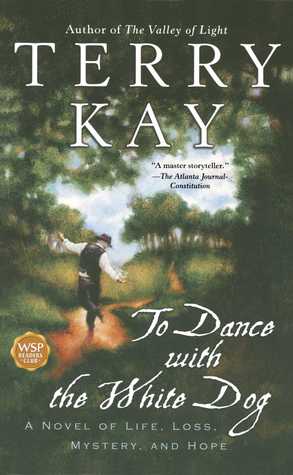
To Dance with the White Dog


To Dance with the White Dog by Terry Kay
Fiction
1990 Washington Square Press
Finished on December 24, 2018
Rating: 4/5 (Very Good)

Publisher's Blurb:

Sam Peek's children are worried. Since that "saddest day" when Cora, his beloved wife of fifty-seven good years, died, no one knows how he will survive. How can this elderly man live alone on his farm? How can he keep driving his dilapidated truck down to the fields to care for his few rows of pecan trees? And when Sam begins telling his children about a dog as white as the pure driven snow -- that seems invisible to everyone but him -- his children think that grief and old age have finally taken their toll.

But whether the dog is real or not, Sam Peek -- "one of the smartest men in the South when it comes to trees" -- outsmarts them all. Sam and the White Dog will dance from the pages of this bittersweet novel and into your heart, as they share the mystery of life, and begin together a warm and moving final rite of passage.

This book has languished on my shelf for many years, but I finally decided to give it a try and was pleasantly surprised, not wanting to put it down, reading late into the night. I can't remember who recommended it to me, but I have a feeling it was someone from my online book group over a decade (or two!) ago. In any event, I enjoyed this quiet, gentle story, which is based on the lives of the author's parents. Not a lot happens, so it should appeal to those who enjoy character-driven novels, particularly those who like tender stories about families and aging parents. Somehow, I didn't mark any passages, but the lyrical prose is proof of Kay's Southern roots. Now to watch the Hallmark production, which is based on the book and stars Jessica Tandy and Hume Cronyn.

July 20, 2018

Looking Back - All Over but the Shoutin'

Looking Back... In an effort to transfer my book journal entries over to this blog, I'm going to attempt to post (in chronological order) an entry every Friday. I may or may not add extra commentary to what I jotted down in these journals.


All Over but the Shoutin' by Rick Bragg
Memoir
1997 Pantheon Books
Finished on December 22, 1997
Rating: 5/5 (Outstanding!)

Publisher's Blurb:

A haunting memoir about growing up dirt-poor in the pines of Alabama--and about moving on but never really being able to leave.

The extraordinary gifts for evocation and insight and the stunning talent for storytelling that earned Rick Bragg a Pulitzer Prize for feature writing in 1996 are here brought to bear on the wrenching story of his own family's life. It is the story of a war-haunted, hard-drinking father and a strong-willed, loving mother who struggled to protect her sons from the effects of poverty and ignorance that had constricted her own life. It is the story of the life Bragg was able to carve out for himself on the strength of his mother's encouragement and belief. And it is the story of his attempts to both atone for and avenge the mistakes and cruelties of his past.

All Over but the Shoutin' is a gripping account of people struggling to make sense and solidity of life's capricious promises. A classic piece of Americana, it is made vividly, movingly particular by Rick Bragg's searching vision, generous humor, and richly nuanced voice.

My Original Notes (1997):

The best book I've read all year. The absolute best!


He made me laugh out loud. Made me almost cry. Made me want to meet him and his mama.

Bragg writes the most beautiful sentences!

My Current Thoughts:

I was born in Canada and raised in California, but after reading anything Rick Bragg writes, I can't help but speak with a southern drawl. Words and phrases such as, Y'all, poooool, Sugar, and bless her heart have suddenly wormed their way into my vocabulary! All joking aside, this man can write. His gorgeous phrasing reminds me of Pat Conroy's lyrical passages in Beach Music. (Oh, those Southern writers.) He makes me laugh and tugs at my heartstrings. I read this book over twenty years ago and it's remained on my shelf of lifetime favorites, waiting to be read again. I think it's time. It is truly fine writing.

Rick Bragg writes like a man on fire. And All Over but the Shoutin' is a work of art. I thought of Melville, I thought of Faulkner. Because I love the English language, I knew I was reading one of the best books I've ever read. By explaining his life to the world, Rick Bragg explained part of my life to me. I fell in love with is mother a hundred times. I wept when the book ended. I never met Rick Bragg in my life, but I called him up and told him he'd written a masterpiece, and I sent flowers to his mother. ~Pat Conroy

Searingly honest, beautifully written, All Over but the Shoutin' is perhaps the most courageous thing Pulitzer Prize-winning journalist Rick Bragg has ever written. Bragg has never failed to record the grace and dignity of people who life their lives in the margins. Here he gives us the story of himself, a child of poor white Southerners, and of his family--an alcoholic, mostly absent father, and an extraordinary mother, quietly heroic in the face of devastating poverty. Bragg looks down the corridors of his past with love, hate, humor, regret, self-doubt, and understanding. In the telling, he may occasionally flinch, but he never turns away. ~Willie Morris

Bragg's tribute, a love story for his mother, honored her for the sacrifices she made as a mother. What a remarkable way to say thank you.

September 26, 2016

A Land More Kind Than Home


A Land More Kind Than Home by Wiley Cash
Fiction
2012 William Morrow
Finished on April 22, 2016
Rating: 4.5/5 (Terrific!)


New York Times Bestseller - New York Times Notable Book of 2012 - Southern Independent Booksellers Alliance's Best Fiction of 2012 - Appalachian Writers' Association's Book of the Year - Crime Writers' Associations' Debut Novel of 2012 - Maine Readers' Choice Award - Thomas Wolfe Memorial Book Prize - Crook's Corner Book Prize for Debut Southern Novel - PEN Robert W. Bingham Award Finalist - Strand Magazine Critics Award Finalist for Debut of 2012 - Indies Choice Finalist for Debut of 2012 - Library Journal Top Ten Book of 2012 - Kirkus Reviews Best of 2012 - Indie Next Pick - SIBA Okra Pick - Barnes and Noble Discover Great New Writers Selection

Publisher's Blurb:

Families are supposed to shield children from the horrors of the world, but one Sunday nine-year-old Jess Hall watches as his autistic brother is called into a little church in the mountains of North Carolina. What happens next forces Jess to question everything he once believed. Clem Barefield, the local sheriff, arrives to find a group of charismatic believers who are unwilling to utter a word about the things Jess has seen. At the center of the mystery is Carson Chambliss, a snake handling ex-convict turned preacher whose past is just as mysterious as the power he claims to possess.

Told by three resonant and evocative characters—Jess; Adelaide Lyle, the town midwife and moral conscience; and Clem Barefield, A Land More Kind than Home is a literary thriller, thick with characters connected by faith, infidelity, addiction, and a sense of hope that is as tragic as it is unforgettable. These are masterful portrayals, written with assurance and truth, and they show us the extraordinary promise of this remarkable first novel.

I started listening to the audio version of this book a few years ago, but couldn't get interested in the story so I decided to call it quits. Earlier this spring while searching through my stacks, I came across the ARC of this novel and decided to give it another try since I fell in love with Cash's masterful storytelling after reading This Dark Road to Mercy. I'm so glad I gave it another chance; this one's a winner!

On Sound:
"Listen," he said again.

I dropped my head and closed my eyes just like I'd seen Joe Bill do, and for a minute I couldn't hear nothing at all except for a few birds fussing in the trees above us and the sound of the breeze coming through the dry grass, and after a minute I couldn't even hear that. But then, real slow, the singing of the crickets raised up out of the woods behind me and their chirping sounded like somebody was scratching a spoon across a clean dinner plate, and past that, across the railroad tracks on the other side of the woods, I could hear the river running slow toward Marshall, and it was so soft that I wondered if I was making it up or remembering the sound of it just because it was supposed to be there. Then I couldn't hear nothing until I turned my ears to listen for what was in front of me out there in the field where the grasshoppers and the katydids hummed in the high grass. That was a noise I'd always heard without even knowing I could hear it, and when I heard it, I could finally hear what Joe Bill was talking about. At first I heard it like a heartbeat, and I felt it in my chest like a heartbeat too, like it was inside my body thumping up against my ribs because it wanted to get out. It made me think about the Madison High marching band at the football games and the marchers with the drums strapped to their chests and the feeling you get inside you when they march out onto the field at halftime with the batons and the horns and the drums and all that noise they make. And now I could hear other noises floating just above the sound of that heartbeat: the electric guitar came out over the field like a crackly old radio that wasn't tuned in good, and the sound of somebody banging away on the piano followed behind it. All of a sudden I knew that what I was hearing was music, and when I opened my eyes I knew it was coming from inside the church. I looked over at Joe Bill.

"It's music." I said.
Final Thoughts:

Reminiscent of The Homecoming of Samuel Lake (Jenny Wingfield) and Ordinary Grace (William Kent Krueger), this is sure to please fans of Southern fiction and lyrical mysteries. Highly recommend!

September 22, 2016

Looking Back - Leaving Cold Sassy


Looking Back... In an effort to transfer my book journal entries over to this blog, I'm going to attempt to post (in chronological order) an entry every Friday. I may or may not add extra commentary to what I jotted down in these journals.


Leaving Cold Sassy by Olive Ann Burns and Katrina Kenison
Fiction
1994 Delta (First published in 1992)
Finished on November 2, 1996
Rating: 2/5 (So-so)

Publisher's Blurb:

Cold Sassy Tree, Olive Ann Burns' unforgettable story of a Georgia town at the turn of the century, has captivated millions of readers with its tale of Grandpa Blakeslee, his young bride Miss Love, and the irrepressible fifteen-year-old Will Tweedy. Throughout her long battle with cancer, Olive Ann Burns worked passionately on a sequel to this magical book. Only during her final days did she realize she wouldn't complete it, dictating from her hospital bed her wishes that the finished chapters be published.

The result is Leaving Cold Sassy - a portrait of the grown-up Will Tweedy; of the feisty young schoolteacher who captures his heart; of the town that has claimed a place in the American imagination; and, in a fascinating reminiscence by her editor, of Olive Ann Burns, a writer who didn't get a chance to finish her extraordinary tale.

Complete with Olive Ann Burns' notes for later scenes and chapters exactly as she wrote them, Leaving Cold Sassy is a final, loving goodbye to Cold Sassy, Georgia.
  
My Original Notes (1996):

So-so. Not nearly as good as Cold Sassy Tree. I'm sure that has a lot to do with the fact the author wrote this as she lay dying of cancer. The working title was Time, Dirt, and Money and was intended to be a sequel to Cold Sassy Tree. Unfortunately, the characters and storyline are very thin/superficial. I was really disappointed. Olive Ann Burns didn't finish the book before her death, but her editor included Olive's notes for the remaining chapters, as well as a reminiscence by the editor. The family photos were a nice touch, too. I didn't realize that the characters were based on Olive Burns' family (particularly her parents).

This sequel wasn't very good, but the biography by the editor was wonderful! Very sad and moving. Feels like I know Olive Ann and her husband Andy, who also died of cancer. I'm glad I kept reading. 


My Current Thoughts:

I wrote about Cold Sassy Tree a couple of weeks ago and I'm a little surprised that I read this sequel so soon after finishing the first book, but back in the late '90s, I didn't have a huge TBR stack (if any at all!), so I probably went straight to the bookstore and bought this book to read right away. As much as I love having a lot of books to choose from here in my house, there's something refreshing about the idea of going out to buy a book as soon as I hear about it and actually reading it right away rather than letting it languish on a shelf for years. Ah, the good old days! :) But I digress. 

I no longer have a copy of Leaving Cold Sassy and if I did, I'm pretty sure it would go in the donation box, as I don't plan to read it a second time. However, I do plan to read Cold Sassy Tree sometime in the near future. 

September 9, 2016

Looking Back - Cold Sassy Tree


Looking Back... In an effort to transfer my book journal entries over to this blog, I'm going to attempt to post (in chronological order) an entry every Friday. I may or may not add extra commentary to what I jotted down in these journals.


Cold Sassy Tree by Olive Ann Burns
Fiction
1984 Delta
Finished in October 1996
Rating: 4/5 (Very Good!)

Publisher's Blurb:

The one thing you can depend on in Cold Sassy, Georgia, is that word gets around - fast. When Grandpa E. Rucker Blakeslee announces one July morning in 1906 that he's aiming to marry the young and freckledy milliner, Miss Love Simpson - a bare three weeks after Granny Blakeslee has gone to her reward - the news is served up all over town with that afternoon's dinner. And young Will Tweedy suddenly finds himself eyewitness to a major scandal. Boggled by the sheer audacity of it all, and not a little jealous of his grandpa's new wife, Will nevertheless approves of this May-December match and follows its progress with just a smidgen of youthful prurience. As the newlyweds' chaperone, conspirator, and confidant, Will is privy to his one-armed, renegade grandfather's second adolescence; meanwhile, he does some growing up of his own. He gets run over by a train and lives to tell about it; he kisses his first girl, and survives that too. Olive Ann Burns has given us a timeless, funny, resplendent novel - about a romance that rocks an entire town, about a boy's passage through the momentous but elusive year when childhood melts into adolescence, and about just how people lived and died in a small Southern town at the turn of the century. Inhabited by characters who are wise and loony, unimpeachably pious and deliciously irreverent, Cold Sassy, Georgia, is the perfect setting for the debut of a storyteller of rare brio, exuberance, and style.

My Original Notes (1996):

Great book! Very entertaining. I felt like I knew the characters and cried when one died. It was heartbreaking. It took me a few chapters to really get involved in the book, but once I did I couldn't put it down. The ending was so emotional that I rushed out to buy the sequel, so I could find out what happened next. The author never finished the second book, though. She died of cancer, but part of the book was published. I'm going to read it next, I think.

"Rich with emotion, humor and tenderness... a novel about an old man growing young, a young man growing up, and the modern age coming to a small southern town." ~ The Washington Post Book World

It was humorous. I laughed out loud quite a few times! 

My Current Thoughts:

I remember how much I enjoyed this book and how disappointed I was when I read the sequel. I still have a copy, so I think I'll hang on to it and read it when I'm in need of a good laugh.

Have you read either of Olive Ann Burn's novels? What did you think? 

About the Author:

Olive Ann Burns was born in Banks County, Georgia, in 1924. Because she made her appearance before her doctor made his, her father delivered her and placed her on a newspaper, so the printed word was literally her first contact with the world. After graduating from the University of North Carolina at Chapel Hill with a degree in journalism, she wrote for The Atlanta Journal Sunday Magazine. In 1976 Burns was diagnosed as having an unexpected illness, and she decided she would write a novel. The idea for Cold Sassy Tree grew from a family history she was working on with her sisters for their children. Burns collected stories of her father's, most of which focused on his grandfather, who owned a store in Commerce, Georgia, the model for Cold Sassy. The highly acclaimed sequel to Cold Sassy Tree, Leaving Cold Sassy, was Burns's final work before her death in 1990.  

April 28, 2016

Looking Back - I Know Why the Caged Bird Sings


Looking Back... In an effort to transfer my book journal entries over to this blog, I'm going to attempt to post (in chronological order) an entry every Friday. I may or may not add extra commentary to what I jotted down in these journals.


I Know Why the Caged Bird Sings by Maya Angelou
Nonfiction - Autobiography
1993 Bantam Books (First published in 1969)
Finished on March 15, 1996
Rating: 4/5 (Very Good)


Publisher's Blurb:

Sent by their mother to live with their devout, self-sufficient grandmother in a small Southern town, Maya and her brother, Bailey, endure the ache of abandonment and the prejudice of the local "powhitetrash." At eight years old and back at her mother’s side in St. Louis, Maya is attacked by a man many times her age—and has to live with the consequences for a lifetime. Years later, in San Francisco, Maya learns that love for herself, the kindness of others, her own strong spirit, and the ideas of great authors ("I met and fell in love with William Shakespeare") will allow her to be free instead of imprisoned.

Poetic and powerful, I Know Why the Caged Bird Sings will touch hearts and change minds for as long as people read.

My Original Notes:

Very, very good! An enlightening autobiography. I'd like to read more of her works now. What a survivor. Glad I tried it again, as I couldn't get into it the first time.

My Current Thoughts:

Well, for a book that I claimed to be very, very good, I sure don't have any recollection of the subject matter. I no longer own it, so it must not have been something I wanted to read a second time.

September 29, 2014

This Dark Road to Mercy


This Dark Road to Mercy by Wiley Cash
Fiction
2014 HarperCollins and Blackstone Audio
Readers: Scott Sowers, Jenna Lamia and Erik Bergmann
Finished on July 22, 2014
Rating: 4.75/5 (Terrific!) 


Publisher’s Blurb:

Hailed as “mesmerizing” (New York Times Book Review) and “as if Cormac McCarthy decided to rewrite Harper Lee’s To Kill a Mockingbird” (Richmond Times-Dispatch) A Land More Kind Than Home made Wiley Cash an instant literary sensation. His resonant new novel, This Dark Road to Mercy, is a tale of love and atonement, blood and vengeance, a story that involves two young sisters, a wayward father, and an enemy determined to see him pay for his sins. --

When their mother dies unexpectedly, twelve-year-old Easter and her six-year-old sister Ruby are shuffled into the foster care system in Gastonia, North Carolina, a town not far from the Appalachian mountains. But just as they settle into their new life, their errant father, Wade, an ex-minor league baseball player whom they haven't seen in years, suddenly reappears and steals them away in the middle of the night.

Brady Weller, the girls' court-appointed guardian, begins looking for Wade, and he quickly turns up unsettling information linking Wade to a multimillion-dollar robbery. But Brady isn't the only one hunting him. Also on the trail is Robert Pruitt, a mercurial man nursing a years-old vendetta, a man determined to find Wade and claim what he believes he is owed.

The combination of Cash’s evocative and intimate Southern voice and those of the alternating narrators, Easter, Brady, and Pruitt, brings this soulful story vividly to life. At once captivating and heartbreaking, This Dark Road to Mercy is a testament to the unbreakable bonds of family and the primal desire to outrun a past that refuses to let go.


This Dark Road to Mercy captured my heart from the opening lines thanks to the outstanding performance by reader Jenna Lamina. Reminiscent of Catherine Tabor’s performance for The Homecoming of Samuel Lake, Lamina’s southern accent is spot-on and captivating. I quickly became engrossed in Easter and Ruby’s story, eager to return to this remarkable audio book at every available opportunity. The narrative takes place during the summer of 1998 and I found myself reminiscing about my own long, hot summer afternoons in Fort Worth, Texas, spent stretched out in front of the television, watching Mark McGwire and Sammy Sosa race toward the home-run record. I do so love a good baseball story and one that is set in the south makes for a perfect novel, don’t you agree?

On baseball:
I could see everything around me now: the whole outfield with Sammy Sosa standing over in right, the upper deck, and the open white circle of the ballpark above us where the bright blue sky almost looked like a lid that was keeping all the heat trapped inside. I could feel everything around me too: the crowd was so loud that you couldn’t even hear the music or the announcers, and when Brian Jordan hit a fly ball to left field and McGwire stepped into the batter’s box with nobody on base it was the loudest thing I’d ever heard. Ruby stuffed her hot dog in her mouth and covered her ears with her hands. But as soon as McGwire set his feet and got into his batting stance the whole stadium went totally silent, and you couldn’t hardly hear a thing.

Maybe it was all the heat, or maybe it was the breeze coming across the field from home plate, but something about it all reminded me of the first time me and Ruby saw the ocean. It felt like years ago, even though it hadn’t quite been a week, but I remembered it now: the way the warm sand felt under my feet, the sound of the tide like the whispering voices I heard all around me now, the sight of the waves moving far out in the ocean like the way people were moving all around the ballpark, trying to get a better look at what might be about to happen.


Final Thoughts:

Part mystery, part coming-of-age (and with a powerful baseball story providing the perfect backdrop),Wiley Cash has written a beautiful story that will steal your heart from the opening lines. Fans of All Over But the Shoutin’ (Rick Bragg), The Homecoming of Samuel Lake (Jenny Wingfield), Calling Me Home (Julie Kibler) and The Help (Kathryn Stockett) are sure to fall in love with Cash’s lyrical prose and I suspect book clubs across the country will make this one of their top picks of 2014. I plan to pick up a copy of This Dark Road to Mercy when the paperback edition hits the shelves later this month. I encourage you to do the same. This is one to own!

About the Author

Wiley Cash is from western North Carolina, a region that figures prominently in his fiction. He holds a BA in literature from the University of North Carolina at Asheville, an MA in English from the University of North Carolina at Greensboro, and a PhD in English from the University of Louisiana at Lafayette. He and his wife currently live in West Virginia, where he teaches fiction writing and American literature at Bethany College.


August 31, 2007

Southern Reading Challenge Update


I finished Maggie's Southern Reading Challenge earlier this week. As you might recall, I compiled a list of 13, but only needed to read three in the three month period. Here's what I wound up choosing (click on the titles to go to my reviews):

gods in Alabama by Joshilyn Jackson (Georgia)

Up Island by Anne Rivers Siddons (Georgia)

The Great Santini by Pat Conroy (South Carolina)

Unfortunately, none of these were terribly impressive, and I'd be hard pressed to pick one over the other.

Thank you, Maggie, for hosting this challenge. I'm going to hang on to my list just in case you decide to do it again next year.

August 26, 2007

The Great Santini


The Great Santini by Pat Conroy
Contemporary Fiction
Finished on 8/20/07
Rating: 2.5/5 (Fair)
TBR Challenge #6
Southern Reading Challenge #3


Book Description

The Astonishing Autobiographical Bestseller By The Author Of Beach Music

Today his family would be called dysfunctional. Bull Meecham -- fighter pilot, warrior, juggler, clown and bully -- a hard-drinking terror of a man who calls himself The Great Santini -- actually hides behind his misnomer. His swaggering mask is all Marine, and entitles him to be the absolute ruler of his family, which he handles with all the tenderness and understanding of a drill sergeant shaping up a class of new recruits.

Bull's wife, Lillian, is a beautiful steel magnolia -- without her cool head and infinite patience, the family would fall apart. Ben, at eighteen the oldest of Bull and Lillian's three children, is a natural athlete whose best never satisfies his father. As Ben struggles to become his own man against the intimidation of his father, he's forced to stand up, even fight back, against a man who refuses to give in.

Bull Meecham is undoubtedly Pat Conroy's most explosive character -- a man you should hate, but a man you'll come to love, in this stingingly authentic production.

I never came to love Bull Meecham, but as the book drew to a close, I began to reconsider my initial opinion of the novel. While reading The Great Santini, I couldn't help but compare it to Beach Music, the only other work of Conroy's I've read. From my journal, dated September 1996, I wrote:

THE BEST! I think this has to be one of the very best books I've ever read. I couldn't put it down and didn't want it to end. I want to read everything Pat Conroy has ever written. He writes the most beautiful sentences I have ever read. I felt like I could see, hear, taste and smell everything he described. The characters became part of me. I laughed. I cried. What a beautiful, lyrical book. I recommend it to everyone!

So why did it take me 11 years to pick up another book by Conroy? Did I have some inkling that Beach Music was the best of lot?

Unfortunately, there's just no comparing The Great Santini to Beach Music. Instead of lyrical prose, I found verbosity. Rather than endearing and memorable characters such as Jack McCall and his mother Lucy, I found nothing but crude vulgarity in Bull. The long, drawn out details of several basketball games grew tiresome, whereas the lush details of Italy and South Carolina drew me in to worlds I've come to long for even after all these years.

When asked to name my favorite books, Beach Music immediately springs to mind with no hesitation. I've wanted to read it again, yet fear it won't live up to that magic one feels when reading a gem for the first time. I had hoped to capture that feeling once again when I picked up The Great Santini. Sadly, I was disappointed. My first inclination was to say this is an awful book. However, looking back I think Conroy is superb storyteller. He created a realistic family and a believable character in Bull, who was a dispicable father, husband and human being, and I cringed at his words as often as his actions. I held my breath, hoping for a better outcome, wrapped up in Ben's world and desire to simply make his father proud.

I've wrestled with my reaction to this novel, wondering why I hesitate to recommend it or give it a higher rating. I think it boils down to the disturbing nature of the story. Sure, I've read upsetting novels that I've loved and gone on to rave about to anyone who'll listen (The Book Thief is the first that comes to mind), but this is a portrait of a family (albeit a dysfunctional family), and we all have families. As children, we desire our parents' love and approval and as parents we teach and guide our children while providing them with love and assurance. I know what family is, whereas the terrors of war are distant and somewhat removed from my daily life. I can read a book such as The Book Thief and appreciate the harrowing tale of the Holocaust, yet still love the story. In reading The Great Santini, I felt nothing but disgust for the chauvanistic bully and bigot portrayed by Bull Meecham. That disgust interfered with my overall appreciation of the narrative, but not so much that I couldn't finish. And there were, afterall, beautiful passages sprinkled here and there.

A favorite passage:

The next day Ben received a phone call from a Coach Murphy who said he heard from some of his players that the Arlington Jaycees had cut one hell of a baseball player and that he would consider it a personal favor if Ben would come play for his team. That was the beginning. And as Ben walked along the edge of the salt river, he realized that he wore the memory of Dave Murphy like a chain and it carried him like a prisoner to the infields of Four Mile Run Park in Arlington, Virginia, where he played for the Old Dominion Kiwanis for two of the best years of his life. In the night games, beneath the arc of lights, in his last year of Little league, Ben's new spikes gleamed like teeth as he walked toward Dave Murphy. For years Ben had walked toward him in dreams and sudden thoughts. If he could, Ben would have told him about the soft places a boy reserves for his first coach, his unruined father who enters the grassless practice fields of boyhood like a priest at the end of life. Coach Murphy was gentle. Yes, that was it. Gentle to the clumsy, girl-voiced boys whom he trained to be average, to be adequate, as he hit the soft fungoes to the outfield green. But Dave Murphy had a gift. Any boy who came to him had moments of feeling like a king. Any boy who played for the Old Dominion Kiwanis. Any boy. Coach Murphy still haunts the old fields where his boys bunted down the line, and with graceless fever took infield in voices that cried out for fathers. Going home after practice, they waved good-bye to their coach as they slid their spikes on the sidewalk, astonished at the fire that sprang from their feet. Then they turned toward home, toward the real fathers who waited for their sons to come homeward disguised as heroes.

Hmmm. Perhaps I would've found more to love had The Great Santini been about baseball (which lends itself to poetic prose, not to mention my love for the game) rather than basketball.

The Great Santini is a work of fiction, but how much is really a retelling of Conroy's own childhood? I'll have to give My Losing Season a read and compare details. I've had an Advanced Reader's Copy in my stacks for close to five years. Now I'm eager to give it a read.

Go
here for more on Pat Conroy, the author, the man and the child.

June 30, 2007

Up Island


Up Island by Anne Rivers Siddons
Contemporary Fiction
Finished on 6/26/07
Rating: 3/5
TBR Challenge #5
Southern Reading Challenge #2


It's been almost six years since I discovered Anne Rivers Siddons and her remarkable saga, Colony. I loved that book and felt as though I'd found another Rosamunde Pilcher in Siddons. I went on to read Islands and Sweetwater Creek, but neither impressed me nearly as much as Colony (Islands earned a 3/5 rating; Sweetwater a 2/5). The House Next Door was quite good, but more of a horror story than Siddons' typical works.

And now I've read Up Island. It wasn't a bad read, but it certainly wasn't another Colony. I enjoyed it for the most part (although toward the end, I found myself getting impatient, wanting to be finished and on to something else). Siddons is quite a descriptive writer, but I wouldn't go so far to say she's a lyrical author (Pat Conroy and Rosamunde Pilcher are two who do excel at painting a vivid picture in my mind's eye).

Only one favorite passage to share (and only because it speaks to the reader in me):

After that I went over to the Black Dog and bought bread and sweet rolls and had a bowl of Quahog chowder for lunch, then treated myself to a couple of sturdy Black Dog sweatshirts. The air, even at noon, had a pinch to it. They would feel good on chilly mornings. Walking back to the Ford I passed the Bunch of Grapes bookstore and, on impulse went in. I had planned to find a library for my reading material; books were one expense I thought I could forego. But I came out laden with both paperbacks and hardbacks, thinking with delight of the moment when I slipped between my silky old sheets and turned on my new reading lamp and opened a new novel. Home: leisurely reading in bed would always be, for me, one of its cornerstones.

I still have several other books by Siddons to read, but this one is off to the used bookstore. If I'm going to re-read any of hers, Colony is at the top of the list.

June 19, 2007

gods in Alabama


gods in Alabama by Joshilyn Jackson
Contemporary Fiction
Finished on 6/10/07
Rating: 3/5
Southern Reading Challenge #1


From the Publisher:

When Arlene Fleet headed off to college in Chicago, she made three promises to God: She would never again lie, never fornicate outside of marriage, and never, ever go back to her tiny hometown of Possett, Alabama (the "fourth rack of Hell"). All God had to do in exchange was to make sure the body of high school quarterback Jim Beverly was never found. Ten years later, Arlene has kept her promises, but an old schoolmate has recently turned up asking questions. And now Arlene’s African American beau has given her a tough ultimatum: introduce him to her family, or he’s gone. As she prepares to confront guilt, discrimination, and a decade of deception, Arlene is about to discover just how far she will go to find redemption--and love.

*************************************

When it became obvious I wasn't going to nap, Burr began a game of What Have I Got in My Pocketses that lasted us all the way to Nashville. This was a game we'd invented, and we played it in the car and sometimes on slow winter afternoons in front of the fireplace at his bachelor pad. We would each make up a long, complicated story. Burr usually finished his first. When he had the plot points down, he would tell me half the story and give me some background on the characters so I knew who was who. The catch was, the stories were always told backwards. So Burr would start at the end and trace events back through time until he got to the middle. Then he would stop telling it and say, "What have I got in my pocketses?"

I had to listen carefully, and he had to tell a story with an ending so inevitable that I would then be able to tell him the first half of his story. Not only able to -- forced to. The end had to come out of one possible beginning.

And this is exactly the manner in which Jackson tells her tale.

I fear I'm beginning to sound like a broken record, but once again I feel this is a case of a book not living up to the hype generated by fellow readers. I enjoyed parts of the story, but my overall reaction was mild disappointment. The narrative was a bit uneven and it took a long time before I started to care about any of the characters. A few readers have indicated that Jackson's second novel, Between, Georgia, is better than this debut work and while I plan to give it a try, I won't rush out and buy a copy any time soon. Having said that, I have to say I did enjoy the handful of humorous comebacks by Arlene's boyfriend. Every time I started to think about quitting the book, I'd find myself laughing out loud at Burr's dry wit, plunging back into the narrative with hopes that it'd improve. What a shame the humor was inconsistent. Overall I give it a big meh.

For those interested, Lisa over at Bluestalking Reader has posted a lovely interview with Joshilyn here.

May 31, 2007

Southern Reading Challenge 2007


I know it's ridiculous to even consider 13 books for one challenge, but I chose these from my stacks with hopes of at least reading half between now and August 30th. How hard can it be? Two a month. Easy peasy, lemon squeezy. :) Thanks Maggie, for hosting this wonderful challenge!

Up Island by Anne Rivers Siddons (Georgia)

Welcome to the World, Baby Girl! by Fannie Flagg (Alabama)

The Great Santini by Pat Conroy (South Carolina)

The Crossing by Cormac McCarthy (New Mexico)

gods in Alabama by Joshilyn Jackson (Georgia)

Saving Grace by Lee Smith (North Carolina)

Slow Way Home by Michael Morris (Alabama)

On the Occasion of My Last Afternoon by Kaye Gibbons (North Carolina)

Farewell, I'm Bound to Leave You by Fred Chappell (North Carolina)

The Ladies Auxiliary by Tova Mirvis (Massachusetts - born in Tennessee)

The Sunday Wife by Cassandra King (South Carolina)

To Dance With the White Dog by Terry Kay (Georgia)

The Promise of Rest by Reynolds Price (North Carolina)