Showing posts with label Aging. Show all posts

December 18, 2025

Olive, Again


Olive, Again by Elizabeth Strout
Fiction
2019
Finished on December 12, 2025 (second reading)
Rating: 4.5/5 (Very Good)

Publisher's Blurb:

Elizabeth Strout brilliantly lays bare the inner lives of ordinary people, none more eloquently than the protagonist of her universally acclaimed Olive Kitteridge. "Funny, wicked and remorseful, Mrs. Kitteridge is a compelling life force, a red-blooded original," declared the San Francisco Chronicle. "When she's not onstage, we look forward to her return."

And now Olive has indeed returned, as indomitable as ever, navigating her next decade and the changes--sometimes welcome, sometimes not--in her own life. Here is Olive, strangely confident in her second marriage, in an evolving relationship with her son and his family, and crossing paths with a cast of memorable characters in the seaside town of Crosby, Maine. Whether with a teenager coming to terms with the loss of her father, a young woman about to give birth at a hilariously inopportune moment, a nurse who confesses a secret high school crush, or a lawyer who struggles with an inheritance she does not want to accept, the irascible Olive improbably touches the lives of everyone around her. 

I won't write too much about this book since I reviewed it three years ago. I can't explain why it wasn't a 5-star read for me the second time around, but I did enjoy it. I even marked passages that I didn't notice during my first reading.
Here is the thing that Cindy, for the rest of her life, would never forget: Olive Kitteridge said, "My God, but I have always loved the light in February." Olive shook her head slowly. "My God," she repeated, with awe in her voice. "Just look at that February light."
and
Loneliness. Oh, the loneliness!

It blistered Olive.

She had not known such a feeling her entire life; this is what she thought as she moved about the house. It may have been the terror finally wearing off and giving way for this gaping bright universe of loneliness that she faced, but it bewildered her to feel this. She realized it was as though she had--all her life--four big wheels beneath her, without even knowing it, of course, and now they were, all four of them, wobbling and about to come off. She did not know who she was, or what would happen to her.
One day she sat in the big chair that Jack used to sit in and she thought she had become pathetic. If there was one thing Olive hated, it was pathetic people. And now she was one of them. 
and
As soon as it got dark she tucked herself into her little single bed and watched television. The news was amazing to her. And this helped her. The country was in terrible disarray, and Olive found this interesting. At times she thought fascism might be knocking on the door of the country, but then she would think, Oh, I'll die soon, who cares. Sometimes she thought of Christopher and all his kids and she felt worried about their future, but then she would think: There's nothing I can do about it, everything is going to hell.

Olive is brash and outspoken, and yet underneath all of her gruffness and lack of filter, she's quite loveable. I  hope she plays a prominent role in another book by Strout.

Rather than link to my earlier review, I'm including it here:

Marvelous! Was it insomnia that led me to finish this book at 1:30 in the morning or the mere fact that I couldn't put it down? After reading the final page, I kept thinking about Olive and the motley cast of characters in this follow-up to Elizabeth Strout's Pulitzer Prize winner, Olive Kitteridge. Truthfully, I had to force myself to turn off the light and not start rereading from the beginning of the book.

In 2014 I read Olive Kitteridge (giving it a second chance after previously quitting on the audiobook) in preparation to watching the four-part HBO mini-series of the same name. I not only fell in love with Strout's writing, but came to care about Olive, warts and all. 

Olive, Again is an outstanding follow-up and does not disappoint. In similar fashion to the original novel, this book is comprised of thirteen vignettes. Olive takes center stage in most chapters, but is only a passing figure in others. I especially enjoyed the presence of characters from other novels by Strout (Isabelle from Amy & Isabelle was an unexpected treat!) and I'm now inspired to go back and reread each of her books. 

Having watched Frances McDormand in the lead role of the mini-series, I had a vivid picture of Olive, laughing out loud at her caustic remarks while feeling a tug of sadness and empathy as her life grew emptier and lonelier. I felt an ache of melancholy as I turned the last page, not ready to leave Olive, with whom I felt a strong connection as she reflected upon her life as a wife and mother in her final years. Thankfully, I have copies of both books for future reading and plan to rewatch the TV drama. 

Olive, Again is a poignant glimpse into aging, while providing levity with hilarious one-liners by the irascible and blunt heroine of Olive Kitteridge. Highly recommend!

November 3, 2025

Evensong


Evensong by Stewart O'Nan
Fiction
2025
Finished on October 27, 2025
Rating: 3/5 (Good)

Publisher's Blurb:

An intimate, moving novel that follows The Humpty Dumpty Club, a group of women of a certain age who band together to help one another and their circle of friends in Pittsburgh as they face the challenges of their golden years

The Humpty Dumpty Club is distraught when their powerhouse leader, Joan Hargrove, takes a bad fall down her stairs, knocking her out of commission. Now, as well as running errands and shepherding those less able to their doctors’ appointments, they have to pick up the slack.

Between navigating their own relationships and aging bodies and attending choir practice, these invisible yet indomitable women help where they can. They bake cookies, they care for pets, they pick up prescriptions, they sit vigil by the sick, and most of all, they show up for the people they’ve pledged to help. In the face of death, divorce, and the myriad directions our lives can take, the Humpty Dumpty club represents the power of community and chosen family.

Weaving together the perspectives of the four cardinal members as they tend to those in need, Stewart O’Nan revisits beloved characters from his past work -- most notably Emily Maxwell -- to fashion a rich and moving novel that celebrates our capacity for patience and care. Vivid, warm, and often wryly funny, Evensong reminds us that life is made up of moments both climactic and quotidian, and we weather those moments with the people we choose to keep close.

I rarely get any ARCs anymore since I no longer work in a bookstore. But every now and then I win a book from Goodreads, so I enter their giveaways whenever I see one for a book I'm eager to read. I was thrilled to win an ARC of Stewart O'Nan's new book, Evensong, setting aside another book that I had just begun in order to read O'Nan's before its publication date. I've read several of his books, some of which I loved, but others that missed the mark. When I saw that Evensong returned to Emily Maxwell's story, I was even more excited to settle in and read what I was certain would be another 5-star book. Sadly, it did not live up to my admittedly high expectations. 

I enjoyed certain aspects of Evensong, especially those told from Emily's point of view, as well as those depicting the characters' love of their pets, but much of the book was slow and dull. Some may find the backstories (or lack thereof) of a few of the characters confusing, so this may be a book that needs to be read after reading O'Nan's Maxwell trilogy (Wish You Were Here, Emily, Alone and Henry, Himself). I have always intended to read these a second time, but I now wonder if they'll be as good as I remember. 

My reviews for the books I've read of O'Nan's:

Emily, Alone (4.75/5)


I received a complimentary copy from Atlantic Monthly Press. All thoughts and opinions are my own.

May 18, 2025

There Was an Old Woman


There Was an Old Woman by Andrea Carlisle
Nonfiction
2023
Finished on May 9, 2025
Rating: 3/5 (Good)

Publisher's Blurb:

Andrea Carlisle isn’t struggling with her new identity as the Old Woman in the ways society seems to think she should. In fact, she is finding her later years to be an extraordinary and interesting time. In trying to understand the discrepancy, she interrogates the sources of negativity in literature, art, and received wisdom that often lead women to dread this transformative time of life. Given the cultural pervasiveness of ill will toward older women, it is small wonder that growing older is not seen as a natural, even desirable, process. Although some elements of aging are hard to reckon with, there is much to make use of and delight in, along with mysteries, surprises, and revelations.

In these personal essays, Carlisle looks for new ways to bring herself more fully to this time of life, such as daily walks with other women and connecting to the natural world that surrounds her houseboat on an Oregon river at the foot of a forest. She writes about experiences shared with many, if not most, older women: wondering at her body’s transformation, discovering new talents, caregiving, facing loss, tuning in to life patterns and drawing strength through understanding them, letting go (or not) of pieces of the past, and facing other changes large and small.

Those curious about, approaching, or living in old age will find wisdom and insight in her unique perspective. In a voice that rings with clarity, humor, and humility, Carlisle shows us that old age is not another country where we can expect to find the Old Woman grimly waiting, but is instead an expansion of the borders in the country we’re most familiar with: ourselves.

At 63, I'm not quite sure I fit the demographic for this book, but nonetheless I read it for my upcoming book group discussion. Carlisle's insights on aging aren't terribly profound, and at times her essays are repetitive, and her lists of examples too lengthy. I have enjoyed many novels about aging women, but for me, this nonfiction work missed its mark. However, she includes a suggested reading list of books with an emphasis on older characters, and I wound up adding several to my TBR list.

Books about aging women that I have read and enjoyed:

Sipsworth by Simon Van Booy (4/5)

Emily, Alone by Stewart O'Nan (4.75/5)

Olive Kitteridge by Elizabeth Strout (4.5/5)

Olive, Again by Elizabeth Strout (5/5)

Winter Solstice by Rosamunde Pilcher (5/5)

Night of Miracles by Elizabeth Berg (5/5)

We Spread by Iain Reid (4.5/5)

The Swimmers by Julie Otsuka (4/5)

The Elegance of the Hedgehog by Muriel Barbery (4.5.5)

Fellowship Point by Alice Elliot Dark (5/5)

Our Souls at Night by Kent Haruf (4.5/5)

Still Life with Breadcrumbs by Anna Quindlen (4/5)


Read, but didn't love:

Lillian Boxfish Takes a Walk by Kathleen Rooney (3.5/5)

As We Are Now by May Sarton (3/5)

Two Old Women by Velma Wallis (3/5)


Books from Andrea Carlisle's suggested reading list in which I'm interested:

The Dark Flood Rises by Margaret Drabble

Smile Please by Jean Rhys (essay "My Day")

The Door by Magda Szabo

The Woman Next Door by Yewande Omotoso

Quartet in Autumn by Barbara Pym

Mrs. Palfrey at the Claremont by Elizabeth Taylor

Jumping the Queue by Mary Wesley

The Enchanted April by Elizabeth von Armin

April 21, 2025

We Spread


We Spread by Iain Reid
Fiction
2022
Finished on April 7, 2025
Rating: 4.5/5 (Very Good)

Publisher's Blurb:

Penny, an artist, has lived in the same apartment for decades, surrounded by the artifacts and keepsakes of her long life. She is resigned to the mundane rituals of old age, until things start to slip. Before her longtime partner passed away years earlier, provisions were made, unbeknownst to her, for a room in a unique long-term care residence, where Penny finds herself after one too many “incidents.”

Initially, surrounded by peers, conversing, eating, sleeping, looking out at the beautiful woods that surround the house, all is well. She even begins to paint again. But as the days start to blur together, Penny—with a growing sense of unrest and distrust—starts to lose her grip on the passage of time and on her place in the world. Is she succumbing to the subtly destructive effects of aging, or is she an unknowing participant in something more unsettling?

At once compassionate and uncanny, told in spare, hypnotic prose, Iain Reid’s genre-defying third novel explores questions of conformity, art, productivity, relationships, and what, ultimately, it means to grow old.

We Spread is not a slim novel, but with fewer than 300 pages, and a spare structure of one to two lines of dialogue, this novel is a very quick read. I finished it in less than a day.

If asked to classify the novel, I'm stumped. Is it fiction? Horror? Science fiction? A thriller or psychological suspense? It could be any or all of these (although horror seems to be a stretch). Told from Penny's point of view, I questioned her reliability. Does she have issues with her memory? Are some of the supporting characters imagined? I finished the book with unanswered questions and would love to discuss the novel with others. 

Iain Reid is a new-to-me author, and his storytelling is marvelous. The propulsive short sentences create a page-turner that I gulped down. We Spread will appeal to those who enjoyed Still Alice and Turn of Mind. Now to read Foe and I'm Thinking About Ending Things.

Highly recommend!

December 23, 2024

The Swimmers


The Swimmers by Julie Otsuka
Fiction
2022
Finished on December 20, 2024
Rating: 4/5 (Very Good)

Publisher's Blurb:

The swimmers are unknown to one another except through their private routines (slow lane, medium lane, fast lane) and the solace each takes in their morning or afternoon laps. But when a crack appears at the bottom of the pool, they are cast out into an unforgiving world without comfort or relief.

One of these swimmers is Alice, who is slowly losing her memory. For Alice, the pool was a final stand against the darkness of her encroaching dementia. Without the fellowship of other swimmers and the routine of her daily laps she is plunged into dislocation and chaos, swept into memories of her childhood and the Japanese American incarceration camp in which she spent the war. Alice’s estranged daughter, reentering her mother’s life too late, witnesses her stark and devastating decline. Written in spellbinding, incantatory prose, The Swimmers is a searing, intimate story of mothers and daughters, and the sorrows of implacable loss: the most commanding and unforgettable work yet from a modern master.

I was quite sure that I'd read one of Julie Otsuka's earlier novels, but if so, it must have been pre-blogging days since I can't find a review here or on Goodreads. I picked up a copy of The Swimmers while on one of our recent road trips and I'm glad I didn't let it sit on my shelves for too long. It's a quick read (under 200 pages) and despite the sad themes of estrangement, dementia, and loss, I was enjoyed the book and was deeply moved. 

The first part of the novel revolves around the group of swimmers and their daily routines, habits, and quirks at the pool. There was a time, many years ago, that I thought I could add lap swimming to my workout routine. I got a colorful Speedo swimsuit and some fancy goggles and began a short-lived venture into swimming at our gym. I'm not sure how many weeks (days?) I lasted, but I do remember that I found it very dull, and it was all I could do to swim for 30 minutes. I was a runner at the time, and I quickly returned to my daily runs outside while listening to my favorite music. I'm not sure my knees appreciate my choice of running over swimming, and now I do neither. But I digress.
Most days, at the pool, we are here to leave our troubles on land behind. Failed painters become elegant breaststrokers. Untenured professors slice, shark-like, through the water, with breathtaking speed. The newly divorced HR Manager grabs a faded red Styrofoam board and kicks with impunity. The downsized adman floats, otter-like, on his back, as he stares up at the clouds on the painted pale blue ceiling, thinking, for the first time all day long, of nothing. Let it go. Worriers stop worrying. Bereaved widows cease to grieve. Out-of-work actors unable to get traction above ground glide effortlessly down the fast lane, in their element, at last. I've arrived! And for a brief interlude we are at home in the world. Bad moods life, tics disappear, memories reawaken, migraines dissolve, and slowly, slowly, the chatter in our minds begins to subside as stroke after stroke, length after length, we swim.
The cadence of Otsuka's prose is snappy and at times, circular or repetitive, and I think I would have enjoyed listening to the audio edition of the book in order to hear the poetic delivery of the story. The middle section lost momentum, and I grew tired of the swimmers' anxious queries about the ongoing discovery of new cracks in the pool surface. However, the final section drew me back in, but oh how my heart ached for Alice, who suffers from frontotemporal dementia.
FTD. Some of the symptoms: gradual changes in personality, inappropriate behavior in public, apathy, weight gain, loss of inhibition, the desire to hoard.
Lisa Genova's brilliant work, Still Alice (reviewed here), put a face on Alzheimer's, and Julie Otsuka has done the same with dementia and the heartbreaking existence in a memory care facility. Otsuka's collective point-of-view, as well as her litany of traits and behaviors of the swimmers (and residents in the "home") requires patience from her readers, but overall, I thought the book was exceptionally good. It might hit too close to home for some, but the inclusion of humor provides some levity to an otherwise devastating narrative. Recommend with reservations.

December 21, 2024

Sipsworth


Sipsworth by Simon Van Booy
Fiction
2024
Finished on December 17, 2024
Rating: 4/5 (Very Good)

Publisher's Blurb:

Over the course of two weeks, in a small English town, a reclusive widow discovers an unexpected reason to live.

Following the loss of her husband and son, Helen Cartwright returns to the village of her childhood after living abroad for six decades. Her only wish is to die quickly and without fuss. She retreats into her home on Westminster Crescent, becoming a creature of routine and habit: "Each day was an impersonation of the one before with only a slight shuffle--as though even for death there is a queue."

Then, one cold winter night, a chance encounter with a mouse sets Helen on a surprising journey.

Sipsworth is a reminder that there can be second chances. No matter what we have planned for ourselves, sometimes life has plans of its own. With profound compassion, Simon Van Booy illuminates not only a deep friendship forged between two lonely creatures, but the reverberations of goodness that ripple out from that unique bond.

We live in a forest on the Oregon Coast. While we love to watch the birds outside our windows, we've recently stopped feeding them since the seed has been attracting rats! We wound up with a rat in our attic a few months ago, and after closing off the spot where we thought it was going in, we decided to put the bird feeders away...at least until next spring. This is all to say that I am not a fan of rodents. Unlike Van Booy's main character, I do not welcome mice (or rats) in this house. I'm happy that Helen found companionship with a furry four-legged creature, but if I wind up living alone in my old age, I'm more likely to get a dog.
Every day was an impersonation of the one before with only a slight shuffle--as though even for death there is a queue.
I've read some of Simon Van Booy's short stories, and while they didn't wow me, I was curious about Sipsworth, as I enjoy books about aging women. The novel is an easy read, and I enjoyed the opening chapters, but as I progressed in my reading, I felt the story was edging toward something overly sappy. I continued reading and with a surprising revelation about Helen, my attention returned. Those who believe in second chances and are looking for a feel-good read will delight in Van Booy's tender novel.

Recommend.

June 30, 2024

Sandwich


Sandwich by Catherine Newman
Fiction
2024
Finished on June 27, 2024
Rating: 5/5 (Excellent)

Publisher's Blurb:

From the beloved author of We All Want Impossible Things, a moving, hilarious story of a family summer vacation full of secrets, lunch, and learning to let go.

For the past two decades, Rocky has looked forward to her family’s yearly escape to Cape Cod. Their humble beach-town rental has been the site of sweet memories, sunny days, great meals, and messes of all kinds: emotional, marital, and—thanks to the cottage’s ancient plumbing—septic too.

This year’s vacation, with Rocky sandwiched between her half-grown kids and fully aging parents, promises to be just as delightful as summers past—except, perhaps, for Rocky’s hormonal bouts of rage and melancholy. (Hello, menopause!) Her body is changing—her life is, too. And then a chain of events sends Rocky into the past, reliving both the tenderness and sorrow of a handful of long-ago summers.

It's one precious week: everything is in balance; everything is in flux. And when Rocky comes face to face with her family’s history and future, she is forced to accept that she can no longer hide her secrets from the people she loves.

I loved this novel! After reading We All Want Impossible Things last year, I couldn't wait for the release of Catherine Newman's new book, which came out earlier this month. I rarely buy newly published books, but I wasn't going to wait for this one to come out in paperback. I knew if I borrowed it from the library, I'd wind up buying a copy for a re-read anyway. My only regret is that it wasn't longer. Like Rocky, the week-long vacation with her family went far too quickly.
"It's only Monday!" I say. I say this every year. This is the part of our vacation where I feel like the week will never end. Like it's just going to stretch out luxuriously this way for the rest of time. It won't last, though. Later I'll cry, "How is it already Friday?" and everyone will nod and sigh because I ask this every year.
Coincidentally, I started reading Sandwich while my brother's family was visiting our coastal home for a full week. "How is it already Friday?" echoed my feelings as our week drew to a close. Newman's setting is vivid, and if I squint my mind's eye, I can almost imagine Rocky's vacation home here on our bluff in Little Whale Cove. Of course, instead of lobster dinners and mini-golf windmills, we have crab cakes and whale watching, but it's really not so different!

Little Whale Cove

Years ago, when I read Nora Ephron's hilarious book, I Feel Bad About My Neck, I had not quite reached the age to which she was referring, but I still enjoyed her essays, knowing my time would come when my wrinkled neck would annoy me. (Spoiler alert: It has!). Conversely, Newman's protagonist is in the middle of menopause, while thankfully, my experience of hot flashes and emotional outbursts ended over a decade ago.
I'm looking in the mirror at my hair. My hair! What on earth? It used to hang down in heavy, glossy waves, and now it sticks out of my head like a marshful of brittle autumn grasses. It is simultaneously coarse and weightless in a way that seems like an actual paradox, as if my scalp is extruding a combination of twine, nothing, and fine-grit sandpaper.
Despite the age difference, I found Rocky's thoughts and experiences relatable and validating. I also found her relationship with her two adult children, specifically with her twenty-something-year-old daughter, enviable, albeit not without its flaws.
And this may be the only reason we were put on this earth. To say to each other, I know how you feel. To say, Same. To say, I understand how hard it is to be a parent, a kid.
Followers of this blog know that my favorite genres are memoir and fiction, specifically those centered around family, marriage, mother-daughter relationships, and aging women. Sandwich checks all the boxes. As with We All Want Impossible Things, I found Newman's latest novel humorous and tender. Reading late in the night, I disturbed my husband's sleep as I laughed aloud on numerous occasions. 

I'm happy to have purchased a copy of the book for my keeper shelf and look forward to reading it again later this summer. Fans of Anna Quindlen, Joyce Maynard, Stewart O'Nan, Abigail Thomas, and Kelly Corrigan are sure to enjoy this gem. Highly recommend!

September 3, 2022

Olive, Again


Fiction
2019 Random House
Finished on August 30, 2022
Rating: 5/5 (Excellent)

Publisher's Blurb:

Elizabeth Strout brilliantly lays bare the inner lives of ordinary people, none more eloquently than the protagonist of her universally acclaimed Olive Kitteridge. "Gunny, wicked and remorseful, Mrs. Kitteridge is a compelling life force, a red-blooded original," declared the San Francisco Chronicle. "When she's not onstage, we look forward to her return."

And now Olive has indeed returned, as indomitable as ever, navigating her next decade and the changes--sometimes welcome, sometimes not--in her own life. Here is Olive, strangely confident in her second marriage, in an evolving relationship with her son and his family, and crossing paths with a cast of memorable characters in the seaside town of Crosby, Maine. Whether with a teenager coming to terms with the loss of her father, a young woman about to give birth at a hilariously inopportune moment, a nurse who confesses a secret high school crush, or a lawyer who struggles with an inheritance she does not want to accept, the irascible Olive improbably touches the lives of everyone around her. 

Marvelous! Was it insomnia that led me to finish this book at 1:30 in the morning or the mere fact that I couldn't put it down? After reading the final page, I kept thinking about Olive and the motley cast of characters in this follow-up to Elizabeth Strout's Pulitzer Prize winner, Olive Kitteridge. Truthfully, I had to force myself to turn off the light and not start rereading from the beginning of the book.

In 2014 I read Olive Kitteridge (giving it a second chance after previously quitting on the audiobook) in preparation to watching the four-part HBO mini-series of the same name. I not only fell in love with Strout's writing, but came to care about Olive, warts and all. 

Olive, Again is an outstanding follow-up and does not disappoint. In similar fashion to the original novel, this book is comprised of thirteen vignettes. Olive takes center stage in most chapters, but is only a passing figure in others. I especially enjoyed the presence of characters from other novels by Strout (Isabelle from Amy & Isabelle was an unexpected treat!) and I'm now inspired to go back and reread each of her books. 

Having watched Frances McDormand in the lead role of the mini-series, I had a vivid picture of Olive, laughing out loud at her caustic remarks while feeling a tug of sadness and empathy as her life grew emptier and lonelier. I felt an ache of melancholy as I turned the last page, not ready to leave Olive, with whom I felt a strong connection as she reflected upon her life as a wife and mother in her final years. Thankfully, I have copies of both books for future reading and plan to rewatch the TV drama. 

Olive, Again is a poignant glimpse into aging, while providing levity with hilarious one-liners by the irascible and blunt heroine of Olive Kitteridge. Highly recommend! 
Olive is a brilliant creation not only because of her eternal cantankerousness but because she’s as brutally candid with herself about her shortcomings as she is with others. Her honesty makes people strangely willing to confide in her, and the raw power of Ms. Strout’s writing comes from these unvarnished exchanges, in which characters reveal themselves in all of their sadness and badness and confusion. . . . The great, terrible mess of living is spilled out across the pages of this moving book. Ms. Strout may not have any answers for it, but she isn’t afraid of it either.The Wall Street Journal

January 12, 2022

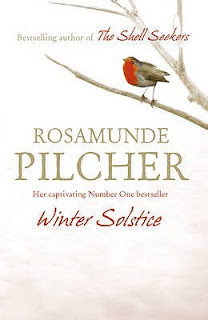
Winter Solstice


Fiction
2000 Thomas Dunne Books
Finished on January 4, 2022
Rating: 5/5 (Excellent)

Publisher's Blurb:

For millions of readers around the world, a new Rosamunde Pilcher novel is a cause for celebration. Her clear-eyed and sharply observed stories have captivated readers for a generation, and with Winter Solstice she proves herself to be at the height of her powers by creating people and places so real, we feel we have known them for years.

The December solstice is a turning point. For some it represents a time of darkness, the shortest day of the year. But for others this events--just a few days before Christmas--is about hope, renewal, and rebirth. In a story both deceptively simple and effortlessly complex, Rosamunde Pilcher brings together five very different people, ranging in age from the teens to the mid-sixties, each of whom must confront very different challenges or losses. 

When Elfrida Phipps abandons London for a quaint country village, she settles in quickly. She has a tiny cottage, her faithful dog, Horace, and the friendship of good neighbors, Oscar, Gloria, and their little girl. Perhaps, at last, she can exorcise the pain of the past and find peace.

But it is not to be.

Tragedy upsets Elfrida's newfound tranquility, and she takes refuge in a rambling house in the north of Scotland called Corrydale. Almost like a magnet, Corrydale attracts various waifs and strays, each of them escaping difficult personal pasts. As the holidays approach and the weather turns foul, the scene seems set as a perfect recipe for disaster.

But somehow the group proves to be greater than the sum of its ill-suited parts, and as the solstice passes and Christmas approaches, the healing power of love, even on the most troubled human spirit, begins to work its magic.

Once again, Rosamunde Pilcher reminds us all that friendship, compassion, loyalty, and love can come together and renew us all--even when the days seem darkest.

Oh, what a wonderful book. When Diane (Bibliophile By the Sea) first mentioned that she was going to listen to the audiobook in December, I considered reading it as well, but I was in the middle of another novel and didn't give Winter Solstice another thought, especially since it's one I'd already read. Well, I finished the aforementioned book on December 21st and took that as a sign to begin Pilcher's novel on the winter solstice. I was a little distracted with our holiday preparations, so it took me a few chapters to finally get interested in the story. However, once I acquainted myself with the cast of characters, I couldn't stop reading. As I mentioned, this is one that I've previously read, but I don't know when that was and I've yet to locate that journal entry. When I do, I will be sure to link back to this review for comparison.

I have read several books by Rosamunde Pilcher, the first of which was The Shell Seekers, which I absolutely adored. I have always intended to read it again, but worried that it might not be as enjoyable as the first time I read it. Having now reread Winter Solstice, I should not let that concern me. I believe Pilcher's novels are marvelous comfort reads, which stand the test of time. I loved this book!

September 24, 2020

When My Time Comes


Nonfiction
2020 Random House Audio
Read by the author and contributing guests
Finished on September 19, 2020
Rating: 4/5 (Very Good)

Publisher's Blurb:

From Diane Rehm, renowned radio host - one of the most trusted voices in the nation - and best-selling author: an audiobook of candor and compassion, addressing the urgent, hotly contested cause of the Right-to-Die movement, of which she is one of our most inspiring champions. 

Soon to be a public television documentary of the same name, featuring the author.

Through interviews with terminally ill patients, and with physicians, ethicists, spouses, relatives, and representatives of those who vigorously oppose the movement, Rehm gives voice to a broad range of people who are personally linked to the realities of medical aid in dying. The audiobook presents the fervent arguments - both for and against - that are propelling the current debates across the nation about whether to adopt laws allowing those who are dying to put an end to their suffering. With characteristic even-handedness, Rehm skillfully shows both sides of the argument, providing the full context for this highly divisive issue.

With a highly personal foreword by John Grisham, When My Time Comes is a response to many misconceptions and misrepresentations of end-of-life care; it is a call to action - and to conscience - and it is an attempt to heal and soothe our hearts, reminding us that death, too, is an integral part of life.

I've been listening to NPR for almost 30 years and it was there that I first heard The Diane Rehm Show and quickly became a fan of this intelligent and charming woman. I've had my eye on a couple of her earlier books (Finding My Voice and On My Own), but it wasn't until I spotted her latest release of When My Time Comes that I decided it was time to finally read one of her books. I downloaded the audiobook and was quickly engrossed in the interviews. Rehm discusses the subject of death with dignity (also known as medical aid in dying) with two dozen individuals, handling the interviews with compassion and empathy, even with those with whom she disagrees. Her emotions are true and her kindness authentic as she speaks with family members who describe the intimate details of their loved ones' final days. She asks personal questions, yet doesn't probe gratuitously. She is one class act.

Five years ago, I read Being Mortal, Atul Gawande's eye-opening book on the elderly, nursing homes and death. His exploration of how we treat our aging parents was a valuable lesson and one that shaped not only my mother's future, but also mine and my husband's. We moved from Lincoln, Nebraska to the Oregon Coast in 2017 after my husband retired. With her blessing, we decided to move in with my mom (who was 84 at the time), thus allowing her to remain in her beautiful home, near her friends and community. Like Gawande's bestseller, Diane Rehm's book has given me a lot to think about with regard to aging and end of life choices. Rehm asks each interviewee what they believe is a good death and I would like to think that my father and stepfather (both of whom died of cancer) died the way they wished, surrounded by family, in their own homes, under the care of Hospice. That is my wish, as well.

As I listened to the book, I kept wanting to highlight specific passages to discuss with my husband, so a print copy is on order. However, I'm glad I listened to the audiobook, which reminded me of Rehm's radio show. I'm anxious to tune in to her podcast, On My Mind, as well as view the documentary based on this new book, which will be available for viewing in January 2021. When My Time Comes and Being Mortal would be great companion reads, leading to deep discussions on how we feel about the final chapters of our lives. Highly recommend!

Note to self: When asked which celebrity or famous person in history I would choose to have at a dinner party, don't forget to include Diane Rehm!

August 14, 2020

Looking Back - Glorie

Looking Back... In an effort to transfer my book journal entries over to this blog, I'm going to attempt to post (in chronological order) an entry every Friday. I may or may not add extra commentary to what I jotted down in these journals.


Fiction
1999 Penguin Books (first published in 1998)
Read in November 1999
Rating: 3/5 (Good)

Publisher's Blurb:

The unlikely heroine of this remarkable first novel is Glorie, an independent-minded octogenarian widow who still talks to her dead husband. Pampered by fifty years of marriage to a man she truly loved, Glorie finds that coping with life alone is a lot easier if you have some company. Despite her daughter's and other friends' well-meaning attempts to console her, Glorie is doing just fine, thank you very much -- except that sometimes things just seem to be slipping out of her grasp. Poignant and wise, funny and real, this portrait of an indomitable, fallible, and fragile woman will pull at your heartstrings as it buoys your spirit. With Glorie, New York Times critic Caryn James has written an unforgettable tale of memory and the persistence of love.

My Original Thoughts (1999):

Quick read. Funny. Cute. Octogenarian widow lives in her home during the day, but spends the night across the street at her daughter's house. She worries about burglars. She carries on conversations with her dead husband. Not great, but it held my interest.

My Current Thoughts:

I wonder how in the world I came across this novel. I'm not familiar with the author and am pretty sure I never noticed the book on the shelves in all the years I worked in a bookstore. Someone must have recommended it to me. I think, in spite of my average rating, I would like to reread this one.

August 21, 2019

Henry, Himself


Henry, Himself by Stewart O'Nan
Fiction
2019 Viking
Finished on August 9, 2019
Rating: 5/5 (Excellent!)

Publisher's Blurb:

A member of the greatest generation looks back on the loves and losses of his past and comes to treasure the present anew in this poignant and thoughtful new novel from a modern master

Stewart O’Nan is renowned for illuminating the unexpected grace of everyday life and the resilience of ordinary people with humor, intelligence, and compassion. In this prequel to the beloved Emily, Alone, he offers an unsentimental, moving life story of a twentieth-century everyman.

Soldier, son, lover, husband, breadwinner, churchgoer, Henry Maxwell has spent his whole life trying to live with honor. A native Pittsburgher and engineer, he’s always believed in logic, sacrifice, and hard work. Now, seventy-five and retired, he feels the world has passed him by. It’s 1998, the American century is ending, and nothing is simple anymore. His children are distant, their unhappiness a mystery. Only his wife Emily and dog Rufus stand by him. Once so confident, as Henry’s strength and memory desert him, he weighs his dreams against his regrets and is left with questions he can’t answer: Is he a good man? Has he done right by the people he loves? And with time running out, what, realistically, can he hope for?

Like Emily, Alone, Henry, Himself is a wry, warmhearted portrait of an American original who believes he’s reached a dead end only to discover life is full of surprises.

Emily, Alone (which I absolutely loved) tells the story of Emily Maxwell after the death of her husband, Henry. Now O'Nan turns back the clock and gives us this remarkable prequel, showing us Henry's point-of-view as a husband and a father. This character-driven novel is comprised of short chapters (or vignettes), which share the details of everyday life ranging from concerns and worries for adult children (and grandchildren) to mundane chores such as tending a lawn, making an ATM bank deposit or outsmarting a mouse. At seventy-five, Henry is well-aware of his mortality, scanning the obituaries and paying close attention to the age of those listed in the columns. With all the struggles and frustrations that come with marriage and parenthood, Henry is patient and understanding while Emily is more brusque and testy. After nearly 50 years of marriage, they no longer need to fill their conversations with inane chatter or lengthy explanations. They know each other so well, they can speak in the briefest of sentences and know what the other is thinking. Well, for the most part. Even the closest relationships have misunderstandings. While their love is long-standing and faithful, O'Nan shares Henry's insecurities and weaknesses, creating one of the most well-drawn and vivid male character I've encountered in a novel.

I loved this deeply affecting book for its honest glimpse into a man's heart and mind. Not since The Arrivals (Meg Mitchell Moore) have I read something so profoundly real with regard to family dynamics.  I can't say that I always know what my own husband is thinking or feeling, but after nearly 31 years of marriage, I can guess what he will say after reading this review. "Sounds like an excruciatingly boring book!" I disagree and I look forward to reading Wish You Were Here (which is the first in this trilogy) before giving Emily, Alone a second reading. Bravo, Mr. O'Nan. This is a gem.

Click here to learn more about the novel.

August 3, 2019

As We Are Now


As We Are Now by May Sarton
Fiction
1973 W.W. Norton & Company
Finished on July 31, 2019
Rating: 3/5 (Good)

Publisher's Blurb:

A novel in the form of a diary, this story tells of Caroline Spencer, a 76-year-old retired schoolteacher who has suffered a heart attack and been deposited by relatives in an old people's home. Subjected to subtle humiliations and petty cruelties, she fights back with all she has, and in a powerful climax wins a terrible victory. "I shared the anger and the righteous indignation which I felt behind every line."--Madeleine L'Engle.

"I am not mad, only old. I make this statement to give me courage. To give you an idea what I mean by courage, suffice it to say that it has taken two weeks for me to obtain this notebook and a pen. I am in a concentration camp for the old, a place where people dump their parents or relatives exactly as though it were an ash can."

And so begins May Sarton's novel, As We Are Now. Once again, I find myself in the minority of a recent read. Three of my blogging friends gave this slim novel (a mere 125 pages) a perfect 5-star rating and while I wasn't familiar with the author, I do enjoy reading books about characters in their later years and was looking forward to this book. I knew from the reviews to be prepared for a bleak, if not depressing story. Those same reviewers said it is a beautiful and honest story, so I decided to give it a read.

The book is very readable and can easily be finished in a single sitting, but I took three days since the content is as heart-breaking as I'd been warned. Carol keeps a written journal in order to keep track of her thoughts and activities before she loses her memory and, or, her sanity.
I call it The Book of the Dead. By the time I finish it I shall be dead. I want to be ready, to have gathered everything together and sorted it out, as if I were preparing for a great final journey. I intend to make myself whole here in this Hell. It is the thing that is set before me to do. So, in a way, this path inward and back into the past is like a map, the map of my world. If I can draw it accurately, I shall know where I am.
 and
I think they want to persuade me that I'm not quite sane. Every now and then Harriet tells me I have done something (broken a glass, burnt a hole in my sheet) or said something ("I won't stay here another minute") that I cannot remember at all. There are also things I have done--or believe I have done--like copying out the letter to Susie, that I may not have done. Losing one's memory is terribly disorienting. The danger is to lose track altogether and begin to be whirled about on time like a leaf in the eddy of a brook--then you begin to wonder what is real and what is not, and where you are, and how long you have been there. And finally it is frightening because I can see that what happens next is a growing distrust of everyone and everything. How can I tell truth from falsehood if I can't remember anything?
and
Old age is really a disguise that no one but the old themselves see through. I feel exactly as I always did, as young inside as when I was twenty-one, but the outward shell conceals the real me--sometimes even from itself--and betrays that person deep down inside, under wrinkles and liver spots and all the horrors of decay. I sometimes think that I feel things more intensely than I used to, not less. But I am so afraid of appearing ridiculous. People expect serenity of the old. That is the stereotype, the mask we are expected to put on.
I thought this was a good novel, and one which would be a great companion read with Being Mortal (Atul Gawande), but I didn't love it as others have. Looking back at a couple of the novels I've read about aging (Emily, Alone; Our Souls at Night; Night of Miracles) I realize that while sad, they were also humorous and hopeful. Sarton's novel is a powerful and thought-provoking, but unbearably bleak and sad. 

About the Author:

May Sarton was born on May 3, 1912, in Wondelgem, Belgium, and grew up in Cambridge, Massachusetts. Her first volume of poetry, Encounters in April, was published in 1937 and her first novel, The Single Hound, in 1938. An accomplished memoirist, Sarton boldly came out as a lesbian in her 1965 book Mrs. Stevens Hears the Mermaids Singing. Her later memoir, Journal of a Solitude, was an account of her experiences as a female artist. Sarton died in York, Maine, on July 16, 1995.

July 31, 2019

Night of Miracles


Night of Miracles by Elizabeth Berg
Fiction
2018 Random House
Finished on July 26, 2019
Rating: 5/5 (Outstanding)

Publisher's Blurb:

A delightful novel about surprising friendships, community, and the way small acts of kindness can change a life, from the bestselling author of The Story of Arthur Truluv.

Lucille Howard is getting on in years, but she stays busy. Thanks to the inspiration of her dearly departed friend Arthur Truluv, she has begun to teach baking classes, sharing the secrets to her delicious classic Southern yellow cake, the perfect pinwheel cookies, and other sweet essentials. Her classes have become so popular that she's hired Iris, a new resident of Mason, Missouri, as an assistant. Iris doesn't know how to bake but she needs to keep her mind off a big decision she sorely regrets.

When a new family moves in next door and tragedy strikes, Lucille begins to look out for Lincoln, their son. Lincoln's parents aren't the only ones in town facing hard choices and uncertain futures. In these difficult times, the residents of Mason come together and find the true power of community--just when they need it the most.

"Elizabeth Berg's characters jump right off the page and into your heart" said Fannie Flagg about The Story of Arthur Truluv. The same could be said about Night of Miracles, a heartwarming novel that reminds us that the people we come to love are often the ones we don't expect.

I own over a dozen books by Elizabeth Berg and have read at least a half dozen others. As I have mentioned time after time on this blog, Berg's earlier novels were much more enjoyable than her more recent works and I had pretty much given up on her. And yet, somewhere along the way, I read several positive reviews for The Story of Arthur Truluv and thought it might be one I'd enjoy. I kept an eye out for the book whenever I visited my local library, but never went to the trouble to request a hold. Last week, I stumbled upon the second in the Arthur Truluv series and decided to give it a try, even though I'm generally a stickler when it comes to reading books in order. I decided it probably wasn't quite as critical since these aren't mysteries, which lend themselves to ever-evolving character development.

After a few disappointments on the reading front this past month, I was so happy to not only get sucked into a novel that wasn't written by Louise Penny, but to fall back in love with Elizabeth Berg's writing. I could have easily finished Night of Miracles in one afternoon, but I lingered over the novel, stretching it out for three nights of blissful reading. As soon as I finished, I wanted to start over from the beginning! I wasn't ready to say goodbye to all of the wonderful characters. I especially like Lucille, who is eighty-eight but feels like she's forty-eight.
Lucille will not give up her baths. No. In the tub, she is what she thinks being stoned must be like: she enjoys a feeling of timelessness and wide content. A float-y, perfumed detachment. After her bath, she'll read her Maeve Binchy book, and then she'll go to sleep.
and
After Lucille eats the cake, she weighs herself in an effort not to have a second slice. It does not work, which she might have predicted, and so she does have a second slice. Well, she finished the cake. Maybe it's two and a half slices. Maybe it's three.
and
It is a spectacularly bright Saturday morning, the kind of day that always makes Lucille feel as though the sun has been through the car wash. It's a welcome thing after so many gray days in a row. She is still in her pajamas, just rinsing out her coffee cup, when she hears a rapping at the door. Who could this be, at such an indecent hour? She looks up at the kitchen clock and sees that it's 10:50. Alright, not such an indecent hour, but still, no call, no warning of any kind.
On Love and Marriage:
"I'll tell you something, Maddy. Half of a good marriage is having someone love you for who you really are. You've got that already. The other half is both of you making a commitment to stay together not only at the altar but smack dab in the middle of every ugly fight. One time when Nola and I were really going at it, I walked over and kissed her hard. And she kissed me back. And then, why, we went right back at it and finished the argument. And I'd guess she won it, she won most of them, fair and square.
"Marriage is like weather, Maddy. You take it day by day. You rejoice in the good days and get through the bad ones, though I don't think you'll have many bad ones because you found an ace of a fellow. But you go ahead and be as nervous as you need to be. A little nervousness never hurt anyone."
Night Miracles is a feel-good story that will have you laughing one minute and wiping a tear from your eye in the next. It's sweet, yet not saccharine. Charming, yet not cloyingly so. Romantic, yet not sappy. I am so glad I gave Elizabeth Berg another chance. Now to get my hands on a copy of The Story of Arthur Truluv (and the final in this trilogy, The Confession Club, which is due out in November). A wise, tender read, Night of Miracles is sure to appeal to fans of Fannie Flagg, Erica Bauermeister, Marisa de los Santos, and Anna Quindlen. 

My one and only complaint is the lack of recipes. I don't do a lot of baking, but there were several desserts mentioned that I would love to try. Berg's website has over a dozen recipes listed, but there are very few desserts. Maybe she'll write a cookbook... or at the very least, update her website. 

Final Note: Be sure to read the acknowledgments at the back of Berg's book. They are as heartfelt and tender as her novels.